

You'll Love Oatmeal When You Try These Seven Ideas That Work
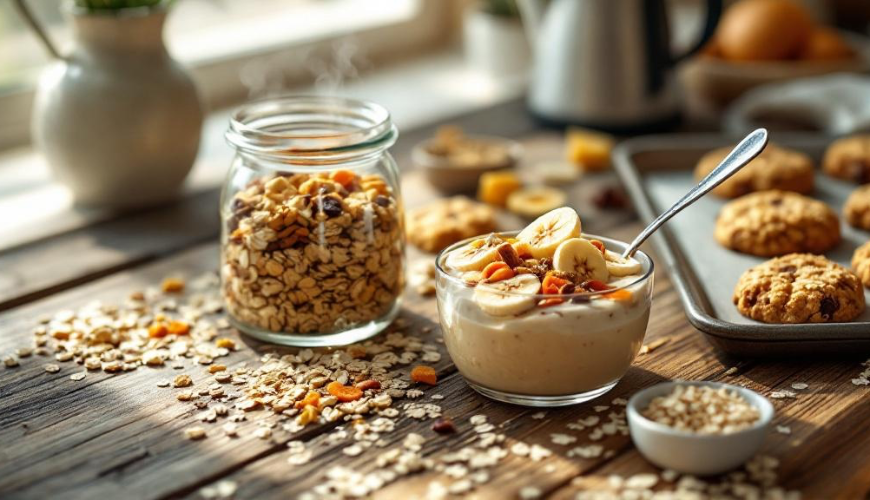
Oat flakes hold a special place in Czech kitchens: almost everyone has eaten them at some point, many people have them at home, yet they often end up in a single role – as breakfast porridge. But oat flakes are not just porridge. They are unassuming, affordable, and surprisingly versatile ingredients that can thicken a soup, enhance a meatloaf, replace part of the flour in baking, or create a quick dessert in a glass. And with a few clever tricks, they become the foundation for dozens of meals that make sense even on busy days.
Moreover, oats have long been associated with beta-glucan fiber, which is studied in relation to maintaining normal cholesterol levels – this is neatly summarized by the Harvard T.H. Chan School of Public Health. It's not a magical ingredient that will "save" your diet, but as a practical basis for healthier eating, flakes work great: they satiate, are neutral, easy to combine, and last long in the pantry. And most importantly – once you understand how to handle them, they become fun.
Try our natural products
Why it's worth giving flakes a second chance (and how to choose the right ones)
The basic choice is between fine, classic, and whole grain (sometimes "coarse") flakes. Fine ones are suitable where the result should be smoother and quick to prepare – for example, in batter, pancakes, or quick "overnight" variations. Classic flakes are a universal choice that works almost everywhere. Coarser flakes hold their structure: in patties, cookies, or homemade granola, they provide the perfect crunch.
A practical tip that changes a lot: flakes can be briefly toasted dry in a pan. They gain a nutty aroma, and the food then tastes more "finished," even if the recipe is simple. Another small trick: when some flakes are blended into "oat flour," it opens the way to baking with less white flour without having to delve into complicated experiments. And thirdly – flakes can replace breadcrumbs in recipes, thicken mixtures, and simultaneously add fiber, which is exactly the type of subtle improvement that counts in an ordinary week.
It may sound trivial, but the body often appreciates regularity: a few tablespoons of flakes daily in various forms is easier to maintain than a big nutritional resolution. And when flakes stop posing as obligatory porridge, they naturally start appearing more often in the kitchen.
7 ways to use oat flakes (tips and recipes beyond porridge)
Below are 7 ways to use oat flakes so they don't get stuck in a single breakfast scenario. Each idea is designed to be easily adaptable based on what's at home – and to make sense in a more sustainable household that cooks smartly and without unnecessary waste.
1) Crunchy homemade granola without the extras
Granola might be well-known, but this is where the difference between store-bought mix (often overly sweetened) and homemade version becomes apparent, which tastes like nuts and spices, not "flavoring." Oat flakes are the base; the rest can be assembled according to your pantry.
Simple procedure: pour the flakes into a bowl, add chopped nuts or seeds, a pinch of salt, cinnamon, and a spoonful of quality oil. Sweetness can come from honey, maple syrup, or mashed banana. Spread the mixture on a baking sheet and bake at a low temperature to dry and turn golden rather than burn. When cooled, adding dried fruit allows the granola to last up to two weeks in a jar – and in the morning, all you need is yogurt or plant-based kefir.
Sustainable plus: homemade granola can be made in bulk and minimizes impulsive purchases of "quick breakfasts." And when broken pieces of dark chocolate are added, it becomes a dessert breakfast, which still stands on a sensible foundation.
2) Overnight oats that even non-porridge people will enjoy
Yes, it's still oats, but technically it's not hot porridge – and for many people, that's a difference. The flakes soften overnight in milk or a plant-based drink and have a creamy texture by morning without cooking. The basic ratio is adjustable, but adding a spoonful of yogurt for smoothness and a pinch of salt for flavor is recommended.
Variations that almost always work: apple with cinnamon, cocoa with banana, or "carrot cake" (grated carrot, cinnamon, raisins, walnuts). The result can be taken to work, and when fruit is added just before serving, it stays fresh.
A real-life example from an ordinary day: in one household, the "morning rush" scenario often repeats. The solution? Prepare the base in two jars the night before, adding cocoa and banana to one, and apple and cinnamon to the other. In the morning, just a spoonful of nut butter, and it's done. Flakes thus stop being a project and become an invisible advantage – breakfast is sorted before you even open the fridge.
3) Oat pancakes and waffles: quick batter without complications
When people hear "recipes with oat flakes," many think of healthy cookies that taste... healthy. Yet pancakes and waffles can be quite the opposite: soft, fragrant, and with a good base. Simply blend the flakes finely (or use some oat flour), add eggs, milk, baking powder, and banana or apple for sweetness. For extra moisture, add quark or yogurt if desired.
The advantage is that the batter is forgiving: if too thick, add milk; if too runny, add a handful of flakes. And pancakes can also be made savory – for example, with grated zucchini and herbs. Such a dinner seems unassuming, but it's exactly the type of meal that kids often eat without debate and adults appreciate for being ready in half an hour.
4) Oat "breadcrumbs" for meatballs, meatloaf, and veggie patties
This is where oat flakes' versatility truly shines. In many recipes, part of the breadcrumbs can be replaced with a handful of flakes – either whole or briefly blended. In meat mixtures, flakes absorb juice and help hold shape; in legume patties, they firm up a mixture that might otherwise fall apart.
A simple meatless variant: mashed cooked red lentils or chickpeas, sautéed onion, garlic, spices, a spoonful of mustard, and a handful of flakes. Let it rest for a while for the flakes to "set" and form patties. Just a little oil is needed on the pan, or they can be baked in the oven. The result? A hearty meal that packs well for lunch and tastes good the next day.
And one small detail that makes a big difference: flakes soften the mixture, so less flour is needed. The flavor remains "cleaner," and the heaviness is reduced.
5) Thickening soups and sauces: an unobtrusive weekday trick
When cream runs out or you don't want to reach for roux, flakes can serve as a thickener. Simply add them to soup (like vegetable, pumpkin, or potato soup), cook for a while, and optionally blend. The soup gains a creamier texture and natural fullness. Flakes are flavor-neutral, so they won't overpower herbs or spices.
This method is also great for households concerned about waste: when a few tablespoons of flakes are left at the bottom of a bag, there's no need to wait for the "right recipe." Just add them to the pot. And for those who like a more robust flavor, flakes can be briefly toasted dry beforehand – the soup then tastes as if it has been cooking much longer.
6) Baking: cookies, bread, and crispy topping for fruit
Baking with flakes has one advantage: results are satisfying even without pastry precision. Oat cookies can be assembled from a few basic ingredients – flakes, banana or a bit of sugar, fat (butter or coconut oil), cinnamon, a handful of raisins, or chocolate. Perfect shapes aren't necessary; their "homemade" imperfection is part of their charm.
Even more interesting is using flakes as a topping for fruit, similar to crumble. Place sliced apple, pear, or plums on a baking sheet, and top with a mixture of flakes, nuts, cinnamon, and a bit of fat. After baking, it turns into a warm dessert that smells like the weekend, even on a Wednesday. It pairs great with yogurt or quark, making it an easy hearty snack.
And for those baking homemade bread, add a handful of flakes to the dough or use them to coat the loaf. The bread then gets a nice texture and looks more "artisan," even though it was made in a regular oven.
7) Homemade oat milk (and what to do with the leftovers)
Oat milk is widely available today, but a homemade version might make sense where cost, packaging, or simply taste is a concern. The process is simple: soak the flakes briefly, rinse, blend with clean water, and strain. It's important to blend briefly and not use hot water to avoid a slimy texture. Sweeten with dates, a pinch of salt, or vanilla.
And what about the leftover "oat pulp" after straining? This is often where sustainability falters. Yet it can be added to cookie batter, pancakes, or even porridge (yes, even there), ensuring nothing goes to waste. Flakes thus work as an ingredient "without leftovers," which is a big advantage in a household striving to be more eco-friendly.
One sentence worth reminding in the kitchen: "The best recipe is the one that helps use up what's already at home." This is doubly true for flakes.
Little tips to make oat flakes taste better (and more often)
It's not just about having "tips and recipes with oat flakes" at hand. Often, it's the small things that matter: a pinch of salt even in sweet variants, a sour component for balance (yogurt, kefir, lemon zest), and also texture. Some love creaminess, others want a crunch – and it's precisely the variation that ensures flakes never get boring. One time granola, another time pancakes, and the third time patties for a burger.
And when you look at flakes through the lens of an ordinary week, they start making logistical sense too. They're compact, affordable, available in larger packages, and often even without packaging in your own container. In the kitchen, they act as a backup: when time is short, just a few minutes turn flakes into something filling that doesn't feel like a last resort.
Anyone who ever thought oats were boring might have just encountered flakes in the wrong format. Once you try them, realizing that oat flakes are not just porridge, they start appearing in recipes almost on their own – in soup, batter, patties, and quick desserts. And that's precisely the kind of kitchen discovery that subtly turns into a new habit.