
Spring cleaning of the children's room can go smoothly when you involve the child in decision-making
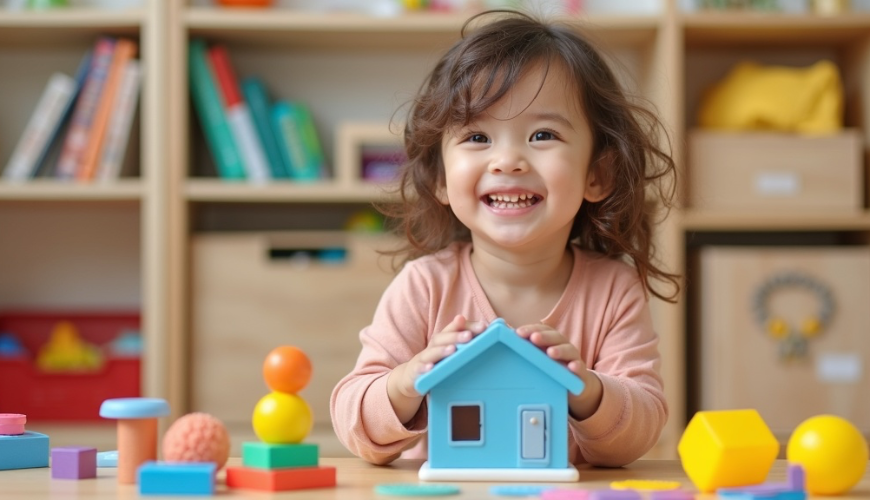
Spring has a unique ability to illuminate things that were "fine" over the winter. Suddenly, there's more light, more energy, and more visibility on the shelves where drawings, stuffed animals, broken crayons, and "treasures" pile up—things that might have long since found their way to the trash bin in another household. Spring cleaning of a child's room often doesn't start with the question "where to begin" but rather "how to do it without a fight." And it can be done—without yelling, without tears, without endless negotiations over who takes what from whom.
It's not just about cleaning. A child's room is their territory, play area, refuge, and gallery. When an adult comes in with a big bag and says, "we're throwing this out," a child might hear it as "this thing you love has no value." At that moment, a simple cleaning session turns into a battle for safety and control. The good news is that clearing out a child's room peacefully is more about approach than a perfect system. With simple rules in place, it can be managed even with children who genuinely dislike cleaning.
Try our natural products



Why Tidying Up a Child's Room Sparks Tension—And How to Prevent It
Adults often see clutter as a problem to be quickly resolved. In contrast, a child might view it as "their world," where things are exactly where they need them. When these two perspectives collide, tension arises. Add to that the fatigue after school, extracurricular activities, hunger, and sometimes the simple fear that a favorite toy might disappear.
It's helpful to start with something other than a command. Instead of "let's clean," a more concrete, understandable sentence works better: "Let's make more space for playing." Or: "I want you to sleep better here and find your Lego when you need it." This way, the child hears a purpose, not just a duty.
The scope is also important. The idea of doing a full-scale clean-up in one afternoon is tempting but often unrealistic. For family peace, it's worth breaking the task into smaller parts. Sorting a child's room can be a process over several days: one day for books, another for clothes, a third for toys. The smaller the "bite," the less resistance.
One more thing: a child needs to have the option to decide. Not about everything, but about something. When they feel involved, the need to fight decreases. In practice, this could be simple: "Pick three toys you want to pass on," or "Tell me which things are most important to you." This is often the key to handling tidying up with children peacefully.
For inspiration, it's useful to rely on proven insights about child development and emotions. For example, UNICEF has long emphasized that children need safety, predictability, and respect in communication—and these are precisely the things tested in cleaning more than one might think.
How to Tidy Up a Child's Room Without It Becoming a Domestic Battle
Spring cleaning often hinges on one thing: adults want quick results, children want to protect their belongings. A shared strategy is therefore more valuable than the best storage box. When a simple framework is set, sorting stops being chaotic and starts making sense.
It begins with preparing the space. Instead of a big "everything out now," it's better to make space: empty one shelf, one drawer, one box. Items are then sorted into clear piles—and here it's good to stick to simplicity. The more categories, the more fatigue. Often, three are enough:
- Keep (I use it, I like it, it’s useful)
- Pass on (donate, sell, give to younger ones)
- Repair / complete (missing piece, torn page, broken zipper)
This system is clear and understandable for a child. When "maybe," "sometime," and "what if" get tangled in, the process stalls. If "maybe" must exist, it's better to make it a small box with the rule: we'll return to it in a month. Often, it turns out that most things aren't missed at all.
Items with a story evoke strong emotions—the first stuffed animal, medals, drawings. Here, it's good to shift from the logic of "throw away–keep" to the logic of "preserve differently." Many families find it helpful to create a memory box, where only a limited number of items fit. The child learns to select the most important things while having the assurance that memories won't disappear. For drawings, taking photos and saving them in an album works well—the child retains a sense of value, and the parent gains space.
And what about toys, of which there are "simply too many"? With them, the rule of visibility helps. If a toy has long been at the bottom of a box and the child doesn’t remember it, it’s a signal. Not as an indictment, but as information. It can be done gently: some toys are stored outside the room in "rotation," and after a few weeks, it’s checked if anyone misses them. If they aren't missed, it's easier to pass them on—and the child feels they had a chance.
If energy is to be conserved anywhere, it's on perfection. Clearing out a child's room peacefully also means accepting that some things will remain "not completely ideal." More important than aesthetics is functionality: so that it's easy to clean, so the child finds what they need, and so the room feels breathable.
A quote often recalled in this context goes: "Order is not the goal, but a tool." In a child's room, this is doubly true—it's a tool for calmer days, not a display case.
Real Example: When Cleaning Becomes a "Mission for Detectives"
In a typical household (two children in elementary school, a small apartment, minimal storage space), spring cleaning long followed the same script: a parent declared a general cleaning on Saturday morning, the children resisted, and after an hour, everyone was arguing. By evening, the room was "clean," but relationships were tense. The turning point came when the format changed.
Instead of a general cleaning, a game was created: "Detective mission—find lost items." The goal wasn't "throw out half the room" but "find everything under the bed that doesn't belong there." The next day's "book mission": gather all the books in one pile and choose those that are already read and can bring joy elsewhere. The children got a stopwatch for 12 minutes, followed by a break and a snack. And importantly: they had the right to explain why each item was important. Not always did it mean the item stayed, but the space to explain reduced resistance.
The result? After a week, the room was noticeably more spacious, but more importantly, cleaning was managed with the children peacefully. Not because the children suddenly loved sorting, but because they had control, clear steps, and the assurance that their things weren't being taken away "as punishment."
This is important: children learn a skill through cleaning, not obedience. And skills are learned gradually, with support and patience.
When talking about spring cleaning, one practical aspect is often overlooked: what to do with things leaving the house. If they are to be donated, it's good to do it quickly so that "pass on" doesn’t turn into "move to the hallway." Some families have a proven rule: what is sorted out leaves that day—to a charity container, a swap, friends, or a donation group. The child can be present and see that things don’t end up "in a discreet disposal" but can serve others. This also strengthens the natural relationship with sustainability, which best enters a child's life through practice, not a lecture.
Similarly, it's helpful to plan how tidying will continue afterward. A child's room won't stay organized thanks to just one action in March. It stays organized because things have their place, and that place isn't complicated. If a child has to open three lids and remove two boxes to tidy up toy cars, it won't work in the long term. Simplicity is the secret ingredient here. And it's surprising how often fewer things are needed, not more organizers.
Those seeking support in understanding why environment matters for well-being and focus can refer to, for example, the World Health Organization (WHO), which has long addressed topics of healthy environments and well-being. While WHO doesn't specifically address children's rooms, the principle is clear: the environment impacts mental well-being and daily functioning—and for children, this is very sensitive.
Finally, it's worth asking a simple question: Is the room meant to serve the things, or is it meant to serve the child? When the answer sticks to the latter, spring cleaning ceases to be a test of nerves. It becomes an opportunity to make more room in a child's world for what truly matters—playing, resting, creating, and just plain peace. And that peace is as refreshing in spring as an open window after a long winter.