

Quality sleep is key to hormonal health
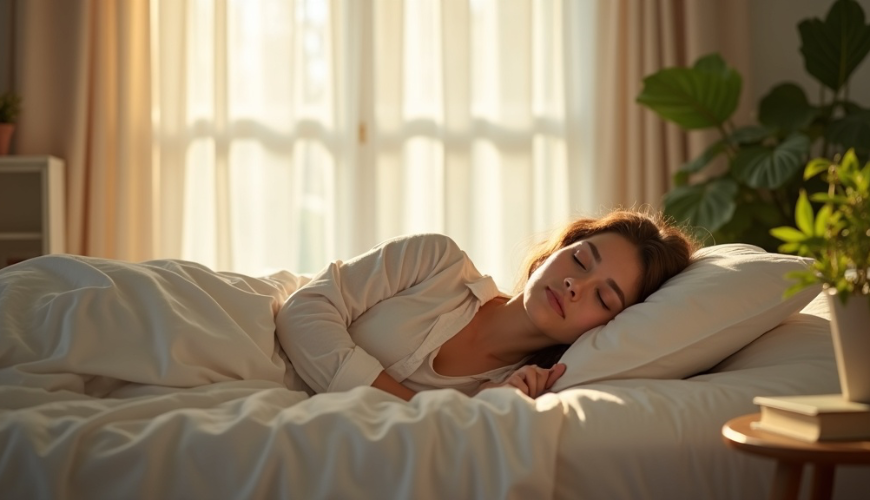
Sleep is often pushed to the sidelines in common health discussions. Diet, exercise, dietary supplements, and sometimes even breathing exercises and meditation are addressed, but quality sleep is often treated as something that will “just work out.” However, it is during sleep that decisions are often made about how the body will feel tomorrow, next month, and even next year. And it’s not just about energy and a good mood. Why is sleep important? Because it’s the time when the body switches to repair, cleaning, and fine-tuning mode – with hormones playing a significant role.
The hormonal system is a sensitive orchestra. Some hormones rise in the morning, others in the evening, and others are linked to stress, hunger, satiety, or reproductive functions. When sleep fluctuates, the entire rhythm can go off – sometimes subtly, other times very noticeably. In practice, this can manifest as irritability, cravings for sweets, increased anxiety, fluctuating energy during the day, but also changes in cycle, PMS, or worsened perception of stress. This is why there is increasing talk about why sleep is crucial for hormonal health – and why it deserves the same attention as diet or exercise.
Try our natural products


Why Sleep is Crucial for Hormonal Health
The body has its internal clock, the so-called circadian rhythm. It controls when different hormones are released, when alertness increases, and when sleepiness sets in. When the rhythm is repeatedly disrupted (late sleeping, night work, frequent waking, “catching up” on sleep during the weekend), hormones simply don’t get the chance to function as they are set.
One of the most well-known hormones associated with sleep is melatonin, which helps induce sleepiness and signals to the body that it is night. But melatonin isn’t just a “sleep hormone.” It is also associated with antioxidant processes and overall regeneration. When bright light shines into the eyes in the evening (typically screens), the body may produce melatonin later and in smaller amounts. The result? Falling asleep is delayed, sleep is shortened, and morning comes sooner than the body is truly rested.
Then there is cortisol, often referred to as the stress hormone. It naturally rises in the morning to help the body “start up.” However, in people with long-term disrupted sleep, its rhythm can be thrown off – some wake up at 3 AM and can’t go back to sleep, while others can’t wake up in the morning and “come alive” in the evening. It’s not laziness or weak will; often it’s a signal that the body definitely has catching up to do.
Hormones that are very practically affected by sleep include leptin and ghrelin – the hunger and satiety hormones. With a lack of sleep, ghrelin (hunger) typically increases and leptin (satiety) decreases. It’s no coincidence that after a short night, cravings for sweet or salty “quick fixes” come, and one feels that nothing really satisfies. And because the body is tired, often there is also less desire to move. This is one reason why sleep is important for sustainable lifestyle changes – without it, good intentions become a daily struggle.
It’s also important to mention metabolic hormones, like insulin, which is related to blood sugar management. Sleep quality affects insulin sensitivity and thus how the body handles energy from food. There are many serious overviews about sleep and its role in health; as a solid starting point, you can refer to Sleep and sleep disorders on the NIH (National Institutes of Health) website or the CDC overview on sleep, which clearly summarize why sleep is more than just “turning off.”
To make it less abstract, imagine a common scenario: a person sleeps about five to six hours for several weeks, rescues the morning with coffee, runs “at performance” throughout the day, and tries to unwind with a series in the evening. The first few days are manageable. But over time, a strange inner restlessness, greater sensitivity to stress, worsened skin, cravings, and the feeling that the body isn’t functioning as it should, add up. This is often where it becomes clear that hormones and sleep are more interconnected than expected.
“Sleep is the best meditation.” (Dalai Lama) This is a simple sentence, but it captures the essence: sleep is not lost time, it is a fundamental biological need that calms the nervous system and gives hormones space to do their job.
Sleep and Women's Hormones: A Delicate Balance That is Easily Disrupted
When talking about hormones, women often primarily perceive estrogen and progesterone, possibly thyroid hormones. However, sleep and women's hormones are related on multiple levels. Partly because the female body undergoes cyclical changes, and partly because stress and fatigue tend to “imprint” on how the cycle manifests.
Estrogen and progesterone are not just reproductive hormones. They also influence mood, thermoregulation (feeling of warmth and cold), skin quality, stress perception, and how easily one falls asleep. At the same time, sleep quality can change throughout the cycle. Falling asleep is easier on some days, while other times there is more nighttime waking or more vivid dreams. This does not automatically mean a problem – it’s just good to know that the body is not the same every week.
In the luteal phase (simplified as the period after ovulation), progesterone is higher, which tends to have a slightly calming effect, but basal body temperature also increases. And temperature is key for sleep: the body needs a slightly cooler environment for quality sleep. It's no wonder that some women sleep worse in the second half of the cycle, sweat more, or wake up “for no reason.” When stress, a demanding period at work, or long evenings in front of screens are added, the result can be a feeling that PMS worsens and the body is “out of balance.”
At the same time, it's fair to say that sleep itself is not the only factor. Hormonal health is a mosaic: nutrition, stress, exercise, environment, relationships, health status. Yet, sleep is often the piece that can be relatively quickly improved – and this releases pressure on other areas.
In real life, it might look like this: a woman begins to notice that a week before menstruation, she is more sensitive, has a harder time concentrating, and can’t fall asleep in the evening even though she is tired. She tries adding magnesium or reducing sugar, but the change is small. Only when she sets a more regular bedtime, dims the lights after nine in the evening, and stops “catching up” on work in bed does the situation begin to improve. Not because sleep is a magical cure, but because hormones get a chance to keep rhythm.
Also important is the issue of menstrual pain and tension. Lack of sleep increases sensitivity to pain and worsens the body's ability to regenerate. When the body is sleep-deprived, everything is somewhat “on edge” – including tolerance to common cyclical changes.
And what about hormonal periods like perimenopause? Even there, sleep often becomes a fragile point. Hormonal fluctuations can bring night sweats, waking, or early morning waking. In such times, it makes sense to address the bedroom environment (cooler temperature, breathable materials), evening routine, and light, but also consult a specialist if the issues are significant. It’s helpful to have authoritative information at hand; for example, NHS information on menopause clearly describes common symptoms and support options.
Sleep and the Female Cycle: What Can Help When the Body Doesn't Want to "Switch to Night"
When the topics of sleep and the female cycle come together, a simple question often arises: what practical steps can be taken to sleep better when the cycle changes and with it the energy? The answer is not “one size fits all,” but several small steps that add up. It’s not about perfection. It’s about giving the body stable signals: when it’s day and when it’s night.
Light plays a big role. Morning natural daylight – even just a few minutes by the window or a short walk – helps. In the evening, dimming the lights and reducing blue light from screens is beneficial. The body doesn’t read clocks but perceives brightness. And when it’s “like noon” in the evening, the hormonal signal for sleep is delayed.
The second thing is temperature and air. An overheated bedroom is often a silent saboteur. Ventilation and a slightly lower temperature often do more than a new sleep app. Some people appreciate little things like a shower before bed or a lighter blanket in the second half of the cycle when the body tends to be warmer.
The third area is evening routine. The brain loves rituals – not in the esoteric sense, but repetition. When a similar sequence happens every night (turn off the lights, put away the phone, brush teeth, short reading), the body starts to “switch” automatically. When each night is different and ends with a work email in bed, the nervous system stays on alert.
And then there are classic "triggers" of worse sleep: alcohol, heavy meals late at night, too much caffeine in the afternoon. It doesn’t mean a ban. It’s just good to know that even though alcohol can speed up falling asleep, it often worsens sleep quality and adds nighttime waking. The body then wakes up tired, and the hormonal balance takes another hit.
If there is to be just one list, let it be truly practical – like a small map for days when the cycle is more challenging and sleep more fragile:
Gentle Habits That Support Sleep Even During the Cycle
- Regular bedtime and wake-up time (at least approximately, even on weekends)
- Morning daylight and dimmed lighting in the evening
- Cooler, ventilated bedroom and minimum distractions
- Caffeine preferably in the morning, opt for decaf tea in the afternoon
- Lighter dinner and a calmer pace in the last hour before bed
All these are small things that may sound trivial. But it is precisely their triviality that is their strength: they can be done long-term and without big fluctuations. And when sleep improves, often so does how the body handles the cycle – moods aren’t as sharp, fatigue isn’t as deep, and stress has less room.
In this context, another question arises: can poor sleep really affect the cycle? In the long term, yes – mainly through stress mechanisms, energy balance, and overall organism load. It doesn’t mean that a few worse nights “disrupt hormones.” But if worse nights become the standard, the body starts to conserve and adapt. And adaptation sometimes manifests in the cycle, skin, mood, or libido.
So sleep is not a luxury or a reward after a productive day. It is a fundamental biological need and at the same time one of the most effective “invisible” tools to support hormonal health. When the evening manages to slow down, dim the lights, and let the body calmly end the day, something surprising often happens: the morning brings not only more energy but also greater inner stability. And in today’s world, that may be one of the most valuable things sleep can offer.