
When do children grow teeth, and how can you tell it's teething, not an illness?
Parents are often surprised at how soon the topic of teeth becomes a topic at home. Just a few months ago, the biggest event was the first rollover onto the tummy – and suddenly drooling, restless nights, and the question of when do children's teeth grow and if it can be identified with certainty arise. There are many myths surrounding teething: some claim that "teeth always mean a fever," while others downplay it as just an excuse for poor sleep. The truth, as usual, lies somewhere in between. Teething is a normal developmental stage, but it can be unpleasant – and it looks a bit different for every child and family.
It's important to know what's still within normal limits, when to be alert, and how to get practical relief at home without unnecessary chemicals. And also to be clear about when teeth start to grow and which ones appear first, as well as the question of how many teeth children have at different stages.
Try our natural products




When do children's teeth start to grow (and which ones erupt first)
When people say "teeth are growing," most envision the moment when a white tip appears in the gum. But preparations begin much earlier. The foundations of milk teeth are laid during pregnancy, and the actual teething most commonly begins around six months. The typical range for when children's teeth start to grow is approximately from 4 to 7 months, but earlier or later timing is also completely normal. Some children surprise with their first tooth at three months, while others wait until a year – and yet everything is fine.
The order of teething often follows a "textbook" scenario, but it's not a law. However, it can be said that it most often looks like this:
Which teeth grow first in children
Most often, the lower central incisors (the bottom "ones") appear first. Shortly afterward, the upper central incisors follow. Then other incisors, first molars, canines, and finally second molars gradually appear. The whole process of milk dentition usually concludes sometime between 2 and 3 years.
For orientation, it is useful to take it as a map, not as a timetable. If a child's teeth grow in a different order, it often doesn't mean a problem – just an individual pace.
How many teeth do children have: milk vs. permanent teeth
Here, it's good to remember a simple number: milk teeth number 20. This is the answer to the common question of how many teeth children have when they are small.
Later, when teeth start to fall out and permanent ones come in, the number increases. Permanent teeth typically number 32 (including the "eights," which may not erupt at all or only in adulthood). For schoolchildren, it is therefore common to have a "mix" – part milk and part permanent teeth.
If you want to rely on authoritative sources, information on the development of children's teeth is neatly summarized, for example, on the American Dental Association website or the general explanation of teething on NHS. These are not the only possible sources, but they are solid and comprehensibly processed basics.
How to recognize that a child is teething: the most common signals (and what might be something else)
The question of how to recognize that a child is teething keeps coming back in households because symptoms are often similar to other common issues. Moreover, they may appear in "waves": a few days of calm, then a restless night, and the next day it seems everything is normal again.
Among the typical signs indicating that a child is teething are:
- increased drooling and the need to chew on everything,
- swollen, sensitive gums (sometimes visibly red),
- irritability or a greater need for closeness,
- worse sleep, more frequent waking,
- lack of appetite or conversely a desire to chew (some children refuse the pacifier, others cling to it),
- rubbing cheeks, pulling ears (pain may "transfer" in the jaw area),
- occasionally even a slightly elevated temperature.
The important word here is "slightly." Teething can be uncomfortable, but if there is a high fever, significant diarrhea, vomiting, or the child appears genuinely ill, it's better not to automatically blame it all on teeth. The child's body often "times" various minor viruses to the same period when teeth are erupting, making it look like one causes the other. In reality, there may be two things happening side by side.
Parents may also become concerned about stools. A mild change (such as looser stools) may occur because the child is drooling more and swallowing saliva or tasting more things around them. But severe diarrhea or dehydration is a signal to consult a pediatrician.
As a useful reminder, pediatricians often repeat: "Teeth can bother a child, but they shouldn't mask a real illness." This helps keep a cool head when sleep is elusive and everything is blamed on the gums.
Real-life example: "Two days of hell, third day a smile"
In many families, it looks similar: a child who usually falls asleep without much trouble suddenly cries two nights in a row, wants to be carried all the time, and refuses favorite porridge. Parents try to check the mouth – and a small whitish "bump" is visible on the gum. On the third morning, a sharp edge of a tooth appears, the mood visibly improves, and the child is "themselves" again. This scenario is typical: unpleasant periods often peak just before the tooth actually breaks through.
However, it's fair to mention the other part of reality: sometimes a tooth "prepares" for a long time, gums are sensitive, but no white tip is visible. This also happens and isn't automatically a reason to panic.
When do children experience the most "painful" teething
Molars are often considered more challenging (larger surface area, more pressure on the gum) and sometimes also canines. Timing often coincides with the period when the child is already active, crawling, or walking, making the combination of fatigue and pain more demanding. So if the first incisors "passed almost unnoticed," it doesn't mean it will always be that way.
What really helps at home when teeth are growing (and how to do it gently)
When it comes to how to recognize that a child is teething, the second question quickly follows: what to do about it. Relief often involves a combination of small things that can be alternated depending on the situation. And also acknowledging that what works for one child may not be the same as the "proven advice" from others.
The following simple approaches most commonly work:
Coolness and pressure: the simplest duo
Coolness soothes, and slight pressure on the gum can provide relief. Practically, this means a cooling teether (always according to the instructions, usually only in the refrigerator, not in the freezer, to avoid it being too hard and cold), or a clean cold cloth for chewing. For smaller children, safety is important, and the situation should always be supervised.
Gentle gum massage
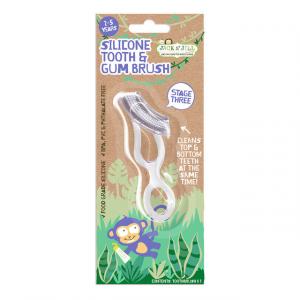
A gentle massage of the gum can be done with a clean finger or a silicone finger toothbrush. Sometimes it calms the child immediately, other times they refuse. Both are normal – sensitivity changes day by day.
Daily routine and sleep: a subtle but strong help
When a child sleeps poorly, the pain threshold decreases, and everything feels worse. Sometimes it helps to move bedtime a few minutes earlier, provide a quieter afternoon, or reduce stimuli. It's not a "magic rule," but a small adjustment that can reduce overall stress.
Hygiene from the first tooth
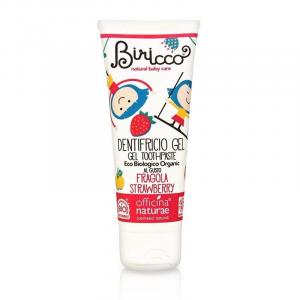
As soon as the first tooth appears, care for it begins. It's not just about aesthetics, but the health of the whole mouth. Initially, a gentle toothbrush and regularity suffice. It makes sense to use gentle products and monitor the composition – parents often seek options that are as considerate as possible of both children and nature.
In this phase, it's also worth considering that the child will put everything in their mouth. Therefore, it's nice to have a home environment without unnecessarily aggressive cleaning agents and scents. Many families switch to gentler cleaning and choose more eco-friendly options during teething because the floor, toys, and hands are washed more frequently than usual.
What about gum gel and pain medications
Some families resort to gels or analgesics, especially at night when the child is exhausted. In such cases, it's wise to follow the pediatrician's recommendations and the package insert. It applies that less is sometimes more, and if medications are needed repeatedly for several days in a row, it's advisable to discuss it with a professional.
It's also good to remember: teething is temporary. Even when it seems at night that it will never improve, the problems usually alternate in short episodes.
When to call a pediatrician (or dentist)
- if the child has a fever over 38 °C that persists or worsens
- if there is significant diarrhea, vomiting, or signs of dehydration
- if the child refuses to drink and has few wet diapers
- if the gums are purulent, significantly inflamed, or suspicious spots appear in the mouth
- if teeth do not erupt for a long time and parents have a feeling that something is "off" (a check-up can provide reassurance)
These rules are not meant to scare but to help distinguish common discomfort from situations where it's better to be sure.
The topic of when children's teeth grow is essentially a story of how different children are. Some go through teething almost unnoticed, while others need more closeness, cold, and calm. When adding the question of how many teeth children have, a simple guideline helps: there are twenty milk teeth, and most of them appear by three years, even though the exact timing can vary by months. And if there is currently an investigation at home about how to recognize that a child is teething, saliva, swollen gums, the need to chew, and changes in sleep are the most common clues.
In the end, it may be a strange reminder of how quickly children evolve: yesterday a toothless smile, today the first sharp edge, and tomorrow another one. And although it occasionally brings a few challenging nights, it usually ends as quietly as it began – with a new tooth that appears one day during an ordinary morning smile.