

Banana pancakes are a healthy and simple breakfast
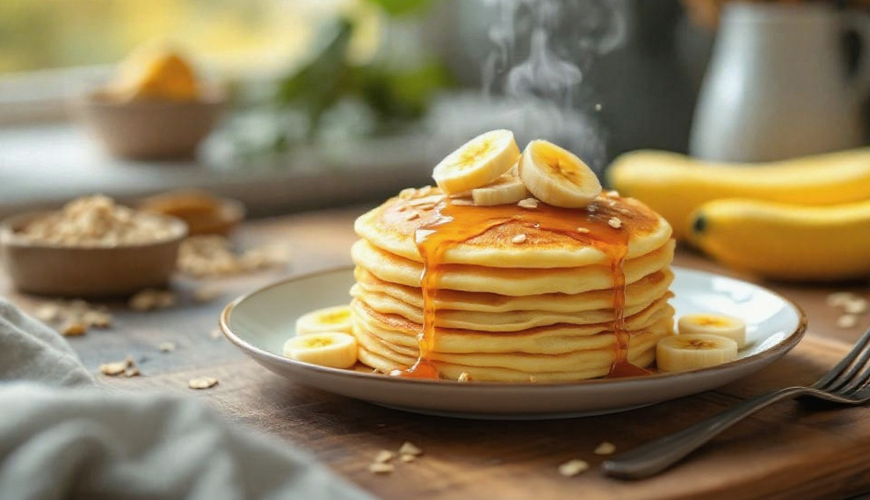
When people hear "pancakes," most of them picture the classic recipe with all-purpose flour, milk, and eggs, drizzled with jam or sprinkled with sugar. But add one ripe banana to the mix and the whole game changes. Banana pancakes aren't just a trendy thing for Instagram food bloggers – they're genuinely delicious, nutritious, and surprisingly simple food that deserves a place in the everyday menu. And what's the best part? They can be prepared in a healthy way, without unnecessary sugar, and with minimal ingredients that most of us already have at home.
The banana pancake phenomenon started spreading around 2015, when the first recipes for two-ingredient pancakes appeared on social media – made from just banana and eggs. Since then, this simple concept has grown into dozens of variations, from gluten-free versions to protein-packed to vegan. But why banana, specifically? What makes this fruit such an ideal partner for pancake batter?
Try our natural products
Why banana is such a great choice in a pancake
Banana holds an exceptional position among fruits. Thanks to its high content of natural sugars – primarily fructose, glucose, and sucrose – it works as a natural sweetener, so you don't need to add any refined sugar to the batter. A ripe banana with brown spots on the peel is the sweetest and mashes most easily into a smooth paste, which is exactly what you need for pancake batter.
Beyond sweetness, however, banana also brings fiber, potassium, vitamin B6, and magnesium. According to data from the U.S. Department of Agriculture (USDA FoodData Central), one medium-sized banana contains approximately 3 grams of fiber and around 422 milligrams of potassium, a mineral crucial for proper heart and muscle function. When you get all of this in your morning pancakes, it's definitely a better start to the day than industrially processed breakfast cereal.
Moreover, banana acts as a binder in the batter – its naturally sticky consistency helps hold the pancake together, even if you skip traditional wheat flour. That's precisely why banana pancakes have become so popular among people who avoid gluten or are looking for alternatives to traditional recipes. It's not just about taste, it's about function – banana literally holds the recipe together.
What's interesting is how banana pancakes fit into practically any dietary approach. Whether someone prefers a low-carb diet, paleo style, vegetarianism, or simply wants to eat more sensibly, the banana pancake can be adapted. Just change the type of flour, add or remove ingredients, and the result is different every time, but always good.
Take, for example, the story of Kateřina from Brno, a mother of two small children, who described on her blog how banana pancakes literally saved her morning routine. Her older son refused classic breakfasts, but he fell in love with pancakes made from banana and oat flakes so much that he wanted them every day. "I stopped worrying about how to get something healthy into him for breakfast. He asks for it himself," she wrote. And that's exactly the kind of story that shows healthy food doesn't have to be a battle – sometimes you just need to find the right recipe.
Banana pancake recipes that actually work
Let's look at specific recipes that absolutely anyone can prepare. No exotic ingredients, no complicated procedures – just simple combinations with excellent results.
Basic two-ingredient pancakes are the simplest thing you can make in the kitchen. Just mash one ripe banana and mix it with two beaten eggs. Pour the mixture in small portions onto a non-stick pan lightly greased with coconut oil and fry on low heat on both sides. The result is thin, gently sweet pancakes with a pronounced banana flavor. They're naturally gluten-free and contain only healthy fats and protein from the eggs. One piece of advice – don't overheat the pan and make the pancakes smaller, because without flour they're more fragile and harder to flip.
If you want pancakes that are a bit more substantial and with better structure, try adding oat flakes. Blend one ripe banana with two eggs and add three to four tablespoons of fine oat flakes (or blend them into flour beforehand). Let the mixture sit for five minutes so the oats absorb the liquid, then fry in the usual way. These pancakes are firmer, more filling, and thanks to the oat flakes provide complex carbohydrates and beta-glucans, which according to numerous studies help maintain healthy cholesterol levels. Harvard T.H. Chan School of Public Health lists oat flakes as one of the healthiest breakfast choices precisely because of their positive impact on the cardiovascular system.
For those looking for higher protein content, there's a great variation with quark or cottage cheese. Mash a banana, add two eggs and two tablespoons of soft quark. You can add a teaspoon of cinnamon and a pinch of vanilla extract. The result is a fluffy, rich batter that after frying resembles small thick pancakes rather than classic thin ones. One serving of this recipe contains around 20 grams of protein, which is a solid contribution to daily needs, especially for active people or athletes.
And what about a vegan version? That's absolutely doable too. Instead of eggs, use so-called flax "eggs" – one tablespoon of ground flaxseed mixed with three tablespoons of water, left to gel for five minutes. Add the mashed banana, a handful of oat flakes, a splash of plant-based milk (oat, almond, or soy), and a teaspoon of baking powder. The result is surprisingly good – the pancakes hold their shape, are slightly crispy on the surface, and soft inside.
Once the pancakes are done, the question of toppings comes next. And here the space for creativity is practically unlimited. Fresh fruit – blueberries, raspberries, strawberries, or slices of another banana – is a classic choice. A teaspoon of peanut or almond butter adds healthy fats and protein. Greek yogurt with a touch of honey creates a creamy topping that also provides a probiotic benefit for the gut microbiome. And for those who love chocolate, they can guilt-free sprinkle the pancakes with cacao nibs or grate a piece of quality dark chocolate with a high cocoa content.
As British nutritional therapist Amelia Freer once said: "The best diet is one you actually enjoy and can maintain long-term." And banana pancakes are exactly this type of food – delicious enough that you want to eat them repeatedly, and healthy enough that you can enjoy them without guilt.
The practical side of things is also worth mentioning. Banana pancakes are an excellent choice for meal prep, meaning preparing food ahead of time. You can let the finished pancakes cool, stack them with parchment paper in between, and store them in the fridge for two to three days, or even freeze them. In the morning, you just reheat the pancakes on a pan or in the oven and you have a ready-made breakfast in a few minutes. For families with children or for people with hectic work schedules, this is an invaluable advantage.
Questions sometimes arise about the caloric value of banana pancakes. It's true that banana isn't exactly a low-calorie fruit – one medium-sized piece has approximately 105 calories. But in the context of the whole recipe, where one banana is enough for a serving of two to four pancakes, that's perfectly reasonable. Moreover, it's important to distinguish between empty calories from refined sugar and flour and nutrient-dense calories from banana, eggs, and oat flakes. The body processes them completely differently – energy is released gradually, you feel full longer, and there are no sharp spikes in blood sugar levels.
For inspiration and more banana pancake variations, you can check out portals like Minimalist Baker, which offers dozens of simple plant-based recipes, or Czech-language blogs focused on healthy cooking, where you'll find local adaptations with ingredients available in regular Czech stores.
Banana pancakes are in a sense a symbol of how our approach to food is changing. Just ten years ago, most people would have considered pancakes an unhealthy dish full of sugar and white flour. Today we know that swapping just a few ingredients is enough to turn a classic recipe into a nutritious, balanced, and still delicious breakfast. It's not about deprivation or about having to stop eating what you love. It's about smart swaps that benefit the body without depriving the taste buds.
Next time you're standing in the kitchen with overripe bananas on the counter, wondering what to do with them, try reaching for a pan instead of making banana bread. Two minutes of preparation, five minutes of frying, and on your plate you have something that's healthy, filling, and – let's be honest – simply good. And that's ultimately the only thing that truly matters when it comes to food.