

# Why We Enjoy Exercising in New Clothes and How to Use It to Your Advantage
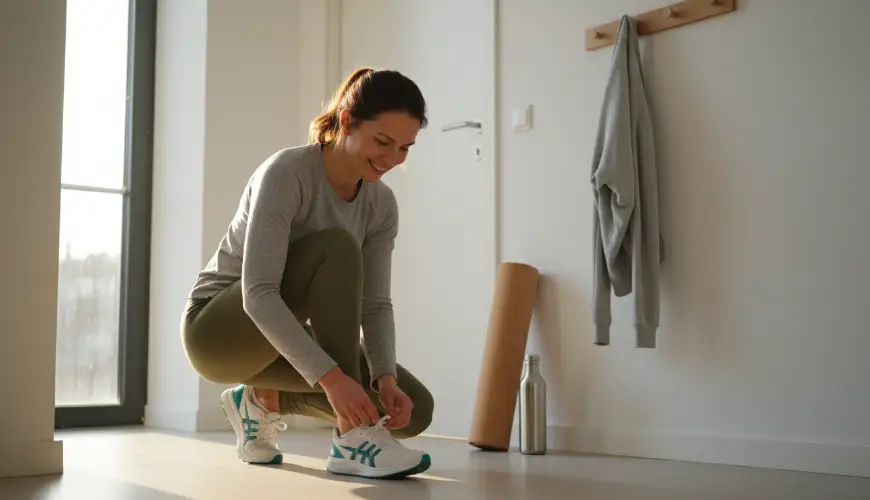
Everyone who has ever pulled new sports leggings or a freshly purchased gym shirt out of a bag knows the feeling. Suddenly you're looking forward to training more than usual, moving with greater enthusiasm and confidence, and feeling like your performance simply has to be better. This is no illusion or marketing trick from sportswear manufacturers — there is real psychology behind this phenomenon, with plenty to say about how our minds influence our bodies and how clothing shapes our behaviour far more than we realise.
Psychologists refer to this phenomenon as enclothed cognition — thinking conditioned by clothing. The term was introduced in 2012 by researchers Adam Galinsky and Hajo Adam from Northwestern University, who discovered that the clothes we wear influence not only how others perceive us, but above all how we perceive ourselves. Their research showed that people who put on a doctor's laboratory coat performed better on attention tests than those wearing the same coat but believing it belonged to a painter. Clothing thus carries a symbolic charge that transfers to the wearer's mind — and sportswear is no exception.
When someone puts on new sports gear, they are unconsciously telling themselves: I am someone who exercises. I am ready to perform. This internal monologue has a direct impact on motivation, focus, and ultimately physical performance itself. It is not magic — it is psychology in practice.
Try our natural products
New clothing as a motivational trigger
For many people, motivation to exercise is one of the biggest obstacles. Getting up early for a run, heading to the gym after a demanding workday, or weekend yoga that we look forward to all week but ultimately skip in favour of the sofa — these are situations almost everyone recognises. And this is precisely where clothing steps in as a surprisingly powerful motivational tool.
Imagine Klára, a thirty-four-year-old accountant from Brno who decided to start running regularly. She bought quality running shoes and functional leggings made from recycled materials. In the first week, she went out for a run four times. Why? She says that every time she saw the shoes standing by the door in the morning, they reminded her of her intention. The clothing became a physical reminder of her decision — and thus a trigger for action. Psychologists describe this mechanism as an implementation intention: a specific plan linked to a specific cue increases the likelihood that we will actually follow through.
New clothing also functions as a form of advance reward. Investing in quality sports gear creates psychological pressure — not negative, but motivational. Subconsciously, a person tells themselves it would be a shame to leave new things sitting in the wardrobe. Economists might call this the sunk cost effect; psychologists speak more of a commitment to oneself. Either way, the result is the same: it becomes easier to find one's way to exercise.
Novelty itself also plays an important role. Our brains are wired to pay attention to new stimuli — an evolutionary mechanism that once helped us survive. New clothing activates this reward system in the brain, releases dopamine, and creates a sense of excitement. This enthusiasm fades over time, but if we harness it correctly, it can launch us into a regular rhythm that then sustains itself.
Research in behavioural psychology, including studies published in the Journal of Experimental Social Psychology, repeatedly confirms that external stimuli — including clothing — can significantly influence internal states and behaviour. This is therefore not a superficial matter, but a deep psychological mechanism.
How to consciously use this effect to your advantage
Knowing the theory is one thing; being able to apply it in everyday life is another. The good news is that the new clothing effect can be consciously cultivated and used as a tool for building healthy habits — without needing to buy a complete new sports outfit every month.
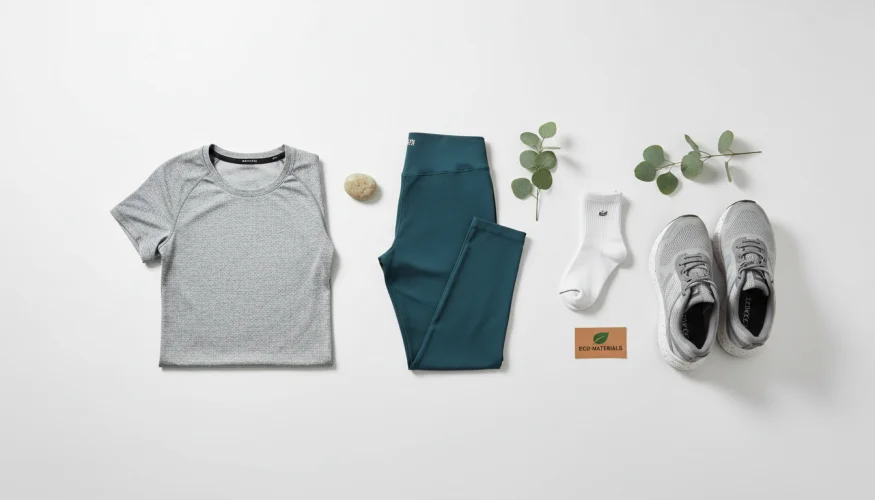
The key is intentionality. Rather than impulsively buying sportswear that ends up in a drawer, it pays to think of a purchase as a ritual. Choose clothing that genuinely suits the activity you want to pursue, that fits well on the body, that makes you feel good, and that pleases you both aesthetically and functionally. It is precisely the combination of aesthetics and functionality that amplifies the psychological effect — clothing that looks good and also performs technically (wicks away sweat, allows free movement, does not chafe uncomfortably) sends the brain a double signal: I am ready and I feel great.
An interesting way to extend the new clothing effect is to assign specific items of clothing to specific activities. Having special leggings just for yoga, a particular shirt just for the gym, specific socks just for running. This assignment strengthens associations in the brain — as soon as someone puts on their "yoga leggings", the brain automatically switches into a mode of calm and focus. It works similarly to work clothing, which helps us mentally shift into work mode even when working from home.
Another practical tip is the visibility of clothing. Hanging sportswear in a visible place — over the back of a chair, on a hook by the door, or over the edge of a wardrobe — serves as a constant visual reminder of one's intention. Research in the field of habit formation, popularised for example by James Clear in his book Atomic Habits, shows that adjusting one's environment so that desirable behaviour is as easy and visible as possible is one of the most effective strategies for building lasting habits.
Worth mentioning too is the social dimension of new clothing. If someone buys a new sports outfit and mentions it to friends or shares it on social media, they are creating a public commitment. Social psychology repeatedly demonstrates that publicly declared intentions have a significantly higher rate of follow-through than those that remain only in one's head. New clothing can thus also become a social catalyst for change.
As writer and psychologist Mihaly Csikszentmihalyi said: "The quality of life depends on what we experience. And what we experience depends on what we pay attention to." New sportswear helps us pay attention to what matters to us — movement, health, and self-care.
It is important, however, not to fall into the illusion that buying clothing replaces exercise. This phenomenon — for which there is no precise equivalent in Czech, but which in English is called "retail therapy" — can in its extreme form be counterproductive. Instead of engaging in the activity, we satisfy ourselves with the feeling that we have "done something for our health" by purchasing sports equipment. A mindful approach to buying clothing as a tool, rather than as an end in itself, is therefore essential.
Sustainability and quality play a greater role in this context than might initially seem apparent. Clothing made from quality, environmentally friendly materials — such as recycled polyester fibres, organic cotton, or bamboo — not only serves the body better during movement, but also brings a deeper sense of meaningfulness. The awareness that a sports outfit was produced ethically and with consideration for the environment adds another layer to the sense of wellbeing during exercise. A person feels good not only physically, but also in terms of their values — and that is a combination that genuinely sustains motivation.
Choosing clothing that lasts, that does not change after every wash, and that retains its shape and functionality after hundreds of workouts is also the more economically and ecologically sensible choice. Investing in one quality piece has a greater long-term effect than five cheap items that wear out quickly and end up in the bin. And the same holds true from a psychological perspective — a stronger emotional bond with quality clothing that a person has consciously chosen is a more durable source of motivation than the short-lived enthusiasm from a cheap impulse purchase.
It is also interesting how clothing influences the perception of one's own body during exercise. Studies published in the academic journal Body Image show that people who are satisfied with how they look while exercising engage in movement for longer, with greater effort, and with lower levels of self-conscious anxiety. Clothing that fits well and in which a person feels comfortable reduces the number of negative thoughts about one's own body and frees up mental capacity for the movement itself and the experience of it.
This is, incidentally, one of the reasons why the sportswear market is so enormous and why brands such as Patagonia, Girlfriend Collective, or domestic sustainable manufacturers are experiencing such strong interest. People intuitively sense that clothing is not merely a practical matter — it is part of their identity, their relationship with movement, and their relationship with themselves.
So if someone is looking for a way to re-motivate themselves to exercise, to overcome laziness, or to bring joy back to training that has become a joyless routine, the conscious selection of new sportswear can be a surprisingly powerful tool. Not because clothing in itself makes someone an athlete — but because the right piece serves as an anchor, a reminder and a mirror of who we want to be. And in the psychology of motivation, that is a very valuable thing indeed.