

# Korean Side Dishes (Banchan) That Last a Week in the Fridge --- ## What Are Banchan? Banchan ar
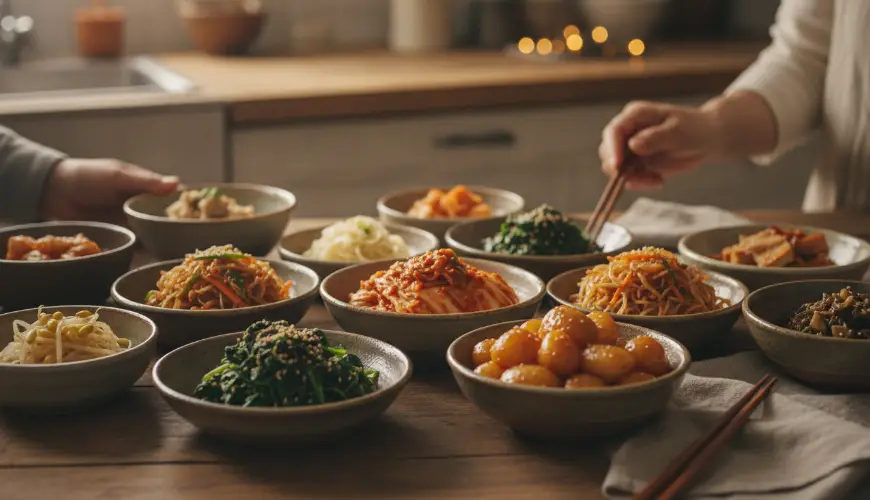
Anyone who has ever looked into Korean cuisine knows that authentic Korean food isn't just a single bowl of rice or soup. It's an entire table full of small bowls with various side dishes, sauces, and pickled vegetables called banchan. This approach to dining has a millennia-old tradition in Korea and conceals something that the modern world is only beginning to appreciate – namely, the idea that cooking smart means cooking once and eating all week.
Banchan aren't merely decorative elements of the table. They are the foundation of the Korean way of eating, which combines various flavors, textures, and nutritional values into one harmonious whole. Fermented, braised, stir-fried, or marinated – each side dish brings something different, while all of them complement each other beautifully. What is truly ingenious about banchan, however, is their practicality. Most of these side dishes keep perfectly well in the refrigerator for an entire week, sometimes even longer, and they taste better with each passing day.
Imagine Markéta, a young woman working full-time in Prague. Every evening she comes home exhausted, and the last thing she feels like doing is standing at the stove for an hour. One day she decided to try the Korean approach to meal preparation – on Sunday afternoon she spent two hours preparing several banchan, filled jars in the refrigerator with them, and then throughout the entire week she simply cooked rice or noodles and supplemented them with the ready-made side dishes. The result impressed her so much that this ritual became part of her weekly routine.
Try our natural products





What banchan actually are and why they make sense
The word banchan (반찬) in Korean literally means "side dishes to rice" or "foods beside rice." Traditionally they are served in multiple bowls simultaneously, with their number symbolizing the wealth and hospitality of the host. Poorer families had three bowls on the table, while the royal court could have as many as thirty. Today this custom is maintained in modern Korean households, where it is common to always have several types of banchan prepared in the refrigerator.
From a nutritional standpoint, this approach to eating is fascinating. Korean cuisine naturally combines fermented foods rich in probiotics, vegetables full of fiber, seafood with minerals, and legumes as a source of plant-based protein. According to research published in the academic journal Journal of Ethnic Foods, the traditional Korean diet ranks among the healthiest in the world, with the variety of side dishes playing a key role in diverse nutrition.
The reason banchan keep so well lies in traditional preservation methods. Fermentation, salting, marinating in soy sauce or gochujang paste – these are all natural ways to extend the shelf life of food without artificial preservatives. Many banchan were historically developed precisely to survive Korean winters, when fresh vegetables were not available.
The transition from theory to practice is surprisingly simple. No special equipment is needed, nor years of experience in Korean cooking. All it takes is basic ingredients, which are now available in most larger supermarkets or Asian grocery stores, and a little patience on the first attempt.
Five banchan worth preparing every week
Kimchi (김치) – fermented cabbage that improves with each passing day
Kimchi is undoubtedly the most famous Korean side dish and at the same time the one that keeps the longest in the refrigerator – easily several weeks to months, with the flavor gradually deepening as fermentation continues. Basic kimchi made from napa cabbage, Korean chili gochugaru, garlic, ginger, and fish sauce (or soy sauce for vegans) is not as complicated to prepare as it might seem.
The key to good kimchi is patience when salting the cabbage – the cabbage needs to be salted, left to rest for at least an hour, thoroughly rinsed, and only then mixed with the seasoning paste. The result after two to three days of fermentation at room temperature followed by refrigeration is a side dish that adds depth to almost any meal. Kimchi pairs wonderfully with rice, eggs, tofu, and soups.
Japchae (잡채) – glass noodles with vegetables
Japchae are transparent noodles made from sweet potato starch, stir-fried with vegetables and seasoned with soy sauce, sesame oil, and a touch of sugar. This side dish is popular not only in Korea but also abroad, precisely for its versatility and excellent shelf life. Properly prepared japchae keeps in the refrigerator without any problem for five to seven days.
The basic vegetables for japchae include spinach, carrots, onion, and shiitake mushrooms, but the recipe is very flexible – practically anything that happens to be on hand can be added. It is important not to cook the noodles too long, so they remain springy and don't stick together after reheating. Adding a little extra sesame oil before serving is a small trick that always revives japchae.
Kongnamul muchim (콩나물 무침) – seasoned soybean sprouts
This simple yet nutritious side dish is among the most frequently prepared banchan in Korean households. Soybean sprouts are briefly boiled or steamed, then seasoned with sesame oil, garlic, soy sauce, green onion, and chili flakes. The entire preparation takes less than fifteen minutes and the result keeps in the refrigerator for up to seven days.
Kongnamul muchim is rich in protein and vitamin C, with soybean sprouts being one of the most accessible and affordable healthy foods available. This side dish is also an excellent example of how Korean cuisine can create something truly delicious and nutritious from simple ingredients.
Gamja jorim (감자 조림) – potato cubes braised in a sweet and spicy sauce
Gamja jorim consists of small potato cubes braised in a sauce made from soy sauce, sugar, garlic, sesame oil, and gochujang paste. The result is glossy, caramelized pieces of potato with a deep sweet-spicy flavor that are absolutely addictive. This side dish is particularly popular with children and people who are just beginning to explore Korean cuisine, because its flavor is more approachable than, for example, strongly fermented delicacies.
It is important to rinse the potatoes in cold water before cooking to remove excess starch – this helps the sauce adhere better and prevents the cubes from sticking together. Gamja jorim keeps in the refrigerator for six to seven days and tastes wonderful both warm and cold.
Sigeumchi namul (시금치 나물) – seasoned spinach with sesame
Blanched spinach seasoned with soy sauce, garlic, sesame oil, and toasted sesame seeds is one of the most classic Korean side dishes. It is quick to prepare, enormously nutritious, and has a gentle, harmonious flavor that pairs well with everything. Sigeumchi namul is also an excellent demonstration of how Korean cuisine works with vegetables – it doesn't overcook them, but preserves their natural texture and color.
As Korean chef and promoter of traditional Korean cuisine Baek Jong-won once said: "Korean cuisine is not about complexity. It is about respect for ingredients and patience." This philosophy is perfectly reflected in sigeumchi namul – the spinach is blanched for a mere thirty seconds to preserve its freshness, and then gently seasoned so that the natural flavor of the vegetable remains the center of attention. Properly stored spinach keeps in the refrigerator for five to six days.
How to properly store banchan so they last all week
Preparing banchan is only half the battle. Equally important is proper storage, which determines whether the side dishes will truly remain in good condition for an entire week. The fundamental rule is to use airtight containers or jars with lids – ideally glass ones, as they don't absorb odors or colors and are more hygienic than plastic ones.
Each banchan should be stored in a separate container so that it retains its own flavor and aroma. Kimchi is especially important to keep separately, as its strong aroma could affect the other side dishes. When placing food into containers, it is best to use a clean spoon rather than a fork you have just been eating with – contamination from food residue significantly shortens shelf life.
Refrigerator temperature also plays an important role. The ideal temperature for storing banchan is between two and four degrees Celsius. Side dishes should be stored on the middle or lower shelves of the refrigerator, where the temperature is most stable, rather than in the door, where the temperature fluctuates with every opening. For those interested in sustainable alternatives to classic plastic containers, glass jars with bamboo lids are an excellent choice – they are eco-friendly while meeting all requirements for proper food storage.
Once a week, ideally on Sunday or Saturday afternoon, it is sufficient to devote approximately two hours to preparing a complete set of banchan. The result is a refrigerator full of healthy, delicious side dishes that then save time and energy throughout the entire week. Rice or noodles can be cooked in ten minutes and dinner is ready – without stress, without compromising on quality.
The Korean approach to cooking and eating offers something that modern rushed society desperately needs: smart planning, respect for food, and the joy of a varied, balanced diet. Banchan are not merely side dishes – they are small miracles of patience and tradition that prove their worth again and again, day after day.