
# Recipe for Fermented Radishes in Korean Style ## Ingredients - 500 g radishes - 1 tablespoon sal

Korean cuisine is among those that have won the hearts of food lovers around the world in recent years – and no wonder. Its characteristic combination of spiciness, umami flavours and fermented ingredients creates something you taste once and then crave again and again. Although cabbage kimchi is the most well-known ambassador of Korean fermentation, there is a whole world of lesser-explored recipes that deserve attention. One of them is the recipe for Korean-style fermented radish – a simple yet fascinating preparation that conceals a surprising depth of flavour and nutritional benefits.
In Korean, this dish is called kkakdugi and it is one of the most popular types of kimchi of all. Unlike classic napa cabbage kimchi, kkakdugi is made from diced daikon radish, which is fermented with garlic paste, ginger, chilli and other ingredients. The result is a crunchy, slightly sour and distinctly spicy side dish that pairs well with grilled meat, soups and also works as a standalone fermented snack. And the best part? Anyone can prepare it at home, without special equipment and with ingredients that are now easily available in Czech shops or health food e-shops.
Try our natural products

Why ferment radish specifically according to Korean tradition?
Before we get into the recipe itself, it is worth understanding why the Korean method of fermentation has such a reputation. Koreans have been fermenting vegetables for thousands of years and this tradition is deeply rooted in their culture and everyday diet. Fermentation is not just about food preservation – it is a living biochemical process in which beneficial lactic acid bacteria convert sugars into lactic acid, creating a characteristic sour taste while simultaneously enriching the food with probiotics.
Probiotics have been at the centre of attention from researchers and doctors in recent times. According to the World Health Organization, probiotics are live microorganisms that, when administered in sufficient quantities, provide health benefits to their host. Fermented foods like kimchi are a natural source of them – and that is a fundamental difference compared to industrially produced dietary supplements. Studies published in the scientific journal Cell have shown that regular consumption of fermented foods can positively influence the diversity of the gut microbiome, which is reflected in overall health, immunity and mental wellbeing.
Daikon radish, which forms the basis of kkakdugi, is itself an exceptional vegetable. It contains vitamin C, potassium, fibre and enzymes that support digestion. Through fermentation, its nutritional value is further amplified – enzymes are activated, the absorption of nutrients improves and the overall effect on the digestive system is significantly more positive than when consuming raw or heat-treated radish.
Let us think, for example, about Markéta, a thirty-year-old woman from Prague who suffered from recurring digestive problems. Following a recommendation from her nutritional therapist, she began incorporating fermented foods into her diet – first kombucha, then sauerkraut and finally Korean radish kimchi. After three months, she described a significant improvement in digestion, less bloating and an overall greater sense of wellbeing after meals. Of course, every body is different, but Markéta's story is not unique.
Korean-style fermented radish recipe step by step
Preparing kkakdugi is quicker and less demanding compared to classic cabbage kimchi, because radish does not require such a long pre-salting period. The entire process can be completed in one afternoon and the result will be ready to taste after just one to two days at room temperature, or after a week if you let the fermentation proceed more slowly in the refrigerator.
To prepare approximately one litre jar, you will need the following ingredients:
- 500 g daikon radish (alternatively a larger white radish, which is more easily available in Czech supermarkets)
- 1 tablespoon of coarse sea salt (non-iodised is ideal, as iodine can suppress fermentation bacteria)
- 2–3 cloves of garlic, pressed or finely grated
- 1 teaspoon of fresh ginger, finely grated
- 2–3 tablespoons of Korean chilli powder gochugaru – this ingredient is key to the authentic flavour
- 1 teaspoon of fish sauce or soy sauce for a vegan version
- 1 teaspoon of sugar or honey to kickstart fermentation
- 2–3 spring onions, sliced into rounds
Peel the radish and cut it into cubes of approximately 1.5 to 2 centimetres on each side – this is the typical shape for kkakdugi, which ensures a pleasant texture even after fermentation. Sprinkle the cut radish with salt, mix gently and leave to stand for about 30 minutes. The salt will draw out excess water from the radish, which could otherwise disrupt the fermentation. After half an hour, rinse the radish under cold water and dry it thoroughly.
In the meantime, prepare the fermentation paste. In a bowl, mix together the gochugaru, garlic, ginger, fish sauce or soy sauce and sugar. This paste is the heart of the entire recipe and this is where the final flavour is determined. Gochugaru can be purchased at Asian grocery stores or in online health food shops – it is not worth replacing it with regular paprika or cayenne pepper, as Korean chilli powder has a specific sweet-smoky flavour that other types of paprika cannot fully replicate.
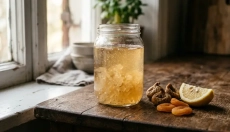
Mix the dried radish pieces with the paste and spring onions. It is best to mix by hand – with rubber gloves if you prefer, as gochugaru stains intensely – and massage the paste into the radish so that every piece is evenly coated. Transfer the mixture to a clean jar or ceramic container, press it down lightly to avoid air pockets, and cover the container with a lid, but not hermetically – fermentation produces carbon dioxide that needs to escape.
At room temperature of around 20 degrees Celsius, fermentation will be active for approximately one to two days. You will recognise it by gentle bubbling and a tangy aroma that begins to emanate from the container. After this time, move the jar to the refrigerator, where fermentation continues more slowly and the kkakdugi matures to its full flavour. It is usually at its best after five to seven days, but many people appreciate it after three weeks as well, when it is more pronounced and more sour.
As Korean chef and writer Maangchi, whose recipes and videos are considered the most authentic source of Korean home cooking available in English, once wrote: "Kimchi is not just food. It is a way of caring for your family and expressing love through patience and fermentation." This approach, where time and attention are invested in food, is something that modern fast cooking lacks – and that is precisely why fermentation is returning to the forefront of interest.
How to incorporate kkakdugi into everyday diet
Korean-style fermented radish is not just an exotic curiosity for the shelf – it is a fully-fledged part of a healthy diet that can be used in many ways. The most classic way of serving it is as a side dish with rice and soup, and in Korea, kkakdugi is traditionally served alongside seolleongtang, a thick soup made from beef bones. At home, however, it also works wonderfully as a side dish with grilled chicken, as part of a Buddhist bowl with vegetables and tofu, or simply as a fermented accompaniment to sandwiches and wraps.
An interesting option is also using the liquid that forms in the container during fermentation. This liquid, rich in probiotics and enzymes, can be added to salad dressings, marinades or simply drunk as a natural probiotic beverage – similar to how sauerkraut juice is consumed in the European tradition.
For those interested in a healthy lifestyle and sustainable eating, home fermentation has one more significant dimension: it is an ecologically conscious way of handling food. Radish is a vegetable with a relatively low carbon footprint, easily available from local sources, and fermentation extends its shelf life without the need for any energy-intensive preservation. A jar of kkakdugi in the refrigerator is therefore not only a healthy choice, but also a small gesture towards the planet.
If the urge to ferment has struck you for the first time and you do not know where to start with the right ingredients or equipment, websites focused on healthy living and an ecological household offer everything you need – from quality gochugaru to fermentation jars with a degassing valve and sea salt without added iodine. Good ingredients are the foundation of success, as fermentation does not forgive compromises in the quality of the input ingredients.
Is fermentation really as complicated as it might seem? The experience of thousands of home cooks around the world shows that it is not. All it takes is patience, clean utensils and a little courage to try something that our grandmothers considered completely natural. Fermentation is essentially a return to basics – to the understanding that food is not just fuel, but a living process that connects us to nature, tradition and our own bodies. And kkakdugi, this unassuming jar of crunchy radish cubes, is one of the most beautiful pieces of evidence of what happens when we let time and bacteria do their work.