
# How to Support the Female Body After Illness or Antibiotics
Every woman knows it – illness comes, antibiotics come, and then comes that strange feeling when you feel "healthy" yet at the same time it's as if your body is telling you it's far from being alright. Fatigue persists longer than it should. Digestion behaves unpredictably. Mood fluctuates. And on top of that come a whole range of small things that women often explain to themselves as normal consequences of illness – when in reality they are signals that the body needs active help with recovery.
Convalescence after illness or antibiotic treatment is not a matter of one day or one miracle supplement. It is a complex process that requires patience, proper nutrition, care for the gut microbiome, and respect for one's own rhythm. And because the female body has its specificities – hormonal cycles, susceptibility to vaginal imbalances after antibiotics, or a higher risk of iron-related fatigue – these topics deserve special attention.
Try our natural products
Why antibiotics affect us more than we think
Antibiotics are undoubtedly one of the greatest medical inventions of the 20th century. They save lives and treat infections that could otherwise have serious consequences. The problem, however, is that they do not work selectively – they destroy not only harmful bacteria, but also the beneficial ones that have been building their ecosystem in your body throughout your entire life. The result is a disrupted gut microbiome, technically known as dysbiosis.
The gut microbiome is not just about digestion. As highlighted by research published in the journal Nature, gut bacteria influence the immune system, the production of certain vitamins, nutrient absorption, and even mental health through the gut-brain axis. When this balance is disrupted, the body feels it on multiple fronts at once.
For women, the situation is particularly specific because antibiotics can significantly disrupt the vaginal microflora. The vagina is colonised primarily by bacteria of the Lactobacillus genus, which maintain an acidic pH and protect against the overgrowth of yeasts or other pathogens. After a course of antibiotics, many women therefore experience yeast infections or bacterial vaginosis – and this is by no means rare. It is estimated that up to a third of women notice some form of vaginal imbalance after antibiotic treatment.
Veronika, a thirty-three-year-old teacher from Brno, describes it this way: after every course of antibiotics for tonsillitis, she experienced an almost ritualistic battle with a yeast infection that lasted another two to three weeks. It was only when she began consciously working on restoring her microbiome – with probiotics, diet, and reducing sugar – that this pattern was broken. Her story is not exceptional, but rather the rule that is too rarely spoken about.
The gut microbiome as the foundation of recovery
Restoring the gut microbiome is the first and most important step in convalescence. It is not simply a matter of swallowing one yoghurt a day and considering the matter settled. Caring for gut bacteria is a long-term process that depends on what we feed our body, how we sleep, and how we manage stress.
Probiotics – that is, live bacteria in the form of dietary supplements or fermented foods – are perhaps the best-known tool in this context. Fermented foods such as kefir, sauerkraut, kimchi, miso, or kombucha contain natural cultures of beneficial bacteria along with a whole range of other nutrients. Regularly incorporating them into the diet after illness or antibiotic treatment can significantly accelerate the restoration of the microbiome.
Equally important, however, are prebiotics – that is, indigestible food components that serve as food for beneficial bacteria. They are found in garlic, onions, leeks, asparagus, bananas, oats, and Jerusalem artichokes. The combination of probiotics and prebiotics – the so-called synbiotic approach – is, according to recommendations from the World Gastroenterology Organisation, one of the most effective ways to support the restoration of intestinal microflora.
Alongside fermented foods, fibre plays a key role. A varied diet rich in vegetables, legumes, and wholegrains ensures that gut bacteria have sufficient nutrients for their recovery. Conversely, a diet full of processed foods, refined sugar, and alcohol literally sabotages the environment needed for microbiome restoration.
For women, it is also important to consider specific probiotics aimed at vaginal health. Research shows that strains such as Lactobacillus rhamnosus or Lactobacillus reuteri can help restore the natural vaginal microflora. These strains are found in some specialised probiotic supplements designed specifically for women's health.
Nutrition, immunity, and hormones: the triangle of female convalescence
Illness and antibiotic treatment are physically demanding for the body, even if we don't realise it. The immune system consumes enormous amounts of energy and nutrients – vitamin C, zinc, vitamin D, iron, and a whole range of antioxidants are depleted more quickly than usual during the fight against infection. That is why it is so important to pay attention to what we eat after illness.
Vitamin C is one of the best-known supporters of immunity, but few people know that antibiotics can reduce its absorption. Rich sources of vitamin C – citrus fruits, peppers, broccoli, or rosehips – should therefore be part of the daily diet during convalescence. The same applies to zinc, which is involved in tissue healing and the proper functioning of immune cells. It can be found in pumpkin seeds, legumes, nuts, and seafood.
Vitamin D is chronically underestimated in the Czech context, yet its deficiency directly weakens the immune response. A large proportion of the Czech population suffers from vitamin D deficiency, particularly during the winter months, and if you fall ill during this period, it is very likely that your reserves are even lower after the illness. Supplementing vitamin D – ideally after consulting a doctor and based on a blood test – can be one of the simplest steps towards faster recovery.
For women, iron is also a specific topic. The menstrual cycle causes regular iron losses, and if we add the physical stress of illness, post-convalescence fatigue can be significantly prolonged precisely due to iron deficiency. Foods rich in iron – red meat, lentils, spinach, or tofu – should have a firm place in the diet after illness. The absorption of plant-based iron is significantly improved when combined with vitamin C.
Hormones play a role in female convalescence that is often overlooked. Cortisol – the stress hormone – rises during illness, and if a woman does not get enough rest and sleep, it remains elevated even after recovery. Chronically elevated cortisol disrupts hormonal balance, weakens immunity, and slows the restoration of the gut microbiome. As integrative physician and women's health author Aviva Romm says: "The body heals in rest, not in motion." Adequate sleep and conscious slowing down are not luxuries, but medicine.
Adaptogens, herbs, and natural support
Alongside nutrition, there are a whole range of natural substances that can support recovery. Adaptogens – plants that help the body adapt to stress and restore balance – have attracted great interest in recent years, and for good reason. Ashwagandha, reishi, cordyceps, and rhodiola are among the best-researched adaptogens with documented effects on immunity and stress management.
Special mention deserves elderberry extract (Sambucus nigra), which has a long tradition in folk medicine and whose antiviral and immunomodulatory effects are being confirmed by a growing number of scientific studies. Similarly, echinacea can help shorten the duration of illness and support the immune system during convalescence.
Also relevant for women's health are herbs such as maca (for hormonal balance), vitex (for regulating the menstrual cycle, which can be disrupted by illness or stress), and St John's wort (for mood support). It is important to note, however, that some herbs can interact with medications – so it is always advisable to consult their use with a doctor or pharmacist.
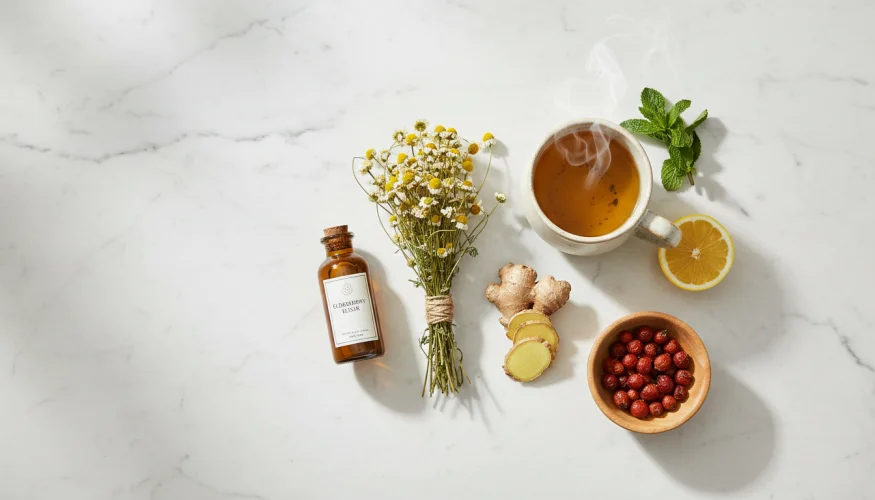
Hydration is another fundamental pillar that is easily underestimated during convalescence. The body loses fluids during illness, and even after symptoms have subsided, it needs sufficient water for proper kidney function, detoxification, and nutrient transport. Herbal teas – for example made from chamomile, ginger, or mint – can pleasantly enrich hydration while also bringing their own healing properties.
Movement, stress, and returning to rhythm
One of the biggest mistakes in convalescence is returning to a normal pace too quickly. Modern society puts too much pressure on productivity, and many people return to work or intensive exercise before their body is truly ready. The result is often prolonged fatigue, a weakened immune system, or even a relapse of illness.
Movement is important during convalescence, but it must be appropriate. Short walks in fresh air, light yoga, or stretching are an ideal starting point. Intense physical exertion should wait until the body has fully recovered – and that can take longer than it seems. As a general rule, for every day of fever, the body deserves at least one to two days of a calmer regime.
Stress is one of the greatest enemies of the immune system. Chronic stress increases the permeability of the intestinal wall, disrupts the microbiome, and weakens the body's ability to regenerate. Techniques such as meditation, deep breathing, time in nature, or simple self-care rituals – a warm bath, reading, time away from screens – are not mere passing trends. They are tools that have a direct impact on physiological processes in the body.
The female body is also closely connected to the hormonal cycle, and illness or stress can cause its disruption. A delayed period, changes in cycle length, or changes in the intensity of PMS symptoms after illness are not at all unusual. Tracking your own cycle – for example using apps or a traditional notebook – can help you better understand how your body is recovering and tailor your care accordingly.
Recovery after illness or antibiotic treatment is not a sprint, but a marathon. The body needs time, nutrients, rest, and a kind approach – and a woman who allows herself this care consciously and without guilt will not only recover more quickly, but will emerge from convalescence stronger than before. Because caring for one's own health is not selfishness – it is the foundation on which everything else rests.