

# How to Relieve Bloating During the Menstrual Cycle Without Medication Bloating during menstruatio

Every woman knows it – certain days of the month arrive, bringing with them the unpleasant feeling of a bloated belly, pressure in the lower abdomen, and trousers that suddenly seem not to fit anymore. Bloating associated with the menstrual cycle is one of the most widespread, yet least openly discussed women's health topics. Although it is a completely natural physiological phenomenon, it can significantly affect everyday wellbeing, self-confidence, and work performance. The good news is that there are numerous ways to alleviate these unpleasant symptoms – without immediately reaching for medication.
In order to effectively combat bloating, it is first important to understand why it occurs. The female hormonal cycle is governed by two main hormones – oestrogen and progesterone. Their levels change dynamically throughout the month, and these changes have a direct impact on the entire body, including the digestive system. Roughly one to two weeks before menstruation, progesterone levels rise and the body begins to retain more water and sodium. The result is a feeling of swelling, heaviness, and that typical bloated belly. With the onset of menstruation and the drop in progesterone, the situation generally improves – but not always quickly, and not always completely.
An additional factor, which is less commonly discussed, also comes into play: prostaglandins. These are hormone-like substances produced by the body in the uterus that cause it to contract during menstruation. However, these substances can also affect the intestines, slowing their motility or, conversely, causing diarrhoea and cramps. The result is a digestive system that simply does not function as smoothly as usual – which manifests precisely as bloating, flatulence, and general discomfort.
What we eat and drink plays a key role
Diet throughout the cycle has a fundamental influence on the degree of bloating. Many women notice that during the premenstrual phase they experience strong cravings for sweet, salty, or fatty foods. Unfortunately, these are precisely the foods that can significantly worsen bloating. Salt causes water retention, sugar promotes fermentation in the intestines, and fatty foods slow down digestion. It is something of a vicious cycle – the body craves exactly what is harmful to it.
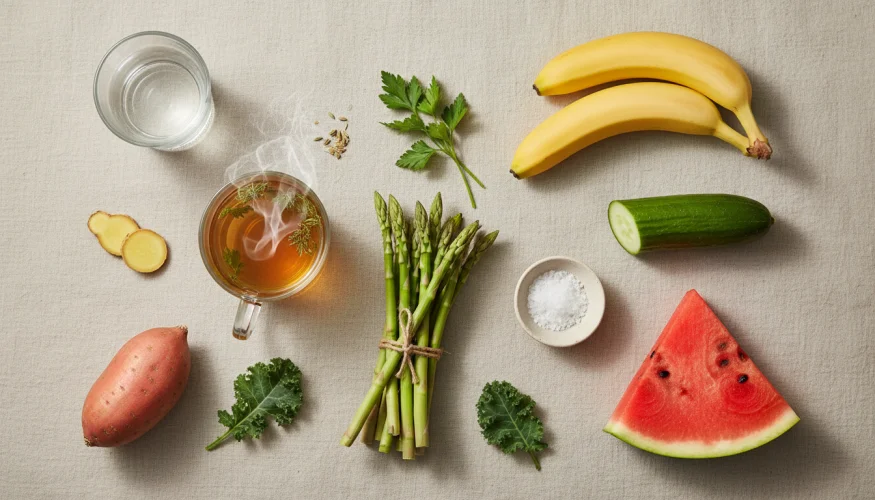
Research cited by Harvard Health Publishing, for example, shows that a diet rich in fibre, adequate fluid intake, and limiting processed foods can significantly contribute to reducing premenstrual bloating. Specifically, it is recommended to limit salt intake to less than 2,300 mg per day, particularly in the second half of the cycle, and to favour foods with a natural diuretic effect – such as asparagus, cucumber, watermelon, or parsley.
Fluid intake also plays a major role. Paradoxically, the less one drinks, the more the body retains water as a defence mechanism. Adequate hydration – ideally with plain water or herbal teas – helps the kidneys work more efficiently and flush excess water from the body. Fennel or ginger tea is particularly suitable, as both also have a beneficial effect on digestion and help to release intestinal gas.
Alcohol and caffeine, on the other hand, are poor companions during this period. Both substances can irritate the digestive tract, disrupt sleep patterns, and ultimately worsen both bloating and other premenstrual symptoms such as irritability or headaches. Replacing the morning coffee with a cup of green tea or an adaptogenic drink can be a surprisingly effective change.
An interesting real-life example: Martina, a thirty-four-year-old teacher from Brno, suffered from such severe bloating every month in the days before her period that she felt uncomfortable even sitting in the classroom. After consulting a nutritional adviser, she began to reduce her salt intake in the second half of her cycle and added more potassium-rich foods to her diet – bananas, sweet potatoes, and leafy greens. After just two months, she noticed a significant improvement. Her story is not an exception – small changes in diet can have a surprisingly large impact.
Exercise, stress, and other factors we often overlook
Physical activity is one of the most effective, yet most underestimated tools in the fight against bloating during the cycle. Many women tend to avoid exercise during the premenstrual phase because they feel tired or find even mild physical exertion difficult. Yet it is precisely regular movement that promotes intestinal peristalsis – the movement of the intestines – and helps to drain excess water from the tissues. It does not have to be intense training – a brisk walk, yoga, or gentle stretching are perfectly sufficient during this period, and highly beneficial.
Yoga deserves special mention. Certain poses, such as child's pose, cat pose, or inverted positions, directly massage the abdominal organs and help to release accumulated gas. There are numerous studies confirming the positive effect of yoga on premenstrual syndrome as a whole – and bloating is a natural part of it. The American Academy of Family Physicians, for example, states that regular exercise can reduce the intensity of PMS symptoms by up to a third.
Stress is another factor that undeniably plays a role in this picture. The gut–brain axis is today a well-documented reality in medicine – psychological stress directly affects the function of the digestive system. Cortisol, the primary stress hormone, can slow digestion, disrupt the gut microbiome, and contribute to water retention in the body. The premenstrual phase is itself a period when women are more sensitive and susceptible to stress. This combination therefore naturally worsens bloating.
Stress management techniques – whether meditation, breathing exercises, time in nature, or simply quality sleep – thus have a direct impact on physical symptoms such as bloating. As researcher and author of books on women's health Lara Briden puts it: "The menstrual cycle is a vital sign of health – and when it causes us pain or bloating, the body is telling us something." Listening to these signals and responding to them holistically, rather than merely suppressing symptoms, is an approach that yields long-term results.
The gut microbiome is a chapter in its own right. Scientific findings from recent years show that the composition of gut bacteria has a direct influence on how the body processes oestrogen – and therefore on hormonal balance as a whole. Probiotics and fermented foods, such as kefir, kimchi, or quality sauerkraut, can help maintain a healthy microbiome and thereby indirectly alleviate hormonally driven bloating. Choosing a quality probiotic supplement, ideally after consulting a doctor or pharmacist, may be a further useful step for some women.
Natural dietary supplements offer additional options. Magnesium is one of the best-researched substances in the context of PMS – it helps to relax smooth muscle, reduces water retention, and has a positive effect on mood and sleep quality. Vitamin B6, in turn, is involved in regulating prolactin levels and can help reduce breast tenderness and bloating. Both of these supplements are widely available and their use is generally safe, although it is always advisable to consult a specialist.
Chamomile or peppermint tea are further natural aids with antispasmodic effects – meaning they relax the smooth muscle cramps in the intestines. Drinking them regularly in the second half of the cycle can contribute to an overall calming of the digestive tract. Similarly beneficial are the enzymes found in pineapple or papaya, which support the breakdown of proteins and aid digestion.
The influence of sleep is also not to be underestimated. Chronic sleep deprivation raises cortisol levels, disrupts hormonal balance, and impairs digestive function. Quality sleep of seven to nine hours is particularly important during the premenstrual phase – and yet it is precisely then that many women struggle to get it due to restlessness or pain. Sleep can be supported by a warm bath before bed, limiting screen time in the evening, or using herbal preparations containing lemon balm or valerian root.
It is also important to mention when it is appropriate to seek medical help. If bloating is extremely intense, persists throughout the entire cycle, or is accompanied by severe pain, significant changes in bowel habits, or other concerning symptoms, it may be a sign of a more serious condition – such as endometriosis, irritable bowel syndrome, or other gynaecological or gastroenterological disorders. In such cases, consultation with a doctor is essential and should not be delayed.
For clarity, the most important steps that help reduce bloating during the cycle can be summarised as follows:
- Reduce salt and processed food intake in the second half of the cycle
- Stay well hydrated – ideally with water and herbal teas
- Incorporate regular, even gentle exercise, such as yoga or walking
- Manage stress using relaxation techniques
- Support the gut microbiome with probiotics and fermented foods
- Consider supplements such as magnesium or vitamin B6
- Prioritise quality and sufficient sleep
Bloating during the menstrual cycle is unpleasant, but in the vast majority of cases it is manageable. The key is not to look for a single miracle solution, but rather to understand one's own body and respond sensitively to its needs at different phases of the cycle. Every woman is different – what works for one may not work for another – and therefore the best approach is gradual experimentation and observing what brings relief. The menstrual cycle does not have to be a monthly battle; with a little understanding and care, it can become a predictable part of life that one can live with in harmony.