

# What Does Walking Barefoot at Home Do to Your Feet ## Positive Effects ### Strengthening Muscles
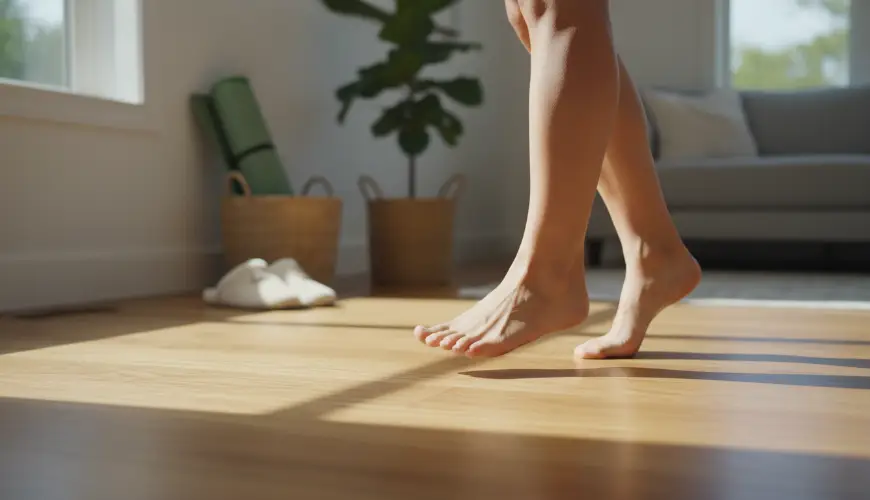
Walking around the house without shoes is an absolute given for most people. You come home, take off your shoes, and spend the rest of the day in socks or barefoot. Few people, however, think about what is actually happening to their feet in the process – or whether it is even a good or bad thing. The answer is not as straightforward as it might seem, and depends on many factors worth exploring.
The human foot is a remarkable structure. It consists of 26 bones, 33 joints, and more than a hundred muscles, tendons, and ligaments that work together to provide balance, shock absorption, and movement. According to the American Podiatric Medical Association, the average person walks a distance equivalent to several times around the Earth over a lifetime, yet devotes only a fraction of the care to their feet that they give to, say, their teeth or hair. Yet feet are the foundation of the entire musculoskeletal system, and their health affects not only walking, but also the condition of the knees, hips, and spine.
Try our natural products



What happens to your feet when you walk barefoot at home
When you move barefoot on home surfaces, the foot works differently than it does in a shoe. The small muscles of the sole, which are largely passive when wearing footwear, must suddenly actively respond to every irregularity in the floor, adapt to the surface, and maintain balance. This process may seem trivial at first glance, but from a biomechanical perspective it is a complex workout that, when practiced regularly, has a genuinely measurable effect.
Research published in the scientific journal Footwear Science showed that people who spend more time barefoot or in minimalist footwear have stronger foot muscles and better proprioception – that is, the ability to sense the position of their own body in space. Proprioception plays a key role in fall prevention, especially in older people. The foot functions as a kind of sensory organ: thousands of nerve endings in the sole constantly send the brain information about what surface we are standing on, how hard, slippery, or warm it is. If this sensitivity is diminished – for example, through long-term use of rigid footwear – balance and coordination deteriorate.
Walking barefoot at home also naturally changes the gait pattern. Without a cushioned sole, a person instinctively steps differently – instead of a heel strike, which is typical of shod walking, they transition to landing on the middle or front part of the foot. This shift reduces the impact transmitted to the knees and hips and can be beneficial for people who suffer from joint pain. It is no coincidence that many physiotherapists recommend barefoot walking as part of musculoskeletal rehabilitation.
Of course, it depends on what surface you are walking on. Hard tile or concrete flooring offers no cushioning, and feet can ache after standing on it for a long time. Carpet or wooden flooring is somewhat more forgiving. If you have cold floors at home, a good compromise may be wearing quality socks with anti-slip treatment or so-called barefoot slippers, which preserve the natural movement of the foot while protecting it from cold and hard surfaces.
When walking barefoot can be a problem
Although moving barefoot at home offers a range of benefits, it is not suitable for everyone or every situation. People with diabetes should be especially cautious – diabetic neuropathy reduces foot sensitivity, and even minor injuries, such as stepping on a sharp object or a scrape, can have serious consequences. The American Diabetes Association therefore recommends that people with diabetes wear closed footwear at home and check their feet regularly.
Similarly, people with flat feet or significant overpronation should take care. Walking barefoot without any arch support can lead to overloading of the plantar fascia – the strong connective tissue running along the bottom of the foot – and cause a painful condition called plantar fasciitis. Many people know this from experience: in the morning after getting up, they feel a sharp, stabbing pain in the heel that eases slightly after a few steps but returns after prolonged sitting or standing. If this happens to you, it is worth consulting a podiatrist or orthopaedic specialist who can assess whether barefoot movement is beneficial or harmful for you.
Another factor is the hygiene of the home environment. Although it may seem excessive, home floors are not sterile – fungi, bacteria, or allergens can survive on them. Walking barefoot in damp areas such as the bathroom increases the risk of nail fungus or so-called athlete's foot. Regular floor cleaning and maintaining foot hygiene are therefore basic conditions for safe barefoot movement indoors.
Consider Martina, a thirty-six-year-old teacher who started working from home and suddenly spent the whole day barefoot on cold kitchen tiles. After a few weeks, she began to feel pain in her heel and stiffness in her Achilles tendon. The physiotherapist she eventually visited explained that the transition from wearing shoes to going barefoot had been too rapid and without adequate strengthening of the foot muscles. He recommended exercises to strengthen the arch, temporarily wearing barefoot slippers, and gradually increasing the time spent barefoot. After two months, the pain was gone and Martina felt better than before.
This story illustrates an important principle: the transition to barefoot movement should be gradual. The body needs time for the muscles and tendons to adapt to new demands. A sudden change – for example, going straight from sports shoes with a thick sole to walking barefoot all day – can cause overloading and injury.
How to truly benefit your feet
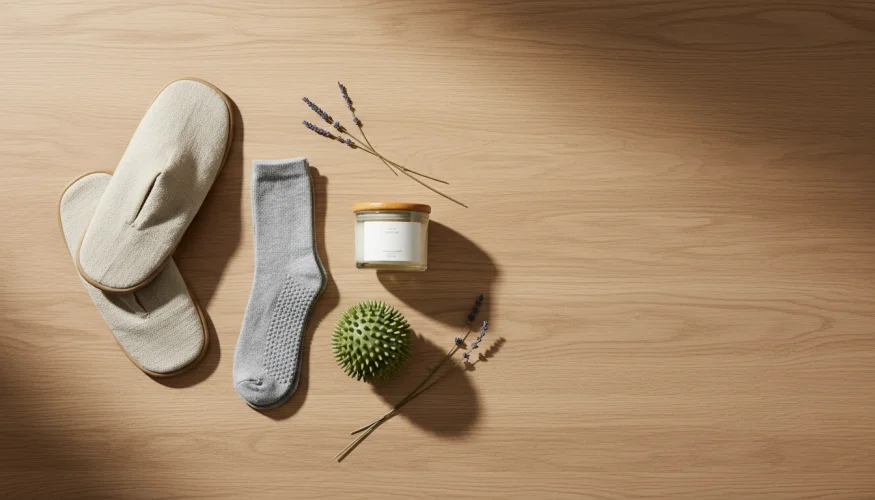
If you want to get the most out of walking barefoot at home without harming your feet, there are several tried-and-tested principles. The key is regular strengthening of the foot and calf muscles. Simple exercises such as picking up objects with your toes, rolling a tennis ball under the sole of your foot, or standing on one leg can significantly improve foot strength and stability. These exercises take only a few minutes a day and can be done anywhere at home.
Equally important is caring for the skin of your feet. When walking barefoot, the skin is exposed to greater friction and pressure, which can lead to the formation of calluses or cracked heels. Regularly moisturising your feet with a quality natural cream, such as one containing shea butter or hemp oil, helps keep the skin supple and healthy. Ferwer's range includes skincare products made from natural and ecological ingredients that are gentle both on your feet and on the environment.
As the world-renowned orthopaedic surgeon and advocate of natural walking Paul Brand once remarked: "Feet are the mirror of the whole body – if we neglect them, we will soon feel it from the knees to the back." These words ring especially true in an era when most of us spend a large part of the day sitting or on unsuitable surfaces.
If you are looking for a compromise between going fully barefoot and protecting your feet, it is worth considering so-called barefoot footwear – whether in the form of slippers, socks with silicone soles, or lightweight house shoes with a very thin and flexible sole. These products preserve the natural movement of the foot, allow the muscles to work as they should, while also protecting against cold, hard surfaces, and potential injuries. Unlike conventional house footwear with rigid soles or pronounced heels, they do not interfere with the natural biomechanics of walking.
Interestingly, walking barefoot also has a psychological dimension. The contact of a bare sole with the floor activates nerve endings in a way that many people describe as calming or grounding. A Japanese study from 2012, published in the Journal of Environmental and Public Health, examined so-called "earthing" – direct contact of the body with natural surfaces – and found that it may have a positive effect on reducing inflammation and improving sleep. Although this is an area that warrants further research, the experience of many people suggests that mindful barefoot movement can contribute to an overall sense of wellbeing.
Feet are the foundation of our musculoskeletal system and deserve conscious attention – just like any other part of the body. Walking barefoot at home can be an excellent way to strengthen them naturally, improve balance and proprioception, and return to a more natural way of moving. What matters, however, is approaching it with common sense, respecting the signals of your own body, and reaching for appropriate support when needed – whether in the form of targeted exercises, proper skin care, or quality barefoot footwear. Your feet will thank you for it – and you will likely feel the difference in your knees, hips, and back too.