

# How to Properly Wash Sports Clothing
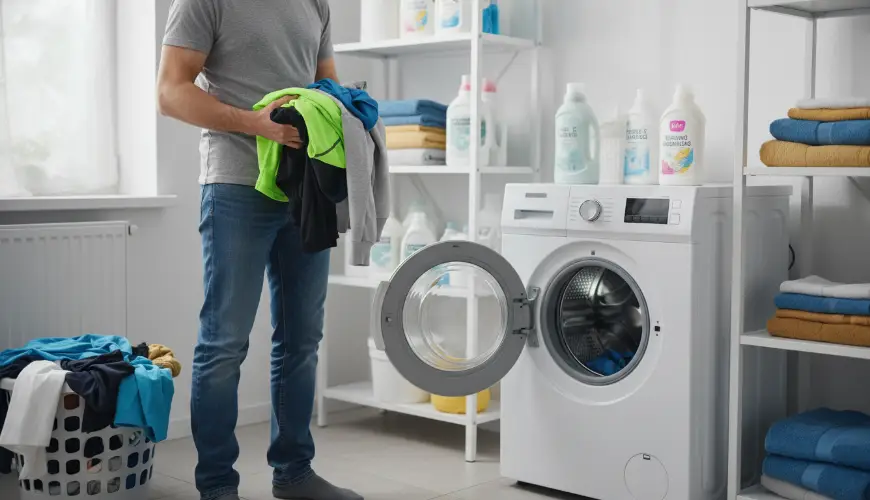
Most of us invest considerable money in sportswear – and then toss it into the washing machine without much thought alongside jeans and towels. The result? A performance shirt that stops wicking sweat after a few months, leggings that lose their elasticity, and a membrane jacket that suddenly lets water through. Yet all it takes is following a few simple principles, and sportswear will remain functional and visually attractive for much longer than one might expect. And that's exactly what this entire article is about – how to properly wash sportswear and how to care for performance materials so they deliver on their promises.
Modern performance textiles are a small technological marvel. Synthetic fibers like polyester or polyamide are engineered to rapidly transport moisture away from the skin to the outside, where it evaporates. Merino wool naturally regulates temperature and resists odor. Membranes like Gore-Tex or similar technologies combine waterproofing with breathability thanks to microscopic pores that allow water vapor to pass through but not water droplets. However, this entire sophisticated system only works if the material is properly cared for. Once the pores become clogged with fabric softener residue or unsuitable detergent, functionality drops dramatically. And that's precisely why caring for sports and performance clothing is fundamentally different from washing regular laundry.
Let's start with the most common mistake that practically everyone makes – putting off washing. After a workout, it's tempting to take off a sweaty shirt and throw it into the laundry basket with the plan to wash it "when the machine is full." But sweat contains salts and bacteria that immediately begin to multiply in a moist environment. They are responsible for that characteristic odor that won't disappear from some sports shirts even after washing. If you can't wash right away, you should at least hang the clothing on a hanger to dry out rather than rolling it up in a closed hamper. Ideally, sportswear should be washed as soon as possible after use, or at the very least rinsed in cold water.
Try our natural products
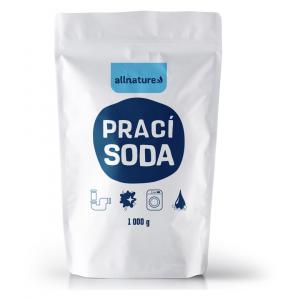
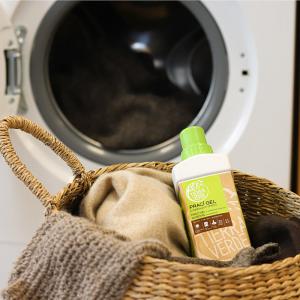
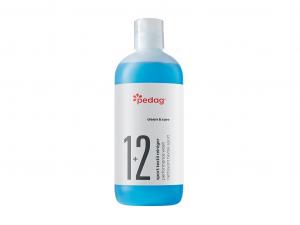

How to Properly Wash Sportswear Step by Step
The actual process of washing sportswear isn't complicated, but it requires a bit of attention to detail. The first and most important step is to always read the label. It sounds trivial, but most people don't do it – yet it's right on the label where the manufacturer states the maximum washing temperature, whether the material can handle a dryer, and other important instructions. As a general rule, most performance materials should be washed at 30 to 40 degrees Celsius. Higher temperatures can damage elastic fibers, compromise the membrane, or deform the garment's shape.
Before putting clothing in the washing machine, it's a good idea to turn it inside out. This protects the outer side of the material from mechanical damage while also better cleaning the inner side that comes into contact with skin and sweat. All zippers should be closed – an open zipper acts like a miniature saw during washing, which can scratch and tear surrounding material. Conversely, hook-and-loop fasteners (Velcro) should be secured, because their hook side catches fibers from other clothing.
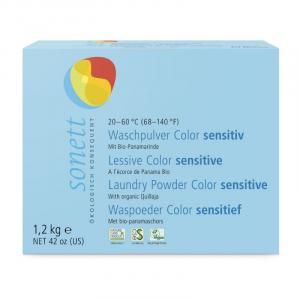
When it comes to detergent, there's one clear rule: less is more. Regular laundry detergents often contain fillers, enzymes, and optical brighteners that can clog the structure of performance materials. The best choice is a special detergent designed specifically for sports and performance clothing – there are plenty on the market, from brands like Nikwax, Granger's, or Fibertec. These products are formulated to effectively remove sweat and bacteria without damaging the material's technical properties. If a special detergent isn't available at the moment, a regular liquid laundry gel in minimal amounts will do – definitely better than powder, which dissolves less readily and can leave residue.
And then there's fabric softener – the greatest enemy of performance clothing. Fabric softener works by depositing a thin film of softening agent onto fibers, making them soft and fragrant. But it's precisely this film that clogs the micropores in performance materials, dramatically reducing their ability to wick moisture. Fabric softener should never be used on sportswear. The same applies to bleach, which can compromise the structure of elastic fibers and damage colors. As noted by the Czech Institute for Testing and Certification, unsuitable detergents are one of the most common causes of premature deterioration of functional textile properties.
The choice of wash cycle is another important factor. The ideal setting is a gentle or delicate program with lower spin speeds – a maximum of 600 to 800 RPM. High spin speeds may wring out clothes better, but the mechanical stress can damage elastic fibers and deform the garment's shape. For particularly sensitive materials, such as compression clothing or delicate merino, it's worth using a mesh laundry bag that protects the clothing from excessive stress inside the washing machine drum.
Fitness trainer Petra from Brno, who leads group classes at a fitness center, shared an interesting experience: "For years I washed my performance shirts on a regular cycle at sixty degrees with fabric softener because I wanted them to smell nice. After three months I was throwing them away because they stopped working and still smelled unpleasant even after washing. When I switched to washing at thirty degrees with a special detergent and no fabric softener, my shirts last over a year and still wick sweat like new." Her story perfectly illustrates what a fundamental difference proper care can make.
Drying, Waterproofing, and Long-Term Maintenance
The method of drying is just as important as the washing itself, yet it receives far less attention. The basic rule is: sportswear should be air-dried, not put in a dryer. High temperatures in a tumble dryer can irreversibly damage elastane, deform molded components, and compromise taped seams, which are used increasingly often in modern sportswear instead of stitched ones. Simply hang the clothing on a hanger or drying rack, ideally in a well-ventilated area out of direct sunlight – UV radiation degrades synthetic fibers over time and can cause colors to fade.
However, there is one important exception. For clothing with a membrane, such as waterproof jackets, it's actually beneficial to briefly tumble dry the garment on low heat or iron it through a cloth after washing. The heat reactivates the DWR treatment (Durable Water Repellent), which is the water-repellent coating on the material's surface. This treatment causes water to bead up and roll off the jacket rather than soaking into the outer layer. Over time, the DWR treatment wears off – you can tell when water on the jacket's surface stops forming beads and the material begins to "wet out," meaning it darkens from moisture. That's when it's time for reproofing.
Reproofing is done with special products that are either added to the final rinse cycle in the washing machine (wash-in waterproofing) or sprayed onto the jacket's surface (spray-on waterproofing). Brands like Nikwax or Granger's offer entire product lines designed for specific types of materials. It's important that the jacket is thoroughly washed before reproofing so the waterproofing agent can evenly coat the fiber surface. Applying waterproofing to dirty clothing is like painting on a dusty wall – it simply won't hold.
Caring for merino wool clothing is a chapter of its own, as it has been gaining increasing popularity among athletes and outdoor enthusiasts in recent years. Merino has natural antibacterial properties, so it doesn't need to be washed after every use – often it's enough to hang it in fresh air and let it air out. When washing is needed, it should be done at a maximum of 30 degrees using a detergent designed for wool. Merino should never be wrung out by twisting or dried in a dryer – simply gently press it in a towel and let it dry flat to prevent deformation.
It's also worth mentioning the care of sports underwear and socks. These items come into the most intense contact with skin and sweat, so they should be washed after every use. For socks with antibacterial treatment (such as those with silver fibers), the same rules apply as for other performance clothing – low temperature, no fabric softener, gentle cycle. Sports bras deserve special attention because they combine elastic materials with structural elements that provide support. They are best washed in a laundry bag on a delicate cycle.
As you can see, proper care of sportswear isn't rocket science, but it does require changing a few ingrained habits. Summarized into the most important points worth remembering:
- Wash as soon as possible after use, or at least let it dry out
- Turn inside out, close zippers, use a laundry bag
- Wash at 30–40 °C on a gentle cycle with low spin speed
- Use liquid detergent, ideally one specially designed for performance textiles
- Never use fabric softener or bleach
- Air-dry, not in a dryer (with the exception of reactivating waterproofing)
- Regularly reproof membranes
- Wash merino wool minimally and with a wool-specific detergent
As legendary mountaineer and outdoor clothing pioneer Yvon Chouinard, founder of Patagonia, once said: "The best thing you can do for the planet is to use your clothing as long as possible." And proper care is the simplest way to achieve that. Every piece of sportswear that lasts an extra season or two thanks to correct washing and maintenance is not only a saving for your wallet but also a small contribution to a more sustainable way of life.
Performance clothing today isn't the exclusive domain of professional athletes – it's worn by runners in the park, cyclists commuting to work, hikers on weekend trips, and people who simply appreciate the comfort of quality materials. That makes it all the more important to know how to care for it. Because investing in quality sportswear only makes sense when its owner knows how to properly maintain it. And as we've shown, that really isn't anything complicated – all it takes is a bit of attention and a willingness to let go of a few old habits.