

How to Wash a Down Jacket to Keep It Fluffy, Lightweight, and Warm After Washing
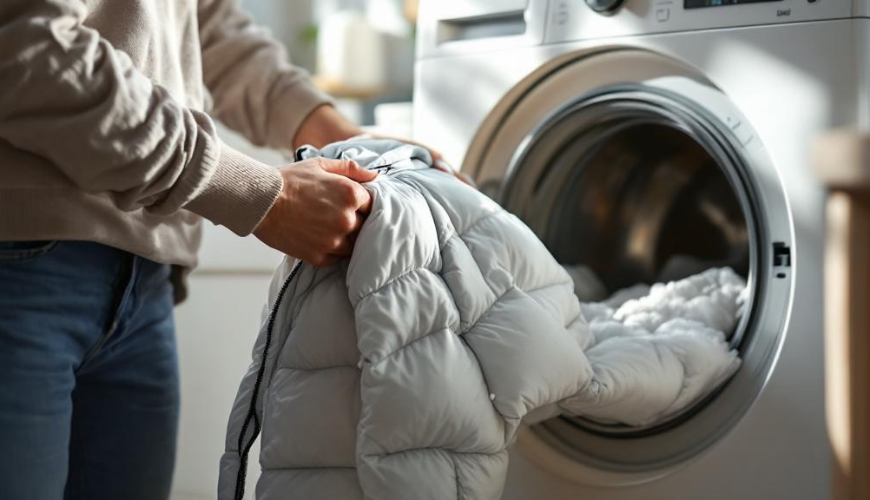
A down jacket is one of those items that quickly finds a place in your wardrobe: lightweight, packable, warm even when damp, and often a lifesaver during winter commutes, weekends in the mountains, or a simple city stroll. However, sooner or later, the time comes when it’s clear that it deserves a good cleaning. Many people hesitate at this point. Is it really possible to wash a down jacket at home? Won’t the down feathers get ruined, lose their loft, or start clumping? The good news is that how to wash a down jacket can be managed without an expensive dry cleaner — as long as you follow a few guidelines and understand what’s most important: gentle washing, proper spinning, and above all, thorough drying.
The down filling functions thanks to the air trapped between the fine down feathers. This air provides insulation. When the feathers get clogged with sweat, body oils, and dirt, they start losing their fluffiness and the jacket becomes less warm. Additionally, stains can appear on the sleeves, around the neck, or near pockets where dirt accumulates the most. Washing is not just about aesthetics — it’s also a way to restore the jacket’s performance. You just need to know how to properly wash and dry a down jacket so that the feathers “reopen” after washing and the jacket doesn’t feel as heavy as a wet pillow after the process.
Why a down jacket is washed differently than a regular winter jacket
Washing a down jacket isn’t just about removing surface dirt. Water and detergent penetrate all the way to the filling, where several unpleasant things can happen: standard detergents or gels often contain substances that leave a film on the feathers, which then prevents fluffiness. Too hot water or an aggressive cycle can disrupt the filling structure and seams. And if the jacket is not dried properly after washing, the feathers remain clumped together, moisture can linger inside, increasing the risk of odor or even mold.
Outdoor clothing manufacturers and expert organizations have long recommended sticking to a simple rule: less chemistry, more patience with drying. General recommendations for down products also emphasize the need for a gentle detergent and thorough drying (a useful summary is offered, for instance, by REI Co-op: https://www.rei.com/learn/expert-advice/down-jacket-care.html). Similarly, guides from brands focused on down equipment agree that the key is to “fluff” the feathers after washing and not let them stay damp for too long.
It’s also good to remember that a down jacket isn’t always just “down.” It often has an outer fabric with a water-repellent treatment (DWR), a membrane or coating, elastic cuffs, glued elements, or a sensitive zipper. This is why it pays to proceed cautiously: gentle cycle, low temperature, and minimal mechanical stress.
And one more small surprise: sometimes people think that a down jacket should be washed as little as possible. In reality, if the jacket is used regularly (city, public transport, trips), occasional gentle washing can extend its lifespan and functionality. Dirt and grease “seal” the feathers, making the jacket not only less warm but also less breathable.
How to wash a down jacket in a washing machine step by step (and without unnecessary stress)
When it comes to the question of how to wash a down jacket in a washing machine, preparation is the most important part. This is often where it’s decided whether the result will be a beautifully fluffy jacket or disappointment.
First, it’s worth checking the label and pockets. It sounds trivial, but small items in pockets can cause damage: a paper tissue can create a “snowstorm,” and coins or keys can damage the drum and fabric. Then it’s good to zip up zippers and Velcro (they can “scratch” delicate fabrics during washing), loosen drawstrings, and ideally turn the jacket inside out. If there’s a prominent stain (typically at the chin or on the sleeves), gentle pre-cleaning can help: a drop of gentle detergent and light rubbing with fingers or a soft cloth. A hard brush doesn’t belong here.
A big topic is the detergent. Special products designed for down are suitable because they’re designed to rinse out dirt from the filling without leaving residues that could clump it. Standard powder and fabric softener are the most common ways to lose the fluffiness of a jacket after washing. Fabric softener is not used — it can impair breathability and, in functional fabrics, water repellency.
Next comes the washing itself. Ideally, use a gentle cycle (delicate fabrics, sports clothing) at 30 °C, sometimes 40 °C according to the label, but in general, a lower temperature is safer. Spinning should be more on the lower to medium side; too high speeds can be unnecessarily harsh on the wet feathers and seams. Adding an extra rinse helps a lot, as detergent residues in the feathers are a common cause of clumping. And if the washing machine allows for easily setting more rinses, it’s an advantage for a down jacket.
In real life, it often happens that the jacket “smells like the city” after winter: street smoke, a bit of sweat, perhaps a trace of mulled wine from Christmas markets. You toss it in the washing machine, start a regular cycle, and hope for the best. But this is exactly where those stories of ruined down jackets come from. The typical difference between success and failure is a small detail: gentle detergent, extra rinsing, and especially drying. In other words, washing is only half the job.
When the jacket is done washing, it’s normal for it to appear “flat.” Wet feathers naturally clump together. Now it’s important to handle the jacket carefully — it’s heavier and the seams take a beating. The jacket shouldn’t be twisted, wrung, or draped over the edge of a basket so that it hangs all its weight in one spot. The best way is to support it with both hands and move it straight to drying.
If there’s one quote to capture a down jacket after washing, it’s simply: “Down is not saved by washing, but by drying.”
How to properly wash and dry a down jacket to keep it fluffy
Drying is the phase where it’s decided whether the jacket will be light and warm again. It’s also the part that requires the most patience. Down filling dries longer than regular synthetic insulation because it holds water inside and must gradually release it. If the jacket is only dried “on the surface,” damp clumps of feathers can remain inside, which may later start to smell.
The simplest and often best option is a dryer, if one is available and the label allows it. It’s dried on low heat and for a long time, even in several cycles. Usually, 2–3 clean tennis balls or special dryer balls are added to the jacket, which help mechanically break up clumps of feathers during rotation. It’s not a miracle on demand: the jacket might still be heavy and clumped after the first cycle, but gradually it will start to lift and regain its volume. Between cycles, it’s good to take the jacket out, shake it with your hands and gently “massage” areas where the feathers are clumped.
If there’s no dryer, it can be managed in the air, but it takes longer and requires ongoing care. The jacket should dry laid out or hung so it doesn’t pull on one seam. An ideally well-ventilated room, not a damp bathroom. Direct heating or a hot radiator isn’t the best idea, as high heat can damage the outer material or treatment. Much better is room temperature and regular shaking: several times a day, shake the jacket, rub individual compartments, and separate clumps of feathers. It’s a bit like taking care of a pillow that doesn’t want to cooperate — just with the difference that the jacket must be really dry through and through.
How do you know it’s done? It’s not enough for it to feel dry to the touch. A truly dry down jacket is light, fluffy, and there’s no cold moisture felt inside. If you’re unsure, it’s worth giving it more time. With a down jacket, rushing the drying process is the quickest way to problems.
On top of all this, there’s occasionally another question: what about water repellency? If the jacket was treated with DWR from the manufacturer, it can diminish over time and with washing. Some gentle products are designed specifically for down and also help maintain the functional properties of the outer fabric, while others renew DWR separately. This makes sense mainly for jackets that often face wet snow or drizzle. However, for regular city wear, cleanliness and loft are more important than perfect “beading” of water droplets.
In practice, people most often ask about three small things that can disrupt the entire process. First: why does the jacket smell after washing? Often because it wasn’t fully dried and moisture remained inside. Second: why are there lumps in it? Because the feathers clumped and haven’t been broken up yet — a dryer with balls or patient manual fluffing usually fixes it. Third: why does the jacket warm less than before? Sometimes it’s the dirt in the feathers (before washing), other times detergent residues (after washing). Extra rinsing is often a surprisingly effective solution.
To keep it all simple, just stick to a few principles that make sense even without chemical details:
- Use a gentle detergent for down and skip fabric softener, ideally add extra rinsing
- Wash on a gentle cycle at low temperature and handle the wet jacket gently
- Dry really thoroughly (preferably in a dryer on low heat with balls), regularly fluff
It might sound like a lot of steps, but in the end, it’s about one habit: don’t wash a down jacket “like everything else.” The reward is a jacket that behaves almost like new after washing — it lifts again, gains volume, and will warm you as it should.
And what if, despite all the care, something goes wrong? Sometimes it’s enough to briefly rinse the jacket again without detergent (just water, gentle cycle) and then thoroughly dry it again. The problem is often detergent residues. However, if the outer fabric is torn or feathers are massively escaping, it’s better to address the repair sooner rather than stressing the jacket further in the drum.
A down jacket is one of those pieces that are worth maintaining with respect for the material. Once you know how to wash a down jacket, and especially how to properly wash and dry a down jacket, it’s not alchemy — just a calm, gentle process. Next time it comes to how to wash a down jacket in the washing machine, it can be a rather satisfying home ritual: a few simple decisions, a bit of patience, and a jacket ready for another season, as if it just came down from the mountain ridge back to the city.