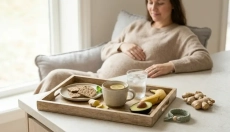

Exercising during menstruation is more beneficial than passive rest
Every month, the female body undergoes significant hormonal changes that affect not only mood and energy, but also how we feel during physical activity. The question of whether to exercise during menstruation, or whether to stay home with a hot water bottle and a cup of tea, has no single universal answer. And yet, it is surrounded by many myths, unnecessary fears, and misunderstandings. The truth is that exercise during menstruation can be not only safe, but under the right conditions also beneficial – the key, however, is learning to truly listen to your own body.
Just a few decades ago, women were commonly advised to avoid all physical activity during menstruation. Today we know that this approach was overly cautious and in many ways counterproductive. Research shows that moderate exercise can help relieve cramps, improve mood, and reduce feelings of fatigue. According to the American College of Obstetricians and Gynecologists, menstruation is not a reason to interrupt physical activity – if a woman feels well, she can continue her training routine without concern.
Try our natural products

How the hormonal cycle affects performance and energy
To understand what happens to the body during menstruation, it is helpful to look at the entire cycle in a broader context. The female menstrual cycle lasts an average of 28 days and is divided into several phases, each of which brings a different hormonal environment. In the first phase of the cycle – that is, during menstruation itself – levels of both estrogen and progesterone are at their lowest point. The body is shedding the uterine lining, which may be accompanied by lower abdominal cramps, back pain, a feeling of heaviness, or pronounced fatigue.
It is precisely these symptoms that lead many women to believe that exercise is inappropriate at this time. Yet the scientific perspective is different. Physical activity stimulates the release of endorphins – natural substances with analgesic effects that help reduce pain and improve psychological well-being. In other words, moderate movement can be more effective than passive rest, even though it may not seem that way at first glance.
Of course, intensity matters. The body during menstruation functions differently than during the follicular phase, when estrogen levels rise and women typically experience an increase in energy, strength, and motivation. This is when performance tends to be at its best and the body can handle more demanding training. Conversely, in the luteal phase – the week before menstruation – the body may be more sensitive to fatigue and overexertion, so it is natural for performance to decline slightly. These rhythms are not a weakness, but a part of natural physiology.
Movement that helps and movement that may cause harm
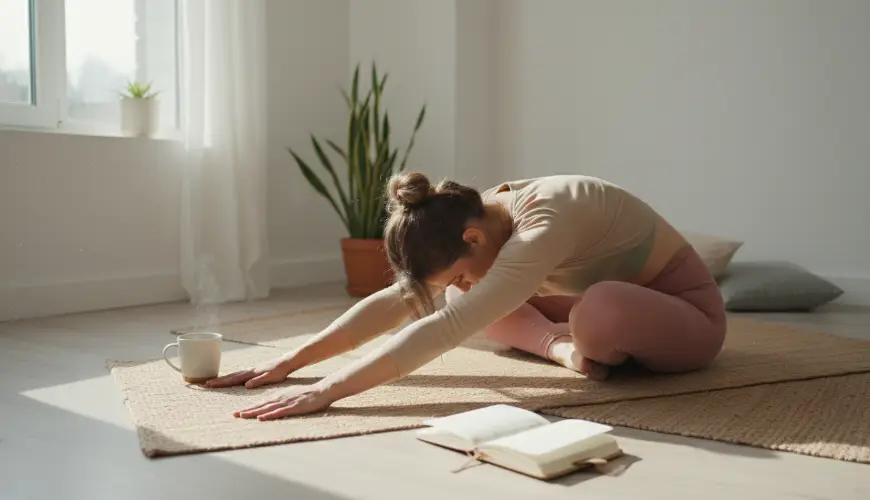
Gentle yoga, walks in nature, light stretching, or swimming are among the activities that are generally very well tolerated during menstruation. Yoga in particular has earned a firm place in women's healthcare in recent years. Poses focused on releasing the lumbar spine and pelvic floor – such as Child's Pose, Pigeon Pose, or gentle twists – can significantly relieve cramps and support overall relaxation. Regular yoga practice has been shown to reduce the intensity of menstrual pain, as demonstrated by a study published in the Journal of Alternative and Complementary Medicine, for example.
On the other hand, there are activities that warrant caution. Very intense strength training, high-performance interval training, or competitive exertion can unnecessarily strain the body during menstruation. This is not to say that these activities are strictly forbidden – professional female athletes compete during menstruation without health risks – but the average woman whose body is not adapted to extreme exertion may experience worsening symptoms, greater fatigue, or a longer recovery period. Every body is different, and therefore it is impossible to simply say: "this is allowed and this is not."
Also interesting is the question of inverted positions, in which the head is lower than the pelvis – such as handstands or inverted yoga poses. In traditional systems such as Ayurveda, these positions are avoided during menstruation because they are believed to disrupt the natural flow of energy. Modern medicine has not demonstrated any direct physiological risk from these positions, but many women report feeling uncomfortable in such poses. And that in itself is sufficient reason for caution.
How to truly listen to your body
"Your body is the best guide you will ever have – learn to listen to it," says approximately every other women's health expert, and although this sounds like a cliché, behind this statement lies a very specific practice. Listening to your body does not simply mean resting whenever you feel tired – it means distinguishing between the different types of signals the body sends.
The fatigue that comes with menstruation is different from the fatigue that follows an intense workout. It is more deeply rooted, has a hormonal basis, and will not be resolved by having an espresso and heading to the gym. On the other hand, if it is just mild drowsiness or slightly lower energy, light movement may be exactly what the body needs. The key is the ability to distinguish between a signal to rest and a feeling of discomfort that movement can overcome.
A practical tool that has been gaining increasing popularity in recent years is so-called cycle syncing – that is, adapting physical activity to the phases of the menstrual cycle. This approach, popularized by American nutritional consultant Alisa Vitti in her book WomanCode, is based on the premise that women are not hormonally stable throughout the month in the way that men are, and therefore their training plan should not be the same every day. In practice, this means choosing calmer activities during menstruation, gradually increasing intensity during the follicular phase, allowing for more demanding workouts during the ovulatory phase, and slowing down again during the luteal phase.
A curious reader might ask: what if I simply don't have the time or inclination to track my cycle in such detail? The answer is simple – it is enough to be present. To spend a moment each morning noticing how the body feels. To ask yourself what energy you have, what feels good, and what feels like unnecessary strain. This daily practice of mindful self-awareness is the foundation upon which a healthy and sustainable relationship with movement can be built.
A concrete example may be illustrative. Imagine a woman who goes to the gym three times a week and always felt guilty when she skipped a workout during her period. After she began tracking her cycle and allowed herself to replace strength training with a walk or gentle yoga during the first two days of menstruation, she found that her cramps were less intense, her mood was better, and she returned to the gym the following week with greater enthusiasm and energy. It was not about stopping exercise – it was about exercising more intelligently.
Nutrition and hydration also play a role. During menstruation, the body loses iron, so it is important to replenish it through food – legumes, dark leafy greens, seeds, or quality animal sources can help prevent fatigue caused by iron deficiency. Adequate intake of magnesium, naturally found in nuts, dark chocolate, or whole grains, for example, can reduce muscle cramps. Hydration is particularly important during menstruation, as the body is more prone to water retention and bloating, while paradoxically, adequate fluid intake helps alleviate these very complaints.
The psychological dimension of the matter is also significant. Menstruation is still associated in many cultures with taboo, shame, or the sense that it represents a "weakness." This perspective is not only outdated but also harmful. Accepting menstruation as a natural part of the female body – including its limitations and its rhythms – is a fundamental prerequisite for a woman to approach her movement with kindness rather than guilt. Movement should never be a punishment or an obligation – it should be a way of caring for oneself.
There is one more thing that is rarely discussed: menstrual pain that is so severe that it makes any movement impossible is not normal and should not be ignored. If a woman regularly experiences very intense cramps, heavy bleeding, or other pronounced symptoms, it is appropriate to visit a gynecologist and rule out conditions such as endometriosis or fibroids, which may be the underlying cause. Movement can alleviate mild menstrual pain, but it is not a remedy for more serious gynecological conditions.
The relationship with one's own body is a lifelong project, and menstruation is one of its chapters – not an obstacle, but a guide. Learning to work with it, to respect its rhythm, and to adapt physical activity accordingly is one of the most compassionate gifts a woman can give herself. And it is precisely in this mindful approach – rather than in the blind adherence to training plans regardless of what the body is saying – that true strength lies.