

# Comparing Cloth and Disposable Diapers
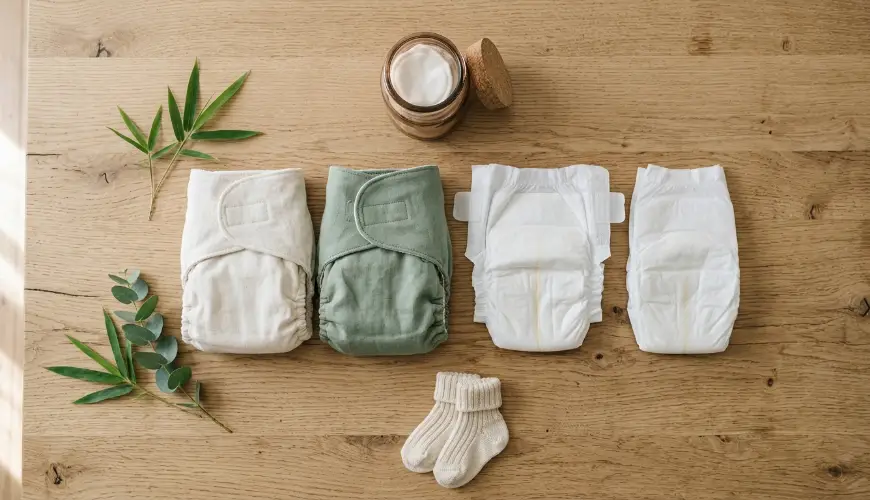
Every parent knows it – the first days with a newborn are a mix of happiness, exhaustion, and a surprisingly large number of dirty nappies. It's during those first weeks that most families realise just how significant a decision the choice of nappy type actually is. It's not just about the baby's comfort, but also the family budget and environmental impact. Cloth nappies or disposables? This question has divided parents into two camps for decades, and the answer is far from as simple as it might seem.
Just a few generations ago, the choice was clear – cloth nappies were the only option. Then disposable nappies arrived and revolutionised the care of babies. Today the pendulum is swinging back again, driven largely by growing interest in ecology and sustainable living. Young parents are increasingly reconsidering established habits and asking whether the convenience of disposable nappies is truly worth the price they pay – both to their wallets and to the planet.
Try our natural products
What the numbers say: comparing the costs of cloth and disposable nappies
Let's get straight to the point that interests almost every parent – how much does the whole thing actually cost? The average child uses approximately 4,000 to 6,000 nappies from birth until they are out of nappies. If you opt for disposables, bear in mind that the price of a single nappy ranges from roughly 4 to 10 crowns depending on the brand and size. The total cost of disposable nappies over the entire nappy-wearing period can therefore easily reach 30,000 to 50,000 crowns, not counting wet wipes, changing mats, or other accessories.
Cloth nappies look at first glance like a significantly more expensive investment – a quality set of modern cloth nappies costs roughly 5,000 to 15,000 crowns. To this you need to add the cost of washing, meaning water, electricity and detergent, which adds approximately another 3,000 to 6,000 crowns over the entire nappy period. Even so, the total cost of cloth nappies remains significantly lower than disposables. And if you use the nappies for a second or third child, the savings multiply further – this is an argument that comes up very frequently in discussions about cloth nappies, and entirely justifiably so.
Take a specific example: a family from Brno who decided to switch to cloth nappies after the first month with their newborn invested approximately 8,000 crowns in a starter set. By the time their son moved to a potty, they had saved an estimated 25,000 crowns compared to disposable alternatives. They then invested this money in more eco-friendly household equipment. Such stories are not exceptional – they demonstrate that the initial investment in cloth nappies truly pays off.
It is fair to mention, however, that cost comparisons are not always so clear-cut. It depends on which cloth nappies you choose, how often you wash, what your electricity and water tariffs are, and of course whether you use a tumble dryer. Some parents purchase premium cloth nappies with bamboo inserts or all-in-one systems, which are more convenient but also more expensive. Even so, in most scenarios cloth nappies work out more economical.
The ecological dimension: what happens to nappies after use
Economics are important, but for many families today the question of ecology is equally significant. And here the numbers are truly telling. A disposable nappy takes approximately 500 years to decompose in the ground. According to estimates from environmental organisations, hundreds of millions of used disposable nappies end up in landfill in the Czech Republic alone every year. Globally, disposable nappies account for approximately 2 to 3 percent of all municipal waste – and that is a figure that should leave no one indifferent.
Disposable nappies are made from a combination of plastics, superabsorbent polymers, and cellulose. Their production is energy-intensive and consumes significant amounts of water and raw materials. Studies by the European Environment Agency repeatedly highlight that plastic waste from hygiene products represents one of the greatest environmental problems of our time.
Cloth nappies are the clear winner from this perspective, but here too the situation is not without caveats. Washing cloth nappies consumes water and energy, and when conventional detergents are used, it places a burden on waterways through chemical substances. The ecological balance of cloth nappies therefore improves significantly if you wash them at lower temperatures, use eco-friendly detergents, and air-dry them rather than using a tumble dryer. Under these conditions, the carbon footprint of cloth nappies is demonstrably lower than that of disposable alternatives – even accounting for the fact that producing the cloth nappies themselves also has a cost.
An interesting perspective is also offered by the material composition of modern cloth nappies. The highest quality ones are made from organic cotton, bamboo, or hemp – materials that are biodegradable and whose cultivation, when managed correctly, can be gentler on the soil than conventional cotton farming. Bamboo is particularly interesting – it grows quickly, requires no pesticides, and has naturally antibacterial properties, which is a major advantage for use in nappies.
As Swedish activist and founder of the Fridays for Future movement Greta Thunberg said: "No individual can save the planet alone, but every decision counts." Choosing cloth nappies is precisely such a decision – seemingly small, but enormous when combined with millions of other families.
Comfort and practicality in everyday life
Theory is one thing, everyday practice is another. And it is comfort that is most frequently cited as an argument in favour of disposable nappies. It is true that disposable nappies are convenient – you change them, throw them away, and move on. No washing, no folding, no thinking about how many clean nappies are left. When travelling, on day trips, or staying overnight at grandparents', disposable nappies remain the first choice for many families.
Modern cloth nappies are, however, far more practical than most people think. All-in-one or pocket diaper systems fasten with poppers or velcro, and changing with them takes a comparable amount of time to disposables. The inserts are washed separately and the nappy shell can be used multiple times if it is not soiled. Many parents who were initially apprehensive about switching to cloth nappies admit that after the first two weeks the whole system felt completely natural to them.
That said, it is fair to say that cloth nappies require a certain amount of organisation. You need to have a sufficient supply of clean nappies, wash regularly, and allow time for drying. For parents at home with access to a washing machine and outdoor drying, this is usually not a problem. For families in small flats without a drying rack or with a packed work schedule, the logistics can be more demanding.
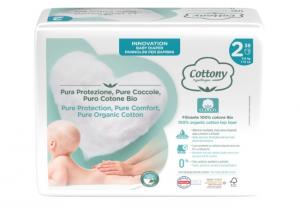
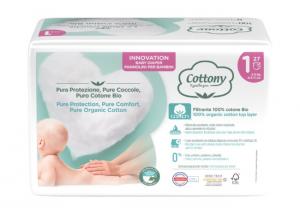
An interesting alternative for those seeking a compromise is biodegradable disposable nappies. These are made from natural materials such as bamboo or cornstarch, and their ecological footprint is significantly lower than that of conventional disposable nappies. They are not as cheap as standard disposable nappies, but for families who cannot or do not wish to switch to cloth nappies, they represent a meaningful compromise. On eco-focused e-shops such as Ferwer, these products can easily be found alongside other accessories for sustainable baby care.
Another practical aspect that parents consider is their child's skin reaction. Some paediatricians point out that disposable nappies contain various chemical additives – fragrances, superabsorbent polymers, or bleaching agents – which can cause irritation or allergic reactions in sensitive children. Cloth nappies made from natural materials are gentler in this regard, although here too it depends on which detergent you use and whether you rinse the nappies thoroughly. Paediatricians generally recommend monitoring the individual child's reaction and adjusting the choice accordingly – every baby is different.
Ultimately, the choice between cloth and disposable nappies is not about what is objectively better. It is a decision that every family makes based on their values, lifestyle, financial situation, and practical circumstances. What the numbers clearly show, however, is that cloth nappies are more economical and more environmentally friendly – and thanks to modern design, they are also far more convenient today than they used to be. For parents who want to take a step towards a more sustainable life, cloth nappies are a natural starting point. And even those who stick with disposables can reduce their environmental impact by choosing more eco-friendly alternatives or at least combining them with cloth nappies in situations where this is possible. Small steps count – and in the case of nappies, those steps literally number in the thousands.