

The first spring herbs will teach you how to cook seasonally without wasting
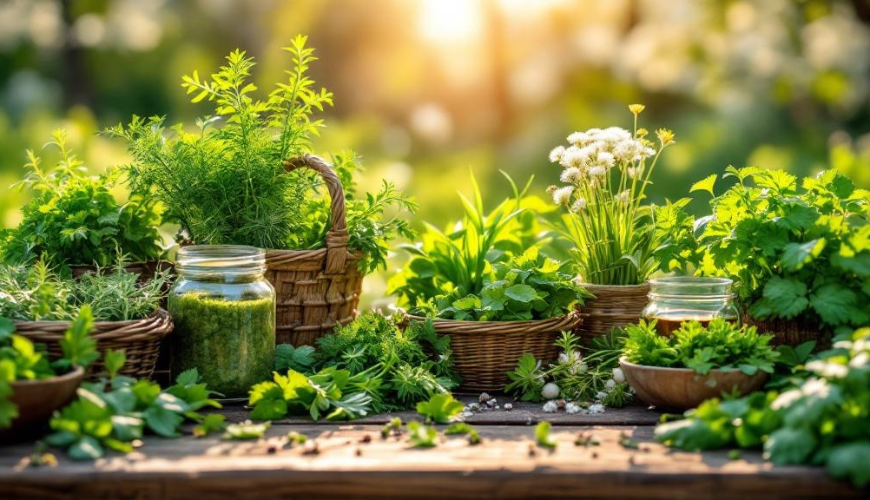
Spring has a unique ability to lift the mood even on an ordinary workday. A short walk around gardens, the first warmer sun, and especially the scent of green sprouts pushing through with unexpected energy after winter is all it takes. The first spring herbs are among the most rewarding gifts of the season: they are aromatic, often surprisingly mild, yet full of flavor. The question is: what are the first spring herbs and how to use them so they don't end up just as a decoration on the plate?
Besides the kitchen, spring herbs have their place in home body care and small daily rituals – from herbal tea to quick pasta pesto. And as sustainability is increasingly discussed today, it's worth remembering that herbs are a great way to eat seasonally, reduce waste, and bring naturalness back into cooking. Anyone who has ever brought home a bunch of herbs only to find it wilted in the fridge two days later knows it takes a few simple tricks – and also good ideas on how and what to use spring herbs for in practice.
Try our natural products






What are the first spring herbs and when to expect them
The "first" herbs are usually considered those that appear soon after warming – in gardens, on balconies, at markets, and in the wild. Some are perennial and just wake up after winter, others grow quickly from seeds. In Czech conditions, it often starts as early as March and April, depending on the weather and altitude.
Among the most typical first spring herbs are:
Chives – one of the most grateful perennials. As soon as it warms up, it sprouts even on older clumps. It has a mild onion flavor but not as sharp as onions, making it suitable for children.
Parsley (leaf) – spring parsley is more tender and aromatic. It works great in soups, spreads, and salads.
Dill – if the early sowing is successful, dill is an immediately recognizable "spring signature" in the kitchen. It’s not only suitable for traditional sauces but also modern dips.
Wild garlic – a symbol of spring. It grows in deciduous forests and its season is short, making it all the more enticing. It has a wide range of culinary uses, but it is important to be able to identify it safely.
Mint – perennial, often waking up early and sometimes surprising even when least expected. Spring mint is gentle and fresh.
Lovage – sometimes appears really early and has a strong flavor. Just a small amount can transform a soup completely.
Sorrel – tangy, refreshing, great for spring soups or salads.
Daisy and dandelion (young leaves) – classics in the edible "wild" repertoire. Daisies are suitable for decoration and salads, young dandelion leaves pleasantly bitter and enhance flavor.
With herbs from the wild, it's worth remembering the simple rule: gather only where the environment is clean and only what is safely recognized. With wild garlic, this is crucial – it can be confused with lily of the valley. If someone is unsure, it's better to opt for herbs from the market or verified cultivation. Practical information on safe foraging and nature protection can be found on the Agency for Nature Conservation and Landscape Protection of the Czech Republic website, a useful guide for a responsible approach.
How and what to use spring herbs for, so they don't become boring
Spring herbs are most interesting when they are young. They have a gentler structure, fewer fibrous parts, and often a rounder flavor. That's why it's worth handling them gently: avoid overheating them, don't cook unnecessarily long, and add them towards the end.
In the kitchen, one can follow a simple logic. Herbs with a strong flavor (lovage, wild garlic, mint) should be used sparingly, while mild herbs (chives, parsley) can handle larger quantities. And then there's the magic of combining: chives with cottage cheese, dill with lemon, parsley with garlic, mint with peas. Once you start playing with it, you quickly realize herbs aren't just "something green on top" but a full-fledged ingredient.
In everyday life, it often looks like buying a bunch of herbs "for one recipe" – and the rest waits in the fridge for its fate. Yet, a small change in habit is all it takes. A typical example: on Tuesday, make a spread with chives, on Wednesday, chop the remaining chives into butter and freeze in a small container, on Thursday, add the rest of the parsley to a quick vegetable soup, and on Friday, make water with lemon from the last mint leaves to take to work. Suddenly, a single purchase results in several small uses and nothing ends up in the trash.
And one more thing: spring herbs wonderfully support seasonal cooking. When cooking lighter in spring – more vegetables, legumes, grains, fewer heavy sauces – herbs naturally complement the flavor where one would otherwise reach for more salt. It's not a strict nutritional trick, more of a practical observation: when food smells and tastes thanks to herbs, it's easier to season it more sparingly.
"Spring is recognized by the fact that even ordinary food begins to taste like an idea." This sentence may not appear in cookbooks, but it perfectly captures what herbs do: they make simplicity a virtue.
How to store herbs so they last
Spring herbs are delicate and wilt quickly, especially in overheated apartments. A few simple procedures help: herbs like parsley, dill, or chives often keep better "in a vase" – that is, in a glass with a bit of water, loosely covered with a bag, and stored in the fridge. In contrast, mint or lemon balm sometimes last well at room temperature, provided there's no direct sun and the air isn't too dry. And when it's clear they won't be used in time, it's practical to chop herbs into ice cube trays with olive oil – creating small portions for use in pans and soups.
Tips and recipes: spring herbs in the spotlight (without complexities)
Spring cooking should be brisk, not exhausting. Therefore, it's worth having a few recipes on hand that work like building blocks: they can be varied based on what's growing, what's at home, and what you're in the mood for. The following tips and recipes rely on simple ingredients, but it's the herbs that give them character.
Herb butter for everything (and it really lasts)
Herb butter is a classic that never gets old. All it takes is quality butter (or a plant-based alternative), a handful of chopped chives and parsley, a pinch of salt, a bit of lemon zest, and to taste, a touch of garlic or a few leaves of wild garlic. The result is an aromatic spreadable rescue that's suitable for bread, roasted vegetables, potatoes, and quick toast.
The trick is in portioning: the finished butter can be wrapped in baking paper like a roll and stored in the freezer. Then just slice a circle as needed. It's a simple way to use herbs that would otherwise wilt.
Spring "green pesto" without rules
Pesto is often associated with basil, but spring has its own version. The base is a handful of green herbs (parsley, chives, wild garlic, even a bit of mint), olive oil, a pinch of salt, something for "body" (nuts, seeds, Parmesan, or nutritional yeast), and a drop of lemon.
The result? A sauce that enhances pasta, couscous, and roasted vegetables. It works great as a sandwich spread or a dip for carrots and kohlrabi. And if the pesto is too "green" or strong, it can be softened with plain yogurt.
For those mindful of ingredient origins, seeds (sunflower, pumpkin) can be used instead of pricier nuts – the taste remains excellent and often more local.
Cottage cheese spread with chives and dill (quick dinner)
Cottage cheese, plain yogurt or a plant-based alternative, salt, pepper, lemon juice, and a large handful of chopped chives. To this, add a few sprigs of dill, if available. The spread is ready in minutes and tastes fresh even on plain bread. You can add radish, grated cucumber, or a teaspoon of mustard.
This is exactly the type of meal that suits the spring regime: light but filling, quick, and without unnecessary pre-made products.
Potatoes with herbs as a main dish, not a side
New potatoes (or simply potatoes boiled in their skins) can be turned into a full meal in spring. Just drizzle them with olive oil, add salt, pepper, and a generous amount of chopped herbs: chives, parsley, a bit of lovage. Accompany with a leaf salad (perhaps with a few dandelion leaves if you like) and a simple lemon and oil dressing.
At first glance, nothing groundbreaking, but this is where you see what it means to use spring herbs without complicated cooking: herbs transform ordinary potatoes into a meal even those who usually don't care for "green stuff" look forward to.
Herbal tea and flavored water: spring even in the drinking regime
Herbs aren't just about food. Mint, lemon balm, or even a few parsley leaves can be used in flavored water with lemon. It's not a miraculous detox, more of a pleasant way to drink more fluids when plain water is unappealing.
For herbal teas, a simple rule applies: fresh herbs are usually steeped for a shorter time to avoid bitterness. And if foraging outside, it's good to be sure of what exactly is being picked. For a basic orientation in herbs and their traditional uses, it's worth looking into the information long summarized by the National Health Information Portal (especially for general safety principles and the context of a healthy lifestyle).
The only list that won't get lost in the kitchen: 7 quick ideas
- Chives in scrambled eggs, omelets, or on avocado toast
- Parsley in vegetable soup at the end, to keep it fragrant
- Dill in yogurt dip for roasted sweet potatoes or cauliflower
- Wild garlic in pesto, risotto, or chopped over potatoes
- Mint in a salad with peas and lemon or in water with lime
- Lovage in small amounts in broth or legume soup
- Sorrel in spring soup or salad for a tangy accent
These are simple combinations, but that's precisely why they're useful: when you're tired, you don't want to study recipes – you want a quick idea that works.
Spring herbs have a lightness that translates well into the home. In the kitchen, they help to cook seasonally with fewer unnecessary seasonings, and in a regular week, they save dinners when there's no time or energy for complex planning. And perhaps the nicest thing about them is that you don't need great know-how: just have them on hand, don't be afraid to use them in larger quantities, and give them a chance even where you wouldn't have thought before. Isn't that the most pleasant spring habit – letting a bit of green courage into the kitchen and allowing it to do its magic?