

# How eco-friendly car washing saves water and money
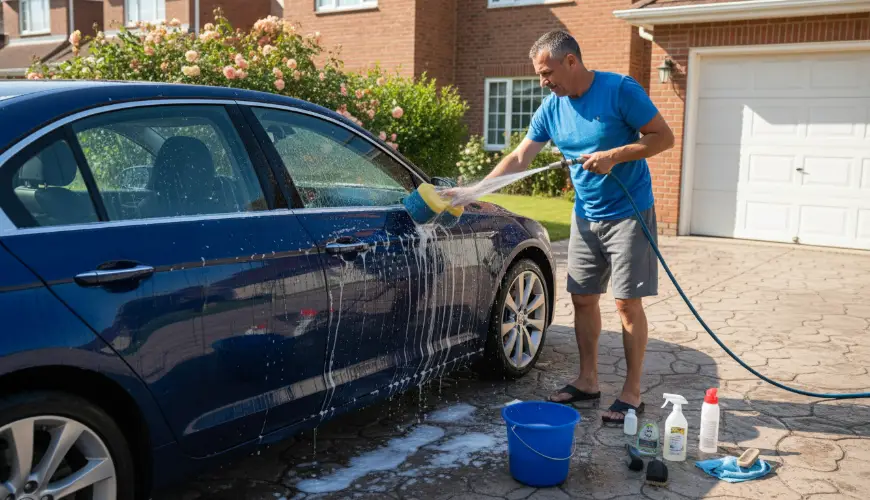
Car washing is one of those everyday activities that few people think of as an environmental problem. Yet the average automatic car wash uses up to 150–300 litres of water per vehicle, while washing with a garden hose at home can push that figure even higher. When we consider that over 6 million passenger cars are registered in the Czech Republic, we arrive at a number that should genuinely concern environmentalists. And that's before we even count the chemical products that enter the soil and waterways along with the contaminated water.
The good news is that there are ways to wash a car cleanly, effectively, and with a significantly smaller environmental footprint. This doesn't mean compromising between cleanliness and ecology – modern approaches to vehicle washing can reconcile both with surprising elegance.
Try our natural products




Why traditional car washing is a problem
Classic car washing in front of the house with a hose in hand looks harmless. In reality, however, it combines several environmental problems at once. Water running off the bodywork carries not only dirt but also residues of engine oils, brake fluid, microplastics from tyres, and remnants of synthetic cleaning products. This mixture flows directly into the sewage system or soaks into the soil – without any filtration process that professional car washes typically provide.
Chemical products used in car washing are another chapter entirely. A large proportion of commonly available car shampoos contain surfactants, phosphates, and synthetic fragrances that break down very slowly in nature. Some are classified as substances harmful to aquatic organisms with long-term effects. A study published in the scientific journal Environmental Science & Technology highlighted that pollution from vehicle washing constitutes a significant share of the microplastic burden in urban waterways.
But the problem isn't only chemical. It is also a matter of water consumption at a time when more and more regions are struggling with water scarcity. The Czech Republic is among the countries with one of the lowest levels of available water resources per capita in all of Europe – and that is precisely why eco-friendly car washing should concern even those who don't ordinarily care much about ecology.
Switching to more sustainable washing methods doesn't mean accepting a half-clean car. It means reconsidering habits and reaching for smarter alternatives that already exist and are readily available.
Waterless washing: a revolution in bodywork care
One of the biggest advances in vehicle care in recent years is the so-called waterless car wash. These are special spray products applied directly to the bodywork that soften dirt and encapsulate it so it can be safely wiped away with a microfibre cloth without risk of scratching the paintwork. Water consumption with this method is practically zero.
It may sound like a marketing gimmick, but the technology behind these products is genuinely sophisticated. They contain special polymers and lubricating agents that mechanically separate dirt from the paint surface while simultaneously leaving behind a protective layer. The result is comparable to conventional washing – and in many cases the bodywork looks even better, because the product also polishes as it cleans.
Take Jan as an example: he lives in a block of flats with no access to a garden or an outdoor tap. Previously, he had to drive to a car wash regularly, paying for unnecessary programmes and chemicals he had no interest in. Now he uses waterless washing in the car park right outside his building – the whole process takes him around twenty minutes, the car looks great, and he doesn't need to drive anywhere. He uses about one decilitre of product for the entire vehicle.
It is important with this method to use high-quality microfibre cloths, ideally with a high pile density (400 GSM and above). Cheap cloths can cause micro-scratches in the paintwork, whereas proper microfibres safely trap dirt and hold it within the fabric structure.
Eco-friendly chemicals: when water is unavoidable
There are situations where waterless washing simply isn't enough – for example after driving through mud, after a winter season of road salt, or after a journey through clouds of insects. In such cases, washing with water is unavoidable, but even here there is considerable room for improvement.
The first step is choosing environmentally friendly cleaning products. Biodegradable car shampoos are now available on the market – free of phosphates, free of chlorine, and certified for their gentleness towards aquatic ecosystems. These products work just as well as their conventional counterparts, but their environmental impact is significantly lower. When choosing, it is worth looking for certifications such as Ecocert or Nordic Swan Ecolabel, which guarantee genuine ecological quality rather than merely being a marketing claim.
The second step is reducing water consumption itself. Instead of a hose with a continuous flow, a far more efficient option is a pressure sprayer or a bucket of water. Approximately 10–15 litres is sufficient for an entire car if you work systematically – first rinsing from top to bottom, then applying shampoo, and finally targeted rinsing only where necessary. The difference compared to hose washing is enormous: instead of 200 litres, you can manage with a fraction of that amount.
The third factor is where you wash. Washing on a lawn or on a paved surface with water capture is significantly better than washing on concrete connected directly to the drainage system. A grassy surface acts as a natural filter – microorganisms in the soil can break down some of the harmful substances before they reach the groundwater. Of course, the less chemical product you use, the better this applies.
As environmental activist and writer Paul Hawken once said: "Sustainability isn't about sacrificing comfort, but about thinking about consequences." And this applies precisely to car washing too – it's not about giving up a clean vehicle, but about choosing a path that leaves the smallest possible footprint behind.
Professional car washes: not all are equal
Many people assume that going to a professional car wash is automatically more eco-friendly than washing at home. This is partly true – modern car washes recycle water and are required to treat wastewater before discharging it into the sewage system. But even here, significant differences exist.
Automatic tunnel car washes are generally less environmentally considerate than bay washes, where the attendant or the customer themselves controls the amount of water and chemicals used. From an ecological standpoint, the best choice is a car wash that actively communicates its approach to water recycling and uses certified eco-friendly products. Such facilities are not on every corner, but their numbers are growing – and they are worth seeking out.
When choosing a car wash, it pays to ask specific questions: Do they recycle water? What chemical products do they use? Do they hold any environmental certification? Car washes that take these questions seriously are usually willing to answer them and explain their approach.
Car care as prevention: less washing, same cleanliness
An interesting strategy that receives less attention is preventing bodywork contamination. Regular treatment of the paintwork with quality wax or modern ceramic coatings significantly reduces the adhesion of dirt – dust, pollen, and rain then soil the car more slowly and less intensively. The result is that the car requires less frequent washing, saving water, time, and money.
Ceramic coatings, which are now becoming available in more affordable price ranges, create a hydrophobic layer on the paint surface – water simply rolls off the bodywork, taking some of the dirt with it. The so-called lotus effect that these coatings mimic is genuinely visible in practice, and its protective effect lasts for many months.
Regular interior cleaning works similarly – the less dirt that enters the car on shoes or clothing, the less intensive cleaning of carpets and upholstery with aggressive products is needed. Small habits, such as wiping your feet before getting in or using rubber floor mats, can cumulatively reduce the environmental burden associated with vehicle maintenance significantly.
The entire approach to eco-friendly car washing actually reflects a broader philosophy of sustainable living: it's not about a dramatic gesture or great sacrifice, but about a series of small, considered decisions. Choosing a biodegradable shampoo instead of a conventional one, reaching for a waterless alternative for everyday maintenance, thinking about which car wash to visit – these are steps that individually seem insignificant, but together make a real difference. And at a time when pressure on water resources is growing and chemical pollution of waterways is an increasingly serious problem, it makes sense to think even about such seemingly trivial matters as what we use and how we wash our cars.