
How a Creative Hobby for Calming the Mind Will Change Your Day
The modern world moves fast. Notifications, deadlines, packed calendars and a constant stream of information – all of this leaves visible marks on the human psyche. It is no wonder that more and more people are looking for ways to slow down, catch their breath and find at least a moment of peace in the midst of everyday chaos. And creative activities are proving to be one of the most effective and most natural ways to achieve this. This is not a fashionable trend or an empty slogan from a motivational poster – there is a solid scientific foundation behind this claim, as well as thousands of personal stories of people who have rediscovered their inner balance through creativity.
Psychologists and neurologists agree that creative activity activates specific areas of the brain that remain unused during ordinary work or media consumption. When a person immerses themselves in painting, crocheting, writing or even jewellery making, their brain enters what is known as a "flow" state – a state of complete focus and absorption described by psychologist Mihaly Csikszentmihalyi. In this state, the conscious mind stops dwelling on worries, the past or the future. Only the present moment exists, along with whatever is taking shape beneath one's hands.
Try our natural products


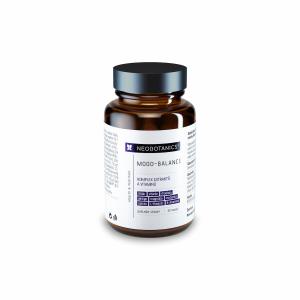
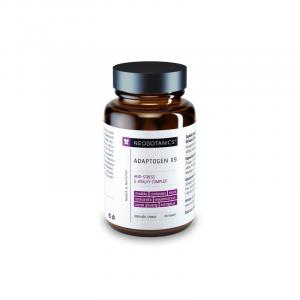

Why creativity works as a natural remedy for stress
The explanation is surprisingly simple. The human brain is evolutionarily wired for problem-solving and creation – for thousands of years, people survived through their ability to make tools, build shelters, draw maps and create stories. Creative activities fulfil this deep need in a way that modern office work or scrolling through social media cannot. The hands are in motion, the mind is occupied with a concrete task and the body naturally calms down.
Research published in the academic journal Journal of Positive Psychology shows that people who engage in creative activities for at least a few hours a week display lower levels of cortisol – the stress hormone – and report a higher degree of overall life satisfaction. This does not apply only to exceptional talents or professional artists. The results hold true for complete beginners just as much as for experienced creators. The key factor is not the quality of the outcome, but the creative process itself.
Interestingly, knitting or ceramics, for example, have effects similar to meditation. The rhythmic, repetitive movements of the hands induce a state similar to meditative focus – the heart rate slows, breathing deepens and the mind is freed from circular thinking. This is precisely why many therapists today recommend art therapy or occupational therapy as a complement to traditional psychological methods.
Consider a specific example: Jana, a forty-four-year-old accountant from Brno, suffered from chronic stress and insomnia for several years. On the recommendation of her therapist, she began attending a ceramics class once a week. "At first it seemed silly to me that I would be kneading clay like a child," Jana recalls. "But after the first session I realised that for two hours I had thought about nothing other than how the clay behaved under my hands. That was the first moment of peace I had felt in months." Today she devotes every weekend to ceramics and describes it as "the only thing that truly switches her off."
There are thousands of stories like Jana's. And science backs them up.
Which creative activities bring the greatest peace of mind
The answer to this question is not straightforward, because every person is different and different personality types respond to different stimuli. Nevertheless, there are several creative areas that repeatedly prove to be particularly effective at calming the mind.
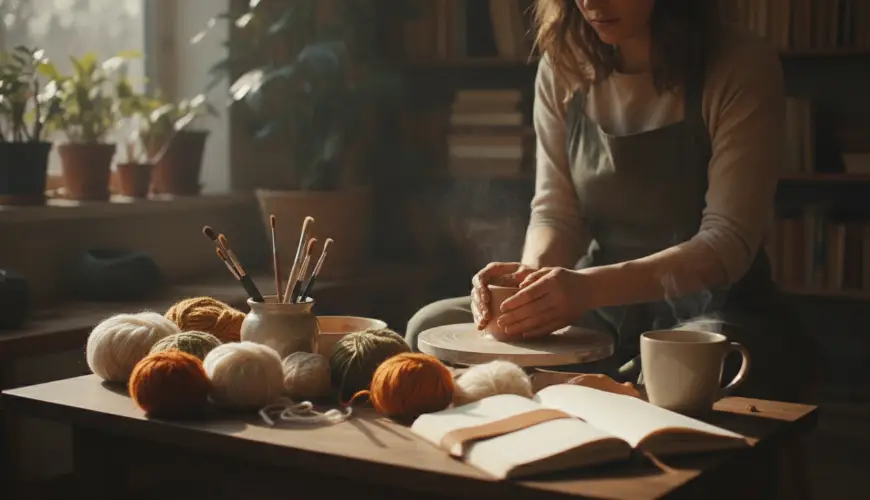
Handicrafts and textile work – knitting, crocheting, embroidery or weaving – are among the longest-practised forms of creative therapy. Their rhythmic and tactile nature makes them an ideal choice for people who tend to think in an overly analytical way. The hands are kept busy, giving the mind space to rest. Organisations such as the Craft Yarn Council regularly highlight the therapeutic benefits of knitting and crocheting, which include reduced anxiety, improved concentration and a sense of meaningful use of leisure time.
Painting and drawing are another area that has been gaining increasing popularity in recent years – even among people who do not consider themselves artists. The phenomenon of "adult colouring books" is no coincidence. Focusing on colours, lines and patterns diverts attention from worries and activates the right hemisphere of the brain, which is responsible for intuition and creativity. The result is a feeling of lightness and mental refreshment comparable to a short nap.
Writing – whether it takes the form of a journal, poetry, short stories or simply a free flow of thoughts onto paper – has a special ability to help people process emotions. Psychologist James Pennebaker spent decades researching so-called expressive writing and found that regularly recording thoughts and feelings leads to measurable improvements in both physical and mental health. His research showed that people who write about their experiences have stronger immune systems, visit doctors less frequently and report lower levels of depressive symptoms.
Photography, gardening, jewellery making, paper crafts or even cooking as a creative act – all of these can serve the same function. The common denominator is presence, intentionality and the joy of creating without pressure to achieve a perfect result.
If a person were to choose where to begin, it is worth following a simple principle: choose an activity that brings joy, not performance. A creative hobby for calming the mind does not work like athletic training with measurable results – it works as a space of freedom where there are no wrong answers.
The material aspect also plays an important role. Quality tools, a pleasant environment and a mindful choice of materials can significantly deepen the entire experience. It is no coincidence that people who engage in eco-friendly crafting or use natural materials – such as organic cotton, natural dyes or recycled paper – report an even stronger sense of connection with the present moment. A conscious choice of sustainable materials itself brings a sense of alignment with one's own values, thereby contributing to an overall feeling of wellbeing.
As the writer and philosopher Henry David Thoreau said: "It is not important how long you have lived, but how you have lived." This thought resonates precisely with what creative work offers – not more hours in the calendar, but more presence, depth and meaning in the hours we have.
How to start and maintain a creative routine
The greatest obstacle most people face is not a lack of talent or money – it is the conviction that they simply do not have time for a creative hobby. This myth, however, is easily dispelled. Research repeatedly shows that even twenty to thirty minutes of creative activity a day is sufficient for positive effects on mood and stress levels to become apparent. The goal is not to devote an entire afternoon to creativity – it is to find a regular, even brief, space that belongs to you alone.
A practical step is to create a so-called creative corner – a place in the home dedicated to making things. This need not be an entire room or a professional studio. A corner table with pleasant lighting, a basket of supplies and the awareness that this space belongs exclusively to creativity is enough. Psychologists speak of so-called "environmental cues" – that is, the way in which the environment influences behaviour. When a person creates a clearly defined place for a particular activity, the brain automatically begins to associate it with the corresponding state of mind, and the transition into creative focus gradually becomes easier.
Another key to maintaining a creative routine is letting go of perfectionism. Nothing kills the joy of making things faster than constantly comparing one's results with the work of professionals or with idealised images from Instagram. A creative hobby for calming the mind has only one measure of success: how a person feels during and after the creative process. If the answer is "better than before," then everything is fine – regardless of what the result looks like.
Community also plays a significant role in this process. Whether it is a local knitting circle, an online group of amateur photographers or a ceramics class around the corner, sharing a creative activity with others adds another layer of positive experience. Social connection, mutual inspiration and a sense of belonging are themselves powerful factors in mental wellbeing.
It is also worth noting that creative activities are not the exclusive domain of women or young people. More and more men are discovering the therapeutic benefits of cooking as an art form, woodworking, photography or music-making. And more and more older adults are finding in creativity a way to keep the mind fresh, active and joyful even in later life. Creativity is not an age category – it is a human need that persists throughout life.
The world will not slow down on its own. Notifications will not stop arriving and deadlines will not wait. But in the midst of this constant motion, there is a space that every person can create for themselves – a space of silence, creation and presence. A creative hobby is not a luxury for the privileged few, but an accessible tool for mental wellbeing that requires neither special talent nor a large budget. It requires only the willingness to begin – and to allow oneself to be imperfect in the process.