

# Armpit Pain Before Menstruation and How to Manage It

Every month brings a whole range of changes to the female body, which are part of the natural hormonal cycle. Most women are well acquainted with bloating, tender breasts, or mood swings before menstruation – these symptoms are part of premenstrual syndrome, which is discussed relatively openly. However, one specific and often concerning sensation is talked about far less: pain or tenderness in the armpit area, which appears precisely in the time before menstruation. Yet this is a symptom experienced by a surprisingly large number of women, and understanding it can bring not only relief but also valuable information about one's own health.
The armpit and its surroundings are anatomically connected to the breast area through lymph nodes and tissues that are extraordinarily sensitive to hormonal changes. It is therefore no coincidence that unpleasant sensations can appear here during the premenstrual phase of the cycle – ranging from mild tenderness upon touch to more pronounced pain that spreads to the sides of the chest or the upper arm.
Try our natural products



Why the armpit hurts – the hormonal background
The key to understanding this phenomenon lies in the hormonal fluctuations that the female body undergoes during the luteal phase of the cycle, that is, in the period of roughly two weeks before menstruation. During this time, levels of progesterone and estrogen rise, with estrogen having a direct influence on fluid retention in the body and on stimulation of the mammary gland. Breast tissue responds to these hormones with increased sensitivity and mild swelling, which naturally extends to surrounding areas – including the armpit.
The armpit contains a group of lymph nodes that drain lymph from the breast area. If fluid retention and mild swelling of the breast tissue occur, this pressure can transfer to these nodes, causing the characteristic sensation of pressure, pulling, or pain. This is therefore a direct physiological consequence of hormonal fluctuation, not an isolated or mysterious symptom.
Consider, for example, a thirty-year-old woman who notices every month, roughly five days before menstruation, that she experiences pain in the area of her left armpit when raising her arm or carrying a bag over her shoulder. The first time this sensation frightened her enough that she visited a doctor. After examination, it turned out to be a completely benign symptom of premenstrual syndrome associated with sensitivity of the lymph nodes. Once she understood the cyclical nature of this sensation, she was able to manage it much more calmly.
Hormonal changes also affect the very structure of breast tissue. Estrogen stimulates proliferation of mammary gland cells, while progesterone causes fluid retention in connective tissue. The result is a temporary enlargement and tension of the breasts, which women describe as a feeling of heaviness or fullness. This change logically affects adjacent areas as well – the armpits, the sides of the chest, and sometimes the inner arm.
According to information available on the Cleveland Clinic portal, cyclic breast pain and pain in surrounding areas is one of the most common gynecological symptoms, affecting up to 70% of women of reproductive age. Although it is benign for the majority of them, it deserves attention and proper understanding.
When armpit pain is a natural part of the cycle and when to be alert
Distinguishing when something is a common premenstrual symptom and when a woman should see a doctor is a key question. Cyclic armpit pain has several characteristic features that set it apart from symptoms requiring medical examination.
Typical premenstrual armpit pain appears regularly at the same phase of the cycle, usually one to two weeks before menstruation. It subsides either with the onset of menstruation or shortly after it begins. It tends to be bilateral, although it may be more pronounced on one side, and it usually worsens with arm movement or pressure on the area. It is not accompanied by any visible changes to the skin, hardened lumps, or fever.
In contrast, there are symptoms that should not be overlooked. If the pain is unilateral and persists even after menstruation ends, if a hard or painless lump is palpable in the armpit, if the skin in the area changes, or if the pain is accompanied by general fatigue and unexplained weight loss, a visit to the doctor is essential. Lymph nodes in the armpit can also be enlarged as a result of infection, inflammation, or – in rarer cases – oncological disease, and therefore monitoring them regularly is part of women's preventive care.
The World Health Organization and leading oncology centers recommend that women perform regular breast self-examinations, which also include the armpit area. This simple habit makes it possible to detect potential changes early and to distinguish cyclic symptoms from those requiring specialist care. Detailed instructions for self-examination are offered, for example, by the Czech Oncological Society.
As the leading American gynecologist and author of books on women's health, Christiane Northrup, once said: "The female body is wise – listen to it, but learn to distinguish between its natural rhythm and true warning signals." These words capture the essence of the approach to premenstrual symptoms very accurately.
Besides hormonal causes, other factors can also contribute to armpit pain before menstruation. An ill-fitting bra, which during the premenstrual period – when the breasts are larger and more sensitive – does not fit properly in size or shape, can cause pressure precisely in the armpit area. Similarly, intense physical activity, which can lead to overloading of the chest and shoulder muscles, may play a role, as can the use of antiperspirants containing aluminum salts, which can irritate lymph nodes in sensitive individuals.
How to find relief naturally
If armpit pain before menstruation is part of a regular cycle and a doctor has ruled out other causes, there are several approaches to alleviating the unpleasant symptoms. Many women appreciate a combination of simple lifestyle changes with supportive natural remedies.
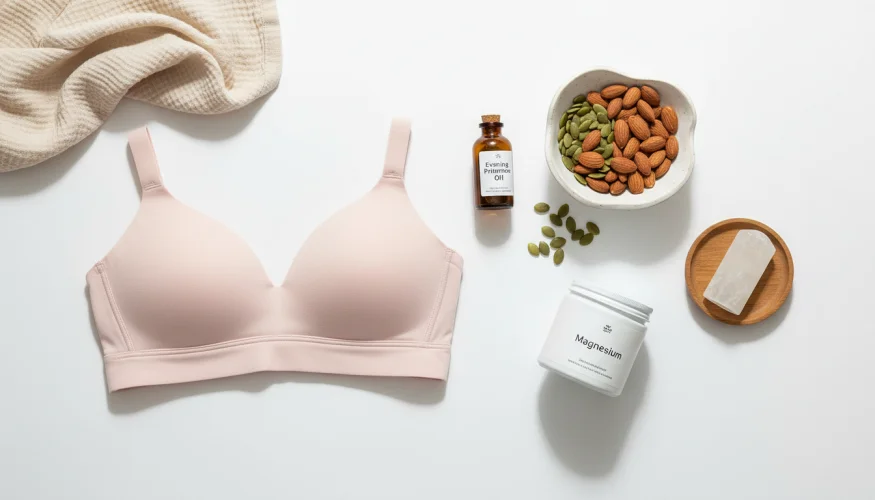
Diet plays a surprisingly large role. Salt intake should be limited during the premenstrual period, as sodium contributes to fluid retention in the body, which worsens tension in the breast tissue and surrounding areas. The same applies to caffeine, which can intensify breast and armpit pain in sensitive women. Conversely, foods rich in magnesium – such as nuts, seeds, or leafy vegetables – can help alleviate premenstrual symptoms in general. Research suggests that magnesium supplementation during the luteal phase of the cycle reduces the intensity of premenstrual complaints, including fluid retention and tissue tenderness.
Physical activity, even though it may sound paradoxical, is among the effective ways to alleviate premenstrual pain. Regular movement supports lymphatic circulation, which helps drain excess fluids from tissues. Particularly suitable are walks, yoga, or swimming – that is, low-intensity activities that do not strain the body but at the same time support lymph circulation.
Heat treatments, such as a warm compress applied to the armpit and chest area, can provide quick relief from pain. Heat releases tension in muscle tissue and promotes blood flow to the area. Some experts also recommend massage performed with gentle circular movements from the armpit toward the center of the chest, which helps with lymphatic drainage.
In terms of clothing choices, it is worth mentioning that during the premenstrual period it is advisable to opt for a wire-free bra or a sports bra, which distributes pressure evenly and does not burden the armpit area. Many women who suffer from cyclic armpit pain describe significant relief after simply switching to a less constricting bra.
For those seeking support in the form of natural dietary supplements, evening primrose oil (oil from the evening primrose plant), which contains gamma-linolenic acid, has proven effective. This fatty acid may, according to available studies, alleviate cyclic breast pain. The effects of vitamin E or vitex (chaste tree), traditionally used to regulate hormonal balance in women, are similarly being studied. Before starting any supplementary use, however, it is always advisable to consult a doctor or pharmacist.
Care for psychological well-being is also immensely important. Stress affects hormonal balance and can intensify premenstrual symptoms. Techniques such as meditation, breathing exercises, or simple relaxation rituals – such as an evening bath with the addition of Epsom salt – can have a surprisingly positive effect on premenstrual symptoms. Epsom salt, that is, magnesium sulfate, supports the absorption of magnesium through the skin and simultaneously helps with overall relaxation of the body.
Keeping a menstrual diary or using a cycle-tracking app is another practical step that helps women better understand their own bodies. If a woman records exactly when armpit pain begins, how intense it is, and how long it lasts, she can much more easily distinguish a cyclic symptom from a potential anomaly. This data is also very valuable during a gynecologist visit, as the doctor then receives specific information rather than a general description of complaints.
Armpit pain before menstruation is therefore a symptom that deserves attention, but not unnecessary worry. It is part of the complex hormonal dance that the female body goes through every month, and for most women it represents a temporary, manageable discomfort. With a little understanding of one's own cycle, a few simple lifestyle changes, and an awareness of which symptoms require a doctor's visit, it is possible to live with this monthly visitor in much greater peace.