
Where to Put Old and Unused Items When You Don't Want to Throw Them Away, But Want to Pass Them On M
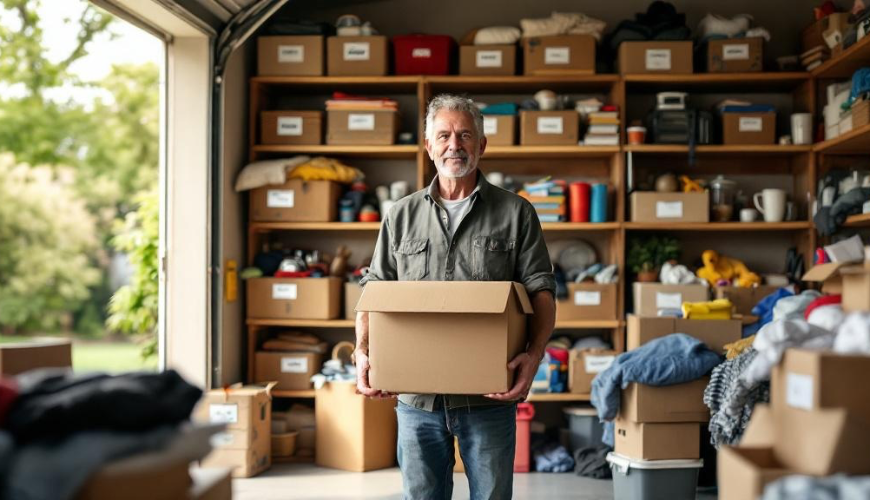
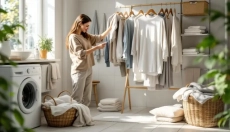
The home has a peculiar ability to "overgrow" with things. First, it's just a few pieces of clothing that will be "useful at home," a box of cables "just in case," children's toys stored "for visitors," and decorations that are brought out once a year. Then comes a moment when someone looks around and is struck by a simple yet pressing question: where to go with old and unused things without them ending up mindlessly in the trash? This is precisely where zero waste and minimalism in the household naturally meet – not as a competition of who has less, but as an effort to return meaning, place, and life to things.
It's important to also say the second part of that question out loud, which people often ask themselves: what if things are still nice? When a shirt is stain-free, a toy is complete, and a mug is just "not your style anymore"? Throwing it away feels like a waste, storing it like a burden. Yet, there are surprisingly many ways to go with things so that they serve someone else – you just need to choose the right one based on the condition, safety, and how quickly you want to get rid of them.
Try our natural products
Why zero waste and minimalism in the household complement each other (and are not extremes)
Minimalism is sometimes mistakenly understood as the aesthetics of empty shelves and two plates in the kitchen. In reality, it's more about keeping what is used and makes sense at home – and not letting the rest block space or attention. Zero waste adds another dimension to this: things don't end up as unnecessary waste but are sought for further use, repair, donation, or recycling. When both approaches are combined, a practical compass is formed: I don't want to hoard things, but I also don't want to mindlessly throw them away.
A simple rule helps: first decide on the function (do I use it/do I not use it), then on the condition (is it safe, clean, complete?), and only then on the way out of the household. This is a big difference compared to the impulsive cleanup of "everything into the bag." And if it's to be truly sustainable, it's worth avoiding what's sometimes called "guilt clearing": sending anything to a charitable container just so one doesn't have to deal with whether it's still wearable. Charity doesn't help when instead of a donation, they receive waste.
There's also a practical detail involved: things have not only material value but also time value. The longer they sit in the closet, the less chance they have of serving someone else. Clothes go out of fashion, plastic becomes brittle, rubber crumbles, books mold in damp conditions. Speed is often an underestimated factor in sustainability.
And if you need to lean on authority: The European Environment Agency has long pointed out that textiles are among the significant burdens in terms of resource consumption and environmental impacts – a good context is offered by the European Environment Agency's overview on textiles and their impacts. That's why it makes sense to extend the life of clothing and other items if possible.
"The most sustainable thing is the one you already have at home." This sentence sounds simple, but in practice, it means that the best win is often not a new eco-friendly purchase, but a smart use of what already exists.
Where to go with sorted clothes and toys when they are still nice
Once the pile of "I don't use" appears on the bed, the second step comes: choose where to take the sorted clothes and toys so that it's not just a way out of the house, but a real path to further use. For items in good condition, several options are available, differing in speed, difficulty, and how much control you have over the outcome.
The fastest is usually donating locally. In many cities, there are community groups on social media or neighborhood platforms where things can be offered "for pickup." The advantage is obvious: the item often disappears within a few hours, and you know who it will serve. For children's items, it's surprisingly effective because children grow quickly, and parents often look for short-term solutions. If toys are complete and clean, kindergartens, children's groups, or low-threshold centers are often very interested – just be sure to ask in advance what they really need and in what condition they accept things.
Another route is selling. Not everyone wants to spend evenings taking photos and arranging handovers, but for quality pieces (winter jackets, shoes in good condition, carriers, wooden toys, building sets), it may be worth it. From a minimalist perspective, it's important to set a boundary: sell only what has real value, and donate the rest. Otherwise, a "quick cleanup" turns into a long-term project that just moves things to another box.
Charitable organizations and collections are a great option, but it's worth respecting their rules. Clothing should be washed, dry, mold-free, and ideally seasonal (winter items in winter, summer in summer). Toys should be safe, complete, and washable. If someone asks "what if things are still nice, where with them," the answer is: where someone can really work with them immediately. Some charities have their own shops or distribution points, others sort items and sell part of them to fund their activities. It makes sense – but it's fair to send them things that won't burden their sorting.
And then there's one often overlooked option: swap, or an exchange event. For clothing and children's items, it's very natural. You bring what you no longer want at home and take something you'll use. Swap also has one advantage that minimalism appreciates: things stay in circulation locally and without unnecessary transportation.
For better illustration, a short example from everyday life is enough. Imagine a family that, after a weekend, sorts out two big bags: children's sweatshirts, pants, a few books, and a box of toys. Previously, it would have ended up in the nearest "textile" container with the feeling that it's done. This time, however, they do two things: they divide the nice clothes into "donate to neighbors" and "send to charity" according to the season, while the toys undergo a quick check for completeness and cleanliness. The result? Within two days, a neighbor comes to pick up a package of clothes for a younger child, the kindergarten accepts a few wooden puzzles, and the rest goes to a collection. The home feels freer – and it's not just a relief, but also a good feeling that the items haven't lost their value.
One more small thing that often decides: with toys and children's needs, it's worth being stricter. If a toy has sharp edges, cracks, missing parts, or is difficult to clean, it's better to find another way than donating. In terms of safety, "still nice" is not enough.
When things aren't nice: repair, recycling, and dignified farewell without regrets
Not everything that clutters at home has the potential to make someone else happy. And this is where the rubber meets the road: where to go with old and unused things when their best years are behind them? Zero waste doesn't mean keeping everything in circulation at all costs. It means deciding realistically and responsibly.
For clothing, the first stop is often repair. A missing button, a loose seam, or a broken zipper are small issues that can be fixed in a few minutes or at a tailor. However, if the fabric is stretched, worn through, or permanently smells, donating is usually not a good idea. In such cases, it makes sense to use the clothing as cleaning rags (especially cotton) or send it to textile recycling where it's truly provided. Not every textile container automatically means recycling – part of the content is resold, part is discarded. Therefore, it's better to look for specific programs and collection points that focus on recycling or inquire with the municipality.
For toys and small household items, it's good to distinguish materials. Wood and metal can often be repaired or recycled more easily than mixed plastics. Electronic toys, old hair dryers, cables, or small appliances belong in electronic waste take-back schemes, not in mixed waste. In the Czech Republic, collection yards and a network of places for electronic waste disposal operate; for example, the Ministry of the Environment on waste sorting and management or collective schemes dedicated to take-back write about it clearly. In practice, it means one thing: when an item contains a battery, cable, or "something that lights up and plays," it has its own exit route.
And what if an item is "halfway" – like a coat in good condition but with a specific cut that no one wants anymore? Here, it helps to change expectations. Minimalism in the household isn't about every item becoming a great gift. Sometimes the most considerate route is to simply admit that it has fulfilled its purpose and send it on in a way that doesn't burden others. Excessive effort to "save" everything can lead to bags of items intended for sale accumulating at home, which don't move anywhere for months. Meanwhile, pressure, chaos, and the feeling that cleaning never ends arise.
If someone feels like being creative, part of the items can be upcycled – old shirts into wipes, jars for storage, boxes for organization. But even here, upcycling only makes sense when the resulting item is truly used. Otherwise, it's just moving clutter into a prettier form.
To keep everything from staying theoretical, a simple decision-making sieve that can be run through the mind in a few seconds helps: Is it clean? Is it functional? Is it safe? Is it complete? If four times yes, there's a high chance the item can be donated, swapped, or sold. Once two or more "no" appear, it's fairer to choose repair, recycling, or ecological disposal.
The only list worth keeping handy might look like this:
- Donate / swap / sell: clean, functional, complete, without defects that would limit another
- Repair: minor defect that can be quickly fixed (zipper, button, seam)
- Use at home: rags, organization, spare parts – only if it has a clear use
- Recycle / hand over: textile collection with real usage, electronics in take-back, sorted components into containers
- Dispose: damaged, moldy, contaminated, dangerous items that can no longer be meaningfully passed on
When this decision-making becomes a habit, the household starts to "self-clean." New things arrive slower because one knows that every item has not just an entry price but also future concern: storage, maintenance, and eventually departure.
And perhaps the most important detail at the end: sustainability is not perfection. Sometimes it's not possible to find the ideal place for things to serve someone else, other times it turns out that the item is in worse condition than it seemed in the closet. This, too, is part of reality. The important thing is that "throwing away and forgetting" becomes a thoughtful process that respects the material, work, and people who might use those things. And when the question of where to go with old and unused things arises next time, it won't be a helpless sigh but rather a practical choice from several good options – with a lighter home and a lighter mind.