

Jet lag doesn't have to take you out when you know how to fight it after arrival
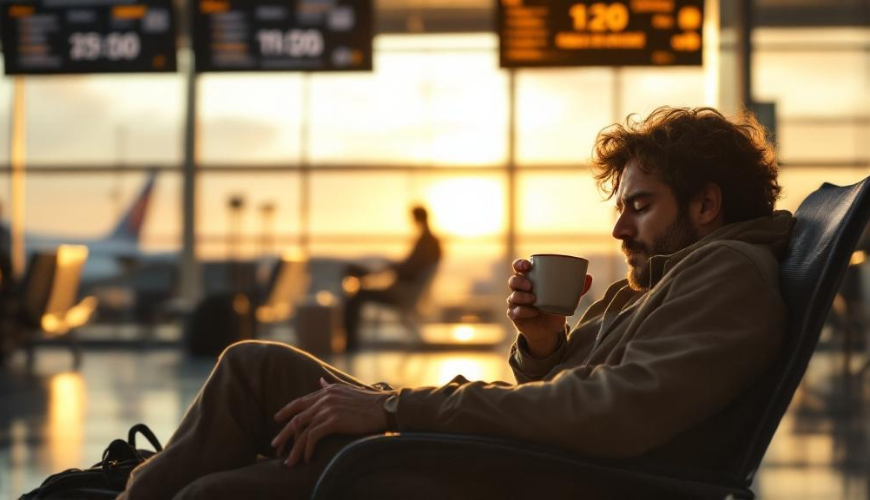
Traveling across multiple time zones has a special knack for ruining even the best-planned trip. You arrive at your dream destination, the sun is shining outside, the city is alive... and your body would rather lie down on the nearest park bench. This is where the topic begins, which is familiar to almost everyone who has ever flown further than a "quick trip" around Europe: jet lag, often referred to in Czech as pásmová nemoc. What is jet lag, how does it occur, and most importantly, how to fight it so that your vacation or business trip doesn't start with two days of brain fog?
Jet lag is not a whim or a lack of willpower. It's a very practical clash between the local time and how the body's internal rhythm is set. And since this rhythm controls sleep, energy, digestion, and mood, "pásmová nemoc" can be surprisingly versatile. Some people experience only drowsiness, others irritability, cravings for sweets, or upset digestion. The good news is that there are tips to prevent jet lag, and specific steps to take against jet lag right after arriving.
Try our natural products

What is jet lag and why is it called pásmová nemoc
Jet lag is a condition where the body doesn't have time to quickly adapt to a new time zone. Simply put: your internal "clock" is still running on home time, even though you might already be in New York or Tokyo. Scientifically, it is referred to as a disruption of the circadian rhythm – the natural 24-hour cycle that affects sleep and wakefulness, hormone levels, body temperature, and other processes.
Pásmová nemoc has typical symptoms: daytime fatigue, insomnia at night, "heavy head," poor concentration, changes in appetite, and sometimes mild nausea. And since the body functions as an interconnected system, the impacts can spill over into mood and motivation. It's no coincidence that the first days after a long flight sometimes feel like you're looking at the world through glass.
It's important to note that jet lag doesn't occur after every flight. A short move through one time zone is usually manageable for most people. Problems typically start when crossing about three or more time zones, especially when flying quickly (by plane), and the body doesn't have a chance to gradually adapt.
How jet lag occurs and its effects on the body and mind
To understand how jet lag occurs, it's useful to briefly look at who "conducts" in the body. A key role is played by a part of the brain that responds to light and darkness and sets the internal clock accordingly. Light is the main signal by which the body knows when to be active and when to rest. But when you move six, eight, or ten time zones in a few hours, the light comes at the "wrong" time. The body still thinks it's night, but outside it's morning. Or vice versa.
This is also related to hormones, especially melatonin (the sleep hormone). Its production is sensitive to light, and when the rhythm is disrupted, the body may release it at unexpected times. The result is the typical scenario: in the evening at the destination, you can't fall asleep, and in the afternoon you could fall asleep standing up.
However, pásmová nemoc and its effects are not limited to sleep. Digestion is often affected as well. It's not just that you eat differently while traveling – digestion also has its rhythm. When meal times shift, the body may react with bloating, constipation, or conversely, faster digestion. Add to this the dry air in the plane, less movement, sometimes travel stress, and it's clear why you might not feel quite "yourself" on the first day.
Anyone who has flown to the USA for work and had a presentation the next day knows this from real life. Arriving in the evening, hotel, quick shower – and at three in the morning, wide awake, because it's morning back home. Morning meeting, where the brain tries to be sharp, but the body signals "sleep." In the afternoon, a fatigue that could be cut with a knife, and in the evening, paradoxically, a burst of energy. In such a moment, it's clear it's about more than just comfort, but also performance, decision-making, and overall well-being.
It's also worth mentioning the direction of travel. Generally, flying east (where the day "shortens") is more challenging because the body has a harder time adjusting to falling asleep earlier. Flying west (where the day "lengthens") is easier for many people. It's not a rule for everyone, but it works as a general guideline.
For those who want to dive deeper, reliable sources are available: for instance, the National Institute of General Medical Sciences overview of circadian rhythms explains why light is so crucial for our internal clocks. And the CDC's practical overview on jet lag offers recommendations on how to prepare for the time shift.
How to fight jet lag: what works in practice
When it comes to how to fight jet lag, people often expect a miraculous trick. In reality, it's more about a set of small steps that together accelerate adaptation. And the good news: most of them are simple, inexpensive, and make sense even for those who want to travel more sustainably and healthily.
The basic principle is always the same: help the body understand what the "new day" is and quickly align sleep, light, food, and movement.
Light as the quickest reset for internal clocks
If there's one thing that has the greatest impact on jet lag, it's daylight. After arriving, it's best to go outside as soon as possible, ideally for a walk. Not for the kilometers, but for the light exposure to the eyes (of course, not staring at the sun). This helps the body quickly reset its rhythm.
- When traveling east, morning light at the destination often helps because it shifts the rhythm forward.
- When traveling west, afternoon and evening light can be useful to help stay awake longer.
It's not a strict rule, but as a simple guideline, it works surprisingly well: adapt to local light as soon as possible.
Sleep: don't overdo it, but don't give up either
One of the most common questions is: what to do about jet lag when you can barely stand after arriving? A short nap can help, but the key word is "short." Long afternoon naps (two to three hours) often delay falling asleep even further and prolong jet lag.
Practically, it's advisable to:
- take a power nap of 20–30 minutes if fatigue is extreme,
- set an alarm and then go outside for light,
- try to go to bed according to local time, even if it means "surviving" until nine or ten.
And what if you can't and wake up at night? It's helpful to dim the lights, skip the phone in bed, and not "force" sleep. Once the body catches the light and routine, it usually adjusts within a few days.
Hydration and food: subtle helpers
Airplanes are dry environments, and dehydration can worsen fatigue. It's not necessary to overdramatize, but regularly drinking water before the flight, during, and after arrival makes sense. Alcohol on board might seem like a "sedative," but it often worsens sleep quality and adds extra strain.
Regarding food, simplicity is useful. In the first days in the new time zone, it's often worth:
- eating lighter meals that the body is familiar with,
- adding fiber (fruits, vegetables, whole grains),
- avoiding overeating late at night.
This helps the body adjust its digestion rhythm more easily. By the way: even meal times are signals for the internal clock. Starting to eat according to local time can speed up adaptation.
Movement and fresh air instead of "enduring it"
There's no need to immediately run five kilometers. But light movement after arrival works wonders – for circulation, mood, and sleep. A walk, a few minutes of stretching, a short swim at the hotel… the body gets the message that the day is already running.
A saying among travelers that surprisingly holds true: "Don't try to sleep off jet lag, try to light it and walk it off." Not as a slogan, but as a reminder that passive lying often doesn't help as much as a combination of light and mild movement.
Melatonin and supplements: cautiously and wisely
Melatonin is sometimes used as an aid in resetting sleep, but it's not a universal solution for everyone. Availability and recommendations vary across countries. If someone has health issues, takes medication, is pregnant, or breastfeeding, consulting a doctor or pharmacist is advisable. Generally, for jet lag, the timing is more important than the "strength" of the dose, and light and routine take precedence.
For those who can't or don't want to use supplements, gentler habits can be employed: reducing blue light from screens in the evening, taking a warm shower, slowing down the pace, and giving the body a clear signal that night is coming.
Tips to prevent jet lag before departure
The best jet lag is the one that never fully kicks in. And tips on how to prevent jet lag often determine whether the first days at the destination will be pleasant or foggy.
A few days before the trip (if possible), gradually shifting the schedule helps. When traveling east, try going to bed a little earlier and waking up earlier; when traveling west, do the opposite. It doesn't have to be an hour a day – even 15–30 minutes makes a difference, especially for more sensitive individuals.
It's also practical to:
- choose a flight that allows for a reasonable arrival time to align with the local day (for example, an afternoon arrival instead of the middle of the night),
- plan the first day more leisurely, without demanding performances,
- bring items on the plane that support sleep or comfort: eye mask, earplugs, layers of clothing.
And then there's one surprisingly effective little thing: set your watch to the destination's time already when boarding the plane. It's not magic, but psychologically it helps – you start thinking in the new time and decide more easily whether it's better to sleep or stay awake.
If you're looking for a simple answer to the question "what to do about jet lag" in one sentence, it might be this: adapt to local time as soon as possible, mainly using light, sleep routine, and light movement. Everything else is supportive detail.
Jet lag is unpleasant, but it's also a signal that the body is working exactly as it should – sticking to a rhythm that protects it in the long term. And when given a few smart cues, it usually catches up more quickly than it seems. Perhaps then there will be more energy left for what you're traveling for: exploring the city early in the morning when it's still quiet, tasting local food without battling fatigue, or simply getting a normal night's sleep after a long flight and waking up feeling like you're truly "there."