
Not being alone with a baby is possible even without family nearby if you know where to look for hel

It's a peculiar paradox of early parenthood: society talks about babies all the time, but when the doors close at home and the day begins, many mothers feel like they're on their own. And the more they try to "manage it all," the more the pressure builds. There's a list running in the head: feed, change, put to sleep, do laundry, eat something, respond to messages, order diapers... and in between, try to remain calm, grateful, and smiling. Who wouldn't get lost in that?
However, not being alone with the baby is neither a luxury nor a whim. It often makes the difference between a day that can be lived with manageable tiredness and one that turns into an endless marathon. Most importantly, knowing how to ask for help isn't a sign of weakness. It's a skill that protects health, relationships, and the home atmosphere. One might wonder: when did seeking support from others become something "embarrassing" to ask for?
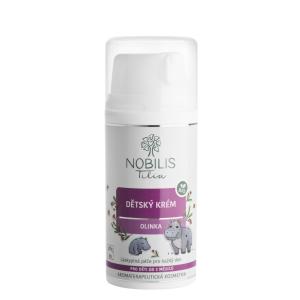
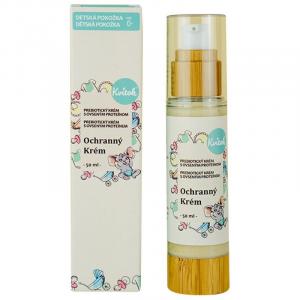
Try our natural products
Why it's so hard to ask for help (and why it's not a "failure")
Many women grow up with the notion that a good mom is one who manages everything. She doesn't ask for help, doesn't complain, "everyone else does it." But this notion is misleading because parenting is not a test of independence. It's long-term care that is demanding both physically and mentally, and it's naturally expected to be shared by more people.
When a mother is overwhelmed and doesn't know how to ask for help, it's often not due to laziness or inability, but a mix of feelings: fear of being a burden, fear of rejection, fear of unsolicited advice, or fear of showing that "she can't handle it." Sometimes, past experiences play a role – those taught to "figure it out" on their own might struggle to ask for support as adults.
Then there are social networks. From the outside, it might seem like other moms have everything clean, meals prepared, babies in perfectly coordinated outfits, and still manage to have coffee. But the reality is often different – it just isn't talked about as much. An important reminder comes from the professional context: the postpartum period is sensitive, and one's psyche can be more vulnerable. Just knowing terms like postpartum blues or postpartum depression helps take one's experiences more seriously; useful information is offered by sources like NHS – Postnatal depression or Czech resources and experts on perinatal mental health.
Help isn't just "babysitting." Sometimes the greatest relief comes when someone brings a meal, hangs up the laundry, takes the stroller out for twenty minutes, or just sits and listens without judgment. Once this idea spreads, it becomes clearer how not to be alone with everything, even if it seems that others "don't know what to do."
How to ask for help when you have a small child: specifically, simply, and without apology
Requests for help often falter because they are too vague. "I need help" is true, but for the other person, it can be intangible. It's much more effective when the request is specific, time-bound, and if possible, with options. Not because the mom has to "project manage" the household, but because people often really don't know what would be helpful.
A simple principle works well in practice: say what, when, and for how long. For example: "Can you take the baby out in the stroller today between five and six? I'll shower and eat in the meantime." Or: "Can you pick up bread, milk, and fruit on your way home tomorrow?" It's small, but such small things piece together a day that can be survived without tears in the bathroom.
Many parents also find that help is easier to accept when it's made clear in advance that it's about a need, not a criticism of the partner or family. One sentence can change the tone: "It's not that you're doing it wrong. I'm just running out of steam and need us to carry this together." This lowers the risk of the other side hearing the request as an attack.
Sometimes a simple sentence helps, which gives others a "guide" on how to be useful: "When you ask what I need, it helps most when..." and add something specific. People often like to help but are afraid of intervening inappropriately. Yet, parenthood is precisely the period when it's normal to say: I need more hands, more food, more sleep.
Part of all this is an important skill: accepting help without feeling it needs to be "repaid." It's not accounting. It's community care that flows over time. Today someone brings soup, next year the mom might support a friend differently – perhaps just by sending a message when it's needed.
And if the request gets stuck in the throat, a short script can help, which can also be sent as a message (sometimes writing is easier than calling): "Hi, the last few days have been tough. I need help with one specific thing – could you please bring lunch or buy a few things tomorrow? It would really help me." It's human, direct, without drama.
A real-life example that suspiciously many families know
In one household, it started to break down subtly: the baby woke up every two hours, the partner went to work, and the mom felt she "just had to" manage the household to keep it peaceful at home. When visitors came, she quickly tidied up the kitchen and automatically offered coffee, even though she was barely standing. She refused help because "it's fine." But it wasn't fine – it just couldn't be admitted out loud.
The turning point came when instead of the vague "I can't do this anymore," something specific was said: "I need at least half an hour of silence every day. Please take the stroller for a walk when you get home from work." The partner agreed because it was finally clear and doable. And when the grandmother came over the weekend, she was given a simple task: bring lunch and hang up the laundry. No one was offended. On the contrary – the grandmother was glad to know what was genuinely helpful.
This is often the whole magic of how to ask for help and not be alone with the baby: not waiting for the situation to fall apart and allowing oneself to ask for small things before they become big problems.
Where to find help when family isn't working as expected
Not every woman has grandmothers, friends, or a partner who can immediately lend a hand. Sometimes relationships are complicated, sometimes family is far away, sometimes the partner is equally exhausted. In such a situation, it's important to know that there are other sources of support – and that it's okay to use them.
Starting with small things that reduce the pressure of daily operations can help. Sometimes it's helpful to simplify the household: less "fancy" laundry, less perfectionism, more repeatable meals. It's not about resigning but easing a system that's overloaded. For many families, it's surprisingly effective to introduce "the minimum that suffices": clean basic clothes, simple meals, basic order for hygiene – and the rest can wait. Home with a baby isn't a showcase, but a refuge.
Services can also help if available: grocery delivery, meal boxes, occasional cleaning help, babysitting for a few hours. Sometimes just a one-time break to catch one's breath is enough. And if the budget is tight, support can still be found in the community – parent centers, neighborhood groups, local service exchanges, parent groups. Finding one reliable person with whom a "stroller exchange" can be arranged (one day you babysit, another day I do) can be a surprisingly stable support.
The psychological aspect is also important. If exhaustion turns into long-term despair, anxiety, or the feeling that it can't go on, it's appropriate to seek professional help. In the Czech Republic, there are psychologists and psychotherapists focused on pregnancy and postpartum periods, and in acute situations, crisis hotlines. Not because the parent "failed," but because the psyche deserves the same care as the body. As the often-quoted phrase goes: "It takes a village to raise a child." And sometimes that "village" can be a well-established network of professionals.
When talking about how to ask for help when you have a small child, it's worth remembering that help doesn't have to come in the form of perfect understanding. Some people can lend a hand but can't talk about emotions. Others can support psychologically but can't handle practical tasks. That's okay too – it's enough to know what to expect from whom.
And one more thing that is often underestimated: help sometimes means allowing yourself to rest, even if the house is messy. For many women, this is the hardest part. But fatigue can't be talked away, and sleep can't be "caught up" by willpower. When the baby sleeps and the mom lies down for ten minutes instead of cleaning, it's often the most sensible investment for the rest of the day. A rested mom isn't selfish – she's more available, patient, and secure.
In this context, a gentler approach to the household makes sense: less aggressive chemicals, fewer irritating scents, more simplicity. Not just for the baby, but also because when someone is tired, they appreciate things that work easily and without unnecessary burden. An eco-friendly household isn't about perfection, but about gradual steps that relieve people and the environment – and sometimes about using a few reliable products instead of five different ones that don't take up half the cupboard and don't burden the mind with more decisions.
It might all sound like small things, but it's precisely the small things that decide whether parenthood will be experienced as isolation or as a shared journey. Not being alone with everything doesn't mean turning the house into a hub of visitors or having someone constantly interfere. It means having at least a few steady points: one person you can text; one agreement that holds; one hour a week that's "just for catching a breath."
And the next time the familiar phrase "if you need anything, just say" comes up, it can be surprisingly liberating to take it literally. Respond calmly, matter-of-factly, and specifically: "Thank you. I would need lunch brought on Wednesday or the stroller taken for half an hour." Not because it can't be done without it. But because with it, life is much better.