

What exercise is best for women over 40 when you want strength, energy, and peace of mind
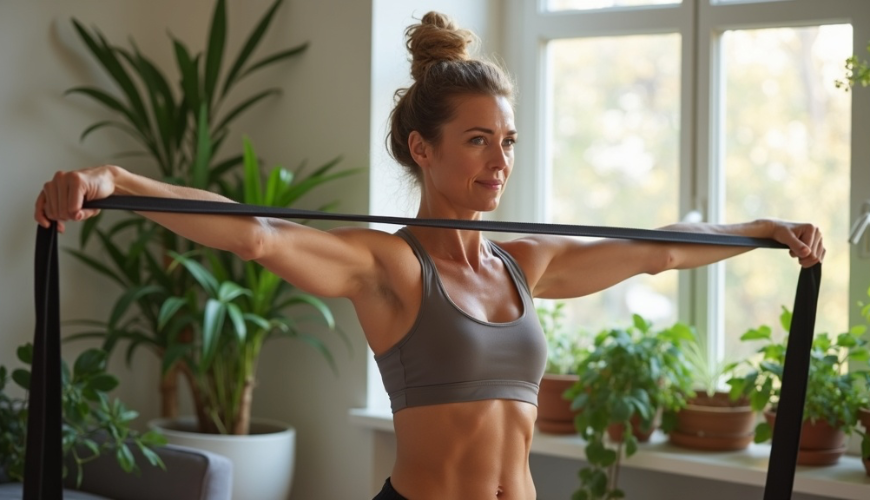
Reaching forty can be a peculiar milestone. Not because something suddenly "breaks" overnight, but because the body starts speaking a bit louder. Some notice that recovery takes longer, others that fat deposits in different places than before, or that periods of energy and fatigue swap without clear reason. Alongside come changes in cycle, sleep, or mood. And here arises the frequent question, what is the best exercise for women over 40—one that works long-term, supports fitness and mental health, and doesn't unnecessarily stress the body.
The good news is, the answer doesn't lie in extremes. In fact, it turns out that exercise after 40 and hormonal health is more about regularity, sensible intensity, and strength rather than "burnout" marathons. An even better news: it's not about starting something completely new, but structuring movement so it is sustainable, enjoyable, and has a real effect—even when time is scarce.
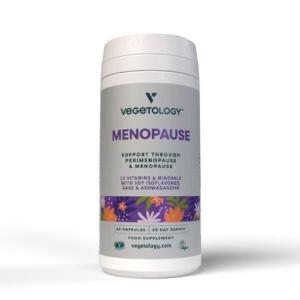
Try our natural products
Why it's worth changing the approach to exercise after 40 (and not necessarily adding more effort)
The simplified "exercise more and eat less" often ceases to work as it did before after forty. There are multiple reasons: muscle mass naturally decreases, stress sensitivity changes, some women begin experiencing perimenopausal changes, and with them, greater energy fluctuations. The hormonal system is sensitive to sleep, nutrition, and mental load—and exercise is one of the strongest tools to stabilize it all. It's just important to know what and how to exercise and at what intensity so that the movement helps, rather than adds fuel to the fire.
Many women experience that when they add intense cardio (running, HIIT) five times a week, they paradoxically become more tired, sleep worse, and have increased cravings for sweets. This doesn't mean intensity is bad. It means it needs to be smartly dosed and supported by something that is often key after 40: strength training, regular walking, and quality recovery.
In professional recommendations, a simple idea repeatedly appears: combine aerobic activity, strengthening, and stability work. For example, WHO's recommendations for physical activity speak of regular movement for heart, metabolism, and mental health while also emphasizing strengthening. From a practical standpoint, this means: it's not necessary to train like an athlete, but it's useful to have different types of movement throughout the week.
And then there's one more thing often overlooked in discussions: exercise after 40 isn't just about weight. It's about bones, joints, pelvic floor, posture, sleep quality, mood, and how one feels in their own body. When this is taken as the main goal, the pressure on performance disappears—and paradoxically, results come easier.
Exercise after 40 and hormonal health: less stress, more strength, and regularity
Hormonal health is complex, but for everyday life, it makes sense to focus on several practical points: how the body reacts to stress, how sleep is going, how stable energy is throughout the day, and how metabolism functions. Exercise enters as a "regulator"—it aids insulin sensitivity, supports cardiovascular health, improves mood, and often sleep as well. However, it can also be a stressor if there's too much of it and recovery is lacking.
Therefore, the most advantageous strategy for many women proves to be a combination of:
- strength training (for muscles, bones, metabolism, posture),
- low to moderate-intensity cardio (walking, cycling, swimming),
- mobilization and stabilization exercises (back, hips, pelvic floor, core),
- and occasional, well-timed intensity (short intervals, brisk segments), but not as a daily staple.
It might sound like a "fitness plan," but it can be very civil. Strength training doesn't have to mean the gym—it can be a few exercises with body weight or a resistance band at home. Cardio doesn't have to be running—it can be brisk walking on the way home from work. Mobility doesn't have to be an hour of yoga—ten minutes in the evening to relax hips and chest is enough.
In practice, it's also important for the exercise to support the nervous system, not exhaust it. A phrase that captures this is: "Exercise after 40 should give energy, not take it away." If after training there is regularly irritability, insomnia, or intense cravings, it might be a sign that the intensity or volume is too high, or that food and rest are missing.
It's helpful to monitor simple indicators: sleep quality, appetite, mood, and how quickly the body "returns to normal" after exertion. If recovery takes three days and the training was "just" a session, it might be time to slow down and strengthen the basics.
For context around hormonal changes during perimenopause and menopause, a solid start is the overview at NHS—even though it's a British source, it's understandable and practical. It's not about diagnosing oneself online, but understanding why some things change after 40 and why it makes sense to stop comparing with one's twenties.
What and how to exercise after 40 (and at what intensity) for it to work in everyday life
When discussing what is the best exercise for women over 40, the most frequent winner is the one that meets two conditions: it is safe and sustainable long-term. And immediately after that is the third condition: it has enough stimulus for the body to have a reason to improve. Here's a practical composition that makes sense to most women—and can be adjusted according to time and fitness.
Strength training 2–3× a week: a foundation that pays off
Strength training is often underestimated, yet after 40, it is one of the best "hacks" for health. It helps maintain muscle (which naturally decreases), supports bone density, and is great for posture and back. It's not about lifting extreme weights, but about gradually increasing load and maintaining proper technique.
Ideally, choose large, simple movements: squat (or chair variation), hip hinge (deadlift with a light dumbbell/band), press (wall or bench push-up), pull (band, TRX, dumbbell), lunges, or step-ups, and core exercises. Work on stability and pelvic floor is also important because this is often where old pains or childbirth history resurface after 40.
Intensity? Practically: the last 2–3 repetitions should be challenging, but the technique must not fall apart. If the goal is health and fitness, often 30–45 minutes is enough. And when time is tight, even 20 minutes are meaningful if exercised regularly.
Walking and low-intensity cardio: unnoticed but powerful tool
Brisk walking is sometimes considered "too simple," yet its simplicity is an advantage. It can be done frequently, doesn't stress joints like hard impacts, and aids recovery. Moreover, it supports metabolism and mental health without increasing stress load like long intense workouts.
For orientation, the so-called "talk test" can be used: at moderate intensity, it should be possible to speak in full sentences, but singing would be undesirable. This is exactly the zone that is great for heart health and is well tolerated.
A real-life example? Often the biggest change doesn't come from a new sport but from small shifts. A woman working in an office and managing home tasks after work sets a goal to get off two stops earlier and walk the rest briskly three days a week. After a month, she notices she is less breathless on stairs, has a clearer head in the evening, and paradoxically falls asleep better. It's not a "heroic achievement," but it's precisely the type of activity that can be maintained even in weeks when everything is overwhelming.
Intense training (HIIT, running, quick intervals): yes, but as a spice
Intensity has its place—it improves fitness, is time-efficient, and can be fun. For many women after 40, however, it works better as a supplement 1× a week (or once every 10 days) rather than a base five times a week. The reason is simple: intense training is demanding on recovery.
A good variant is interval walking uphill, short sprints on a bike, or brisk intervals on a rowing machine. It's important for the week to have alternating challenging and lighter days. When intensity is every day, the body often enters a "survival" mode, not "improvement."
Mobility, yoga, pilates: quiet helper for back, hips, and stress
Mobility and gentler forms of exercise are sometimes perceived as "too little," but after 40, they are exactly what holds the body together. Stiff thorax, overloaded hip flexors, tired lower back—these are typical issues for people who sit a lot, and they don't disappear just by adding another workout.
Moreover, this is where the physical meets the psychological: calmer exercise supports breathing, relaxation, and body awareness. And this is surprisingly important for exercise after 40 and hormonal health, because the nervous system often determines how the body "feels" even metabolically.
How much is actually enough?
To simplify it into a reasonable weekly framework that is livable, this often works:
- 2–3× a week strength training (30–45 min)
- most days walking (even 20–60 min, depending on time)
- 1× a week something brisker (intervals, brisk walking uphill, short run)
- short mobility almost daily (5–10 min)
This isn't the only correct path, but it's surprisingly stable. And if everything isn't achieved some weeks, it's okay. Long-term, regularity triumphs over perfection.
Tips for exercise and workouts after 40 that help maintain (and stay sane)
Most plans fail not because they are bad, but because they are too ambitious for real life. Therefore, small strategies that support habits and respect the body make sense.
One of the most practical shifts is to stop viewing movement as punishment for eating or a race against time. It works much better when movement is seen as part of self-care—similar to sleep or quality food. A simple rule that helps: have at least two days a week when the body feels strong (strength training), and several days when it feels "circulated" and relaxed (walking, mobility).
It's also useful to monitor what training does to sleep. If evening intensity triggers wakefulness at two in the morning, it's worth trying to shift more demanding exercise to an earlier time and leave the evening for stretching or a calm walk. And if joint pain appears, it's worth prioritizing activities with less impact—cycling, elliptical, swimming, brisk walking—and gradually adding impacts.
It's sensible to remember that strength isn't just muscle, but also technique. When a woman over 40 masters the correct squat, core engagement, and scapular work, she often resolves back pain that has persisted for years. Sometimes a few sessions with a good trainer or physiotherapist are enough to "unlock" exercise and start bringing joy instead of frustration.
And one more thing that sounds trivial but changes the game: choosing movement that doesn't require too much friction. When getting to the gym is a hassle, home workouts with a band and dumbbells might be more realistic. When time is an issue, a short strength workout twice a week and walking on the way home do more than a perfect plan that never starts.
Perhaps the most important question isn't "what's the best exercise," but: what exercise can be done even in weeks when there's work, family, and a head full of things? Because that's when health is truly built—in ordinary days, not ideal ones.
And when it all boils down to one sentence that can be a reminder even when motivation wanes: after 40, it's worth building fitness on strength, walking, and recovery, and adding intensity smartly, not out of fear. The body usually responds quicker than expected—with better sleep, more stable energy, and a feeling of being able to inhabit it more lightly.