

Walking barefoot strengthens muscles and protects joints
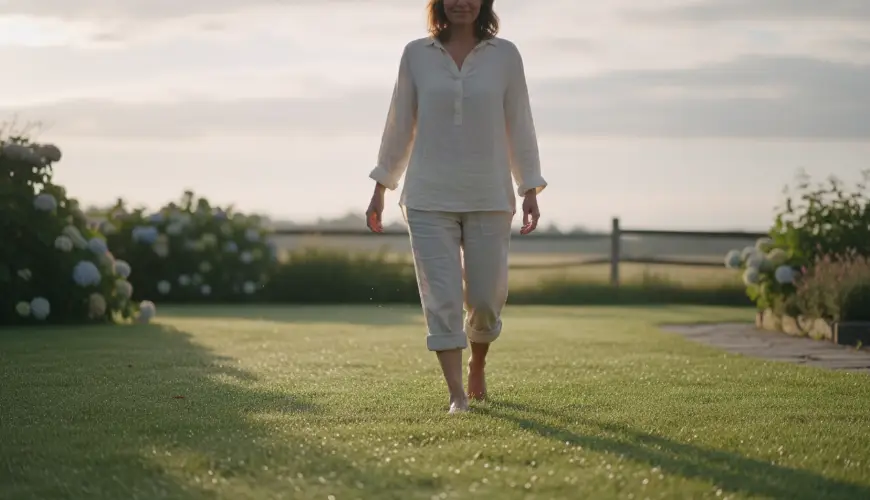
Most people spend their entire lives wearing shoes. From the first steps in children's shoes through school slippers, sports trainers, and on to elegant work shoes – feet are almost continuously confined in footwear. And yet this seemingly innocent habit may be one of the reasons why so many people suffer from knee, back, or hip pain without having any idea where to look for the cause. Walking barefoot activates muscles that spend practically their entire lives at rest when wearing conventional footwear – and this has far-reaching consequences for the whole body.
Consider Markéta, a forty-two-year-old accountant from Brno, who spent years battling Achilles tendon pain and occasional calf cramps. An orthopaedist found no structural damage, a physiotherapist recommended exercises, but nothing helped as significantly as one seemingly trivial step – she started walking barefoot in her garden every morning. After a few weeks, she found that her feet were stronger, more stable, and the pain had significantly diminished. Her story is not exceptional. Similar experiences are shared by a growing number of people who came to barefoot walking out of necessity, curiosity, or on the recommendation of a specialist.
Try our natural products
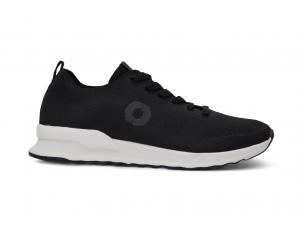
What happens to muscles in shoes – and what happens without them
Modern footwear is designed to protect the foot, absorb impact, and stabilise the ankle. But this protection has its downside. When a shoe takes over the stabilisation function, the muscles that would otherwise have to provide it themselves become unnecessary – and gradually weaken. This is a completely natural biological principle: what is not used, atrophies.
The human foot is, architecturally, a remarkable construction. It consists of 26 bones, 33 joints, and more than a hundred muscles, tendons, and ligaments. The intrinsic muscles of the foot – the so-called intrinsic muscles – are responsible for fine motor control of the toes, maintaining the arch, and transferring forces with every step. These muscles are chronically weakened in the majority of adults. A study published in the specialist journal Journal of Foot and Ankle Research repeatedly highlights a direct link between wearing supportive footwear and the weakening of the foot's intrinsic musculature.
Barefoot walking changes this situation fundamentally. Without a shoe, the foot must actively respond to every uneven surface, maintain balance, and control movement itself. Small muscles that had been in a passive state for years suddenly find themselves in the role of lead performers. And that hurts – literally, at first. The first few days or weeks of walking barefoot on grass, sand, or even on the floor at home can be uncomfortable, because the muscles are not accustomed to this demand. But it is a pain that signals an awakening, not damage.
Equally important are the muscles of the lower leg and calf. When walking in shoes with even a slight heel – and most everyday footwear has one – the Achilles tendon is shortened and the calf muscles work through a different range of motion than the one for which they are evolutionarily set. Barefoot walking returns the ankle to its natural position and forces the calf to work through its full range. The result is better blood circulation, greater tendon flexibility, and a significantly reduced risk of injury.
But what happens higher up also deserves attention. Weak foot muscles and an unstable ankle have a direct influence on the knees, hips, and spine. The body functions as a chain – if one link is weak or immobile, the others compensate. A weakened foot arch leads to pronation (the foot rolling inward), which alters the axis of the knee, which overloads the hip, and the hip then strains the lumbar spine. Barefoot walking is therefore not merely a matter of feet – it is an intervention for the entire musculoskeletal system.
There is also a neurological dimension to the whole process. The foot is literally packed with nerve endings – proprioceptors – that continuously send the brain information about the body's position in space. The thick soles of modern shoes significantly dampen this communication. The brain then receives less precise information, balance deteriorates, and the body becomes less capable of responding to unexpected movements. This is one of the reasons why older people with weakened proprioception fall more frequently. Barefoot walking, or at least walking in minimalist footwear, restores this sensitivity – and this manifests as improved coordination, stability, and overall confidence of movement.
How to start – and why it matters more than it seems
The transition to barefoot walking should be gradual. This recommendation is not merely caution for caution's sake – it is a biological necessity. Muscles, tendons, and bones that have been accustomed to the support of footwear for years need time to adapt to new demands. Too rapid a transition can lead to overload, inflammation, or even stress fractures.
A sensible starting point is to walk barefoot indoors – on carpet, wooden floors, or tiles. Thirty minutes a day is sufficient. Gradually, walking on grass, sand, or rounded stones can be added; these are particularly beneficial for stimulating the foot. A popular method within so-called reflexology is walking on cobblestone mats that simulate natural terrain. Research from the Oregon Research Institute showed that regular walking on rounded cobblestone mats improves blood pressure and balance in older adults.
Beyond simple barefoot walking, there are also specific exercises that purposefully strengthen the intrinsic muscles of the foot. These include:
- Toe curling – actively drawing the toes toward the heel without lifting the foot from the ground (the so-called "short foot exercise")
- Picking up objects with the toes – collecting marbles or a pencil from the floor using the toes
- Single-leg standing – on a soft surface, with both open and closed eyes
- Walking on tiptoes and on heels – alternating, to strengthen different muscle groups of the lower leg
These exercises form part of the rehabilitation programmes of many physiotherapists and are recommended, for example, by the Czech Society of Sports Medicine as a preventive measure against flat feet and musculoskeletal pain.
An interesting perspective is offered by comparison with cultures where walking barefoot or in minimalist footwear is traditional. Studies of tribes in Africa and Asia, where wearing shoes is the exception, consistently show a higher foot arch, stronger intrinsic muscles, and a lower incidence of degenerative joint diseases of the lower limbs. As biomechanist Daniel Lieberman of Harvard University noted: "Humans evolved to walk and run barefoot or in minimal footwear, and their feet are perfectly adapted for it." These words are not a romanticisation of the past – they are the result of scientific research that Lieberman and his team published in the prestigious journal Nature.
Barefoot walking is not a trend or a passing fad – it is a return to the way the human body functioned for hundreds of thousands of years, before footwear began to "protect" it to such a degree that it stripped away its natural function. This does not mean that shoes are always bad under all circumstances. On hard asphalt, in environments with injury risks, or during specific sporting activities, footwear has an irreplaceable role. But if a safe opportunity exists to take off one's shoes – in the garden, on the beach, at home, or in a park on the grass – it is an investment in health that pays off.
It is also worth reflecting on the choice of footwear for everyday use. Minimalist shoes with a thin, flexible sole and a wide toe box are a compromise between protection and the natural function of the foot. Unlike conventional sports shoes with a massive cushioning sole, they allow the foot to work more naturally, transmit proprioceptive information, and do not shorten the Achilles tendon. The transition to them should be just as gradual as the transition to barefoot walking.
The whole story of barefoot walking is, in essence, a story about how modern civilisation creates problems in good faith that it then struggles to resolve. Shoes protected feet from stones and cold, but at the same time cut the entire movement system off from natural stimulation. Rehabilitation, orthopaedic insoles, and strengthening of the lower limb muscles are then the response to problems that would, to a large extent, never have arisen had feet had the opportunity to do what they are made for.
Markéta from Brno may not have known this when she first stepped out onto the morning grass with bare feet. But her body knew it immediately.