

Tips on how to incorporate walking into everyday city life

We live in an era when apps on our phones count our every step, fitness bands remind us we've been sitting all morning, and yet most of us spend a significant part of the day without any movement at all. Meanwhile, one of the most natural and accessible forms of exercise — walking — is waiting literally just around the corner. In a city where everything seems to operate on the principle of "as fast as possible with as little effort as possible," it is paradoxically easier than anywhere else to find opportunities for movement. You just need to know where and how to look.
Modern urbanism has brought us metros, trams, shared bikes and electric scooters, but at the same time has quietly deprived us of the natural movement that previous generations took for granted. Grandmothers and grandfathers didn't go "to exercise" — they simply walked. To the shop, to visit neighbours, to the market, to work. Walking wasn't an extra activity, but a fundamental part of the daily rhythm. Today we must consciously rebuild this rhythm, right in the middle of an environment that actively invites us to sit.
Try our natural products
Why walking in the city is more than just sport
You may be wondering whether walking is even worth considering as a form of exercise. After all, it's not "real exercise," is it? This myth is remarkably persistent, yet untrue. The World Health Organization recommends that adults get at least 150 minutes of moderate-intensity physical activity per week, and brisk walking fully qualifies. Regular walking reduces the risk of cardiovascular disease, helps regulate blood sugar levels, improves mood and supports sleep quality. And all of this without a gym membership, without special equipment, and without needing to block out time in your diary for a "workout."
In an urban environment, walking has yet another dimension that sets it apart from movement on a treadmill or in a park on the edge of a village. The city stimulates. Shop windows, people, architecture, the smell of bakeries, chance encounters — all of it turns walking into an experience rather than mere mechanical movement of the legs. Psychologists speak of the phenomenon of "soft fascination" — a gentle, unforced engagement with the surroundings that allows the brain to rest while remaining present. A walk through the city can thus be meditation, inspiration and natural movement all at once.
The figure of 10,000 steps per day has become something of a gold standard, even though its origin is somewhat surprising — it was coined as a marketing slogan by a Japanese pedometer manufacturer in the 1960s, not established as a scientifically determined norm. Research published in the journal JAMA Internal Medicine showed that health benefits begin at around 7,000 steps per day and continue to grow with each additional thousand. In other words, it's not a magic number, but a principle: more steps means better health, and every extra step counts.
How to naturally add steps to an urban day
The theory is all well and good, but what does it look like in practice? Take the example of Martina, a thirty-year-old project manager from Brno. She works in an office, commutes by metro and collapses exhausted onto the sofa in the evening. Yet she managed to increase her daily step count from an average of 3,500 to more than 8,000 — without a single visit to the gym and without having to get up an hour earlier. How? By getting off one stop earlier, having lunch in the park instead of at her desk, and taking an evening walk with her dog, who "forces" her outside even in rainy weather. Nothing dramatic, no revolution — just a series of small decisions that gradually became habits.
This strategy of small changes is precisely the key to an active lifestyle without the feeling that we are exercising. Behavioural change experts call it "habit stacking" — new habits attach themselves to existing routines like carriages added to a train. Want to walk more? Link walking to something you already do. A phone call with a friend? Walk while you talk. Morning coffee? Go to the café a block further away instead of the one right downstairs. A meeting that could just as well be a walk? Suggest a "walking meeting" to your colleagues — this format has been embraced by companies around the world, and research confirms that movement during a meeting boosts creativity and reduces tension.
The city itself offers dozens of everyday opportunities for movement that we typically overlook. Escalators and lifts are a comfort we have become so accustomed to taking for granted that we treat stairs as the exception. Yet climbing stairs burns approximately five times more calories than taking the lift and significantly strengthens the muscles of the legs and glutes. Similarly with the journey home from work — instead of taking the direct metro route, one can occasionally choose the longer walking option and turn it into a mindful stroll, during which you notice your surroundings, relax and move at the same time.
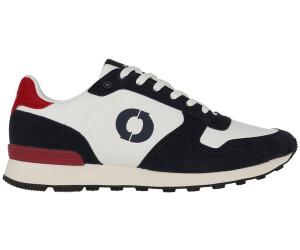
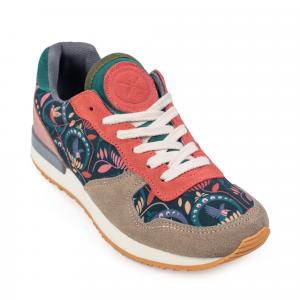
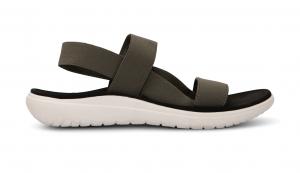
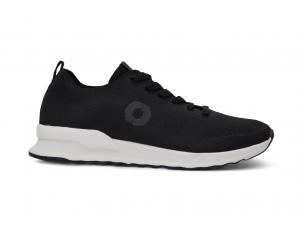
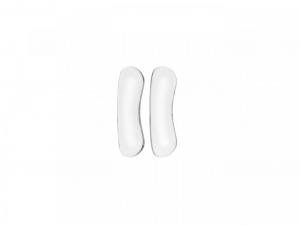
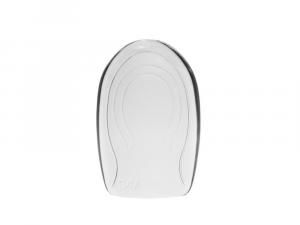
The right footwear also plays an important role. It may sound trivial, but painful blisters or tired feet are one of the most common reasons people give up walking. Investing in quality, comfortable footwear designed for longer walks is an investment in your own health — and it doesn't have to mean expensive sports brands, but simply shoes that truly fit and support the natural movement of the foot. Just as attention is paid to the quality of food or sleep, what we walk in deserves attention too.
For those who want to track their movement around the city and stay motivated, various apps and pedometers can be useful tools. Their value lies not so much in the accuracy of measurement as in the fact that feedback motivates. Seeing a number at the end of the day — whether it's 5,000 or 9,000 steps — creates a sense of achievement and naturally encourages you to make tomorrow's number a little higher. As the writer and philosopher Henry David Thoreau said: "Methinks that the moment my legs begin to move, my thoughts begin to flow." This intuition is now confirmed by research — walking genuinely supports divergent thinking and creativity.

Walking as part of sustainable urban life
Movement in the city has yet another dimension that goes beyond personal health. Everyone who chooses their own two feet over a car or public transport contributes — however modestly — to less congested streets, lower noise levels and cleaner air. Walking is the most sustainable form of movement that exists — zero carbon footprint, zero fuel costs, zero demand for a parking space. At a time when cities around the world are looking for ways to reduce emissions and improve the quality of life for their residents, walking is one of the simplest yet most effective tools available to each and every one of us.
Many European cities actively champion this philosophy. Vienna, Copenhagen and Amsterdam have long been built in such a way that walking and cycling are the natural choice, not an act of heroism. Prague, Brno and Ostrava are also gradually transforming in this direction — pedestrian zones are expanding, pavements are being widened, and new parks and green corridors are being created. This infrastructure is an invitation for people to stop seeing walking as a waste of time and to begin understanding it as a natural part of urban life.
For parents with children, everyday walking carries the added value of the example they set for their children. A child who sees their parents walking, taking in their surroundings and enjoying movement naturally develops a relationship with active movement long before they begin learning about sport at school. Healthy movement is inherited — not genetically, but through lifestyle.
There is also a psychological aspect that is often overlooked in discussions about walking: walking is time for yourself. In a world overloaded with notifications, deadlines and constant availability, a walk without a phone — or at least without headphones — is a rare form of rest for the mind. Research from the University of Michigan showed that just 20 minutes of walking in a natural or semi-natural environment (and city parks count) significantly reduces levels of cortisol — the stress hormone. The city thus offers not only movement, but also an opportunity for mental regeneration, which in today's world is just as necessary as physical activity.
There is no need to overhaul your entire life, rise at dawn or buy expensive equipment. All it takes is the next time you have a free moment or are waiting for a bus — take a few extra steps. Choose the stairs. Walk to lunch. Get off a stop earlier. Movement in the city is not a performance or a discipline — it is a way of returning to something we have always known how to do as human beings, and something that naturally benefits us. And the best part? It's waiting for us literally just around the corner.