
Ecological habits that last long-term are easier to build than you think
Starting with more sustainable habits is surprisingly easy. It's harder to stick with them when the initial enthusiasm fades, a hectic work week arrives, the kids get sick, or you just don't want to deal with anything extra. That's why today it makes the most sense to talk about how to build ecological habits that last long-term – not as a list of "right" decisions, but as small shifts that naturally settle into the everyday routine. And perhaps one might ask a simple question: why should one change anything when one person won't save the world?
However, the meaning of sustainability often doesn't lie in heroic gestures but in what happens repeatedly. When a one-time “I'll try it" becomes a routine, alongside the ecological impact comes a benefit for the household: less waste, fewer last-minute purchases, less chemistry, often even fewer expenses. And most importantly – less feeling that sustainability is another demanding project.
Try our natural products

Why incorporate eco habits when life is already so full?
There are more reasons to incorporate eco habits than just the effort to "be better." For many people, it's a practical response to reality: rising energy prices, overflowing bins, more sensitive skin after aggressive cleaners, or simply the fatigue of constantly buying disposable items. Sustainable changes often begin very personally – and only then connect to a broader impact.
At the same time, it is good to have a basic framework in mind, confirmed by authoritative sources. For example, the Intergovernmental Panel on Climate Change (IPCC) has long pointed out that alongside systemic changes, changes in consumption and daily decisions also play a role. Similarly, the European Environment Agency (EEA) regularly summarizes how households affect emissions, waste, and resource consumption. This doesn't mean everything is on the individual – it means that sustainable ecological habits make sense as part of a larger puzzle.
And then there's another often underestimated reason: psychological relief. When a few simple rules are set at home, everyday minor stress disappears. There's no need to constantly think about which bag to buy, how to clean the bathroom, or where to put another piece of plastic. Some things just "are done this way" – saving attention and time.
"The most sustainable change is the one we can repeat even in a week when we don't feel like doing anything."
This sentence may sound ordinary, but it captures the essence. Sustainability is not a performance sport. It's more about setting up an environment where the right choice is the easiest one.
Ecological habits that last long-term: less perfection, more rhythm
When "eco habits" are mentioned, many people think of big changes: a composter in the garden, a packaging-free store across town, homemade everything from yogurt to laundry detergent. Yet, the steps that stick best long-term are those that are small, repeatable, and connected to what one already does. In other words: ecological habits that last long-term are often the least ostentatious.
It starts surprisingly ordinary: at the bin, at the sink, at the shopping list. If the goal is for the change to survive even during challenging times, it's worth thinking on three levels – what is easy, what is visible, and what has an immediate reward.
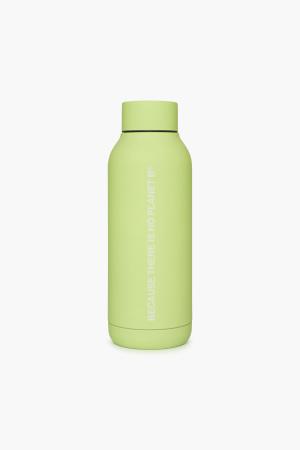
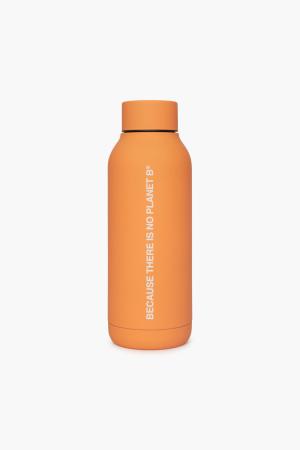
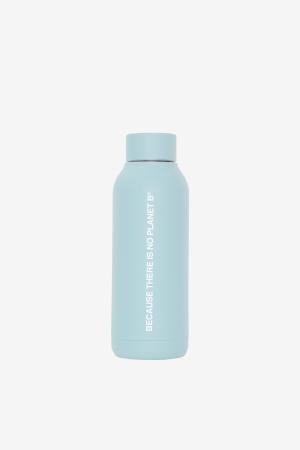
Easy means the habit doesn't require long decision-making. A typical example: cloth bags and pouches. When they're by the door or folded in a backpack, there's nothing to solve. But if they lie somewhere "in a special place" where one doesn't usually go, it remains a good intention. A water bottle works similarly: when it is automatically refilled in the evening and goes into the bag in the morning, single-use PET bottles gradually disappear without much effort.
Visible means the habit is "in sight." When sorting bins are clearly labeled and handy, sorting happens naturally. When they're hidden in a corner and the lid is hard to open, the brain opts for the shortest path – mixed waste. Sustainability often loses not to unwillingness but to inconvenience.
And immediate reward? It can be as simple as a better feeling from a clean home without aggressive odors. When the household gradually switches to gentle cleaning agents (whether ready-made ecological concentrates or simple recipes), many people notice that the air at home is easier to breathe, and some surfaces don't suffer as much as when scrubbed "with force." For more sensitive individuals, the reward can also be that the skin on their hands isn't irritated after cleaning.
Into this comes one important principle that might be the most liberating: it's not necessary to do everything. On the contrary, the pursuit of perfection is often the most common reason why good changes don't last. Sustainability that survives years consists of compromises, not absolute rules.
Try our natural products


Real-life example: how an "eco plan" becomes a routine
In one ordinary household (two adults, a preschool child), it started with the plastic bin always being full, and the kitchen piling up with snack wrappers, cleaning agents, and disposable sponges. The change didn't come with a big revolution but with three small things: a reusable cloth was placed on the counter, two sturdy bags were hung on the door, and a small space was created at the entrance for returnable containers. Nothing more.
The first week, they forgot a few times. The second week, the bags started traveling automatically. After a month, it turned out that fewer "quick" plastic items were being purchased at home, because the bag and list simply led to more thought-out shopping. After half a year, a water bottle was added and gradually the refilling of some agents. Not because someone was forcing it, but because the environment changed, and the habits stuck to the daily rhythm.
This is important: long-term habits often don't look like big eco gestures. They look like ordinary order in what works at home.
Tips for eco habits that really last (and don't take over your mind)
There are tips for eco habits that last because they are practical and quickly yield results. It's not about adding tasks but rather simplifying some things. If a few steps can be chosen that complement each other well, the household starts behaving more sustainably almost "incidentally."
It works well to choose one area – kitchen, bathroom, or wardrobe – and make two to three changes that support each other there. When too much is started at once, the brain evaluates it as a new project, and at the first sign of stress, it gets shelved.
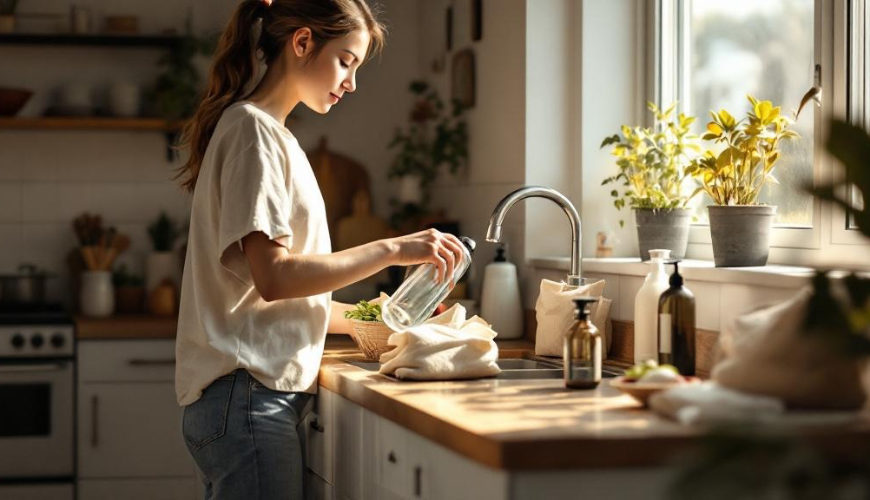
One of the strongest areas is the kitchen, as it sees the most repeated decisions. A big difference is already made when a lunch box and bottle settle at home, possibly a few jars and containers for dry foods. Suddenly, it's easier to take lunch, buy something into your own container, or store leftovers without single-use packaging. And when the habit of planning shopping based on what is already at home is added, food waste is also reduced – a topic addressed by institutions like FAO concerning the global impacts of food waste.
In the bathroom, the biggest "aha moment" often comes with items that are consumed repeatedly: soap, shampoo, deodorant, makeup removal. Replacing disposable pads with washable makeup remover pads or liquid soap in plastic with solid soap is a change that quickly shows in the amount of waste. Moreover, this type of habit sticks easily because it repeats every day and doesn't need "reminding."
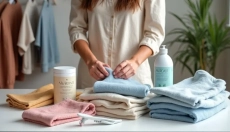
And then there's the wardrobe – an area where sustainability is often unnecessarily simplified to whether a person buys "eco" brands. Yet, the greatest impact often comes from ordinary care for clothes: washing less frequently, at lower temperatures, not leaving the washing machine half-empty, drying gently. Microfibers from textiles and their impacts are discussed in numerous studies; for basic orientation, UNEP's overview of plastic and microplastic pollution can serve as a guide. It's not about being anxious, but about the fact that even small changes in clothing care extend their lifespan – and that's one of the most reliable sustainable habits ever.
If only a few things are to be chosen that can be implemented without much preparation, this simple principle usually works: replace disposable items with reusable ones and reduce the number of "just because" purchases. And to ensure it doesn't remain theoretical, one list is enough, which can be gradually ticked off – not as tasks, but as inspiration:
- Always have a bag and a small pouch for bread or fruit so that disposable packaging isn't the automatic choice
- Use a water bottle and coffee cup if drinks are bought on the go
- Switch to refills or larger packaging for frequently used items where it makes sense
- Simplify cleaning to a few universal agents and reusable cloths
- Set up sorting at home to be the easiest, not "the prettiest" – primarily functional and handy
This list isn't about perfection. It's about making sustainability rely on convenience. Once it's convenient, it's long-term.
Another important detail comes into play: every household has a different rhythm. Some cook daily, others hardly at all. Some have time to visit a zero-waste store, others juggle logistics with kids and work. Therefore, it's smart to choose habits that fit the specific reality. Sustainable ecological habits aren't a universal recipe but rather a set of possibilities from which to choose what won't be bothersome.
And if a period comes when everything falls apart, and disposable items are bought again? That's also part of the long journey. Longevity doesn't come from never taking a step back but from being able to return to what worked without guilt. It's the guilt that often causes sustainability to be completely abandoned – and that's a shame because even a few stable habits have a greater effect over time than a short wave of perfection.
In the end, it turns out that a more ecological life isn't about having everything "bio" and "zero waste" at home. It's about less waste in the ordinary day, things being used longer, the household being calmer, and decisions being less chaotic. And when curiosity and willingness to try small changes are added, eco habits that last start appearing almost on their own – in the kitchen, bathroom, and wardrobe, in everyday small things. And that's where their strength lies.