

What is Greenwashing and How to Identify It in Household Products

Green packaging, leaves in logos, words like "eco," "bio," or "natural," accompanied by an image of a mountain stream. On the shelf, it exudes a calming effect: surely, nothing could be wrong here. However, in the category of household products—ranging from laundry gels to bathroom cleaners to "eco-friendly" sponges—a phenomenon has been growing in recent years that can quickly exploit the good intentions of consumers. Greenwashing is a marketing shortcut that poses as caring for the planet but is often based on unsubstantiated promises, half-truths, or clever distractions. And since everyone shops for household products, the impact can be surprisingly large.
You might be wondering: what is greenwashing and how can I recognize it if I'm not a chemist or a lawyer? The good news is that in everyday life, learning a few simple checking habits often suffices. It's not about being suspicious of everything "green," but about being able to distinguish an honest product from a charming façade. In the following paragraphs, we will look at how to spot greenwashing in household products, what to watch out for, and how to gradually create a household that is truly more sustainable—not just on the label.
Try our natural products
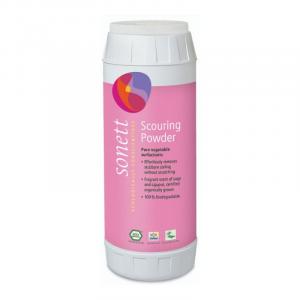
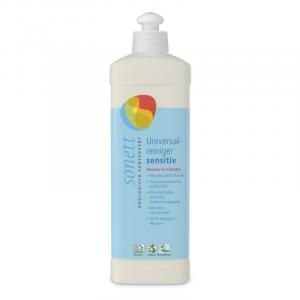
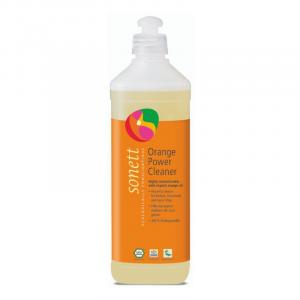
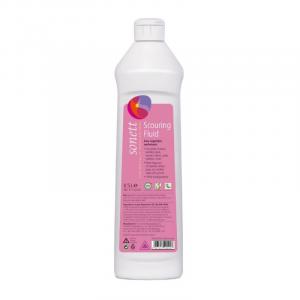
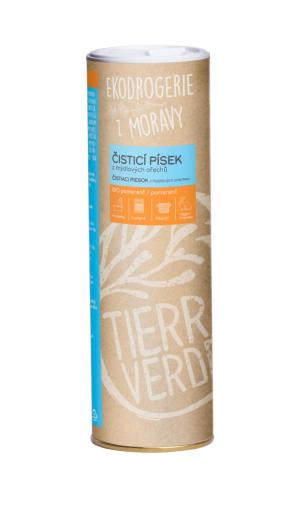
What is greenwashing and why does it sell so well
Greenwashing is when a brand or product creates the impression of being ecological, sustainable, or "green" without being substantiated by real actions, transparent data, or meaningful impact. Sometimes it's downright misleading claims, other times it's "embellishment": a company makes a minor change (like adding a drop of natural fragrance) but presents it as a major ecological revolution.
Household products are ideal ground for greenwashing. Firstly, they are bought often and repeatedly. Secondly, their impact is harder to estimate—few people can immediately assess what "biodegradable" means in practice or what difference a different type of packaging makes. Thirdly, it plays on emotions: a clean kitchen and fragrant laundry are comforting certainties that people associate with safety for family and home.
It's also important to note that "green" claims are more strictly regulated today than before, but marketing is often faster than legislation. The European Union has been long working to limit misleading environmental claims and strengthen the rules for their substantiation; context for this is available on the European Commission's webpage on boosting consumers' role in the green transition. Until these principles are implemented into practice and controls, having your own "consumer radar" is useful.
How to spot greenwashing in household products: signals worth attention
The most common greenwashing works like a smoke screen: a product might be slightly better than the competition in some way, but the message on the packaging is so broad and confident that it creates an impression of overall sustainability. However, household products can be assessed quite realistically—based on their composition, packaging, certifications, transparency, and real use.
Vague words without evidence: "eco," "green," "sustainable," "natural"
When a label says "ecological" or "nature-friendly" without providing any explanation, caution is warranted. Sustainable in what way? For water organisms, the air, the skin, the packaging? Without context, it's just a feeling. Similarly, "natural" can mean a lot—even substances of natural origin can be processed in such a way that the resulting impact is not innocent at all.
A practical guideline: if the main argument on the front of the packaging is just a general green word and nowhere is it clearly stated why (composition, certification, data), it's a typical candidate for greenwashing.
"Chemical-free" and other appealing myths
In household products, the slogan "chemical-free" often appears. But that's nonsense: everything is chemistry, including water and baking soda. More meaningful is a claim like "chlorine-free," "phosphate-free," "synthetic fragrance-free," or "optical brightener-free"—specific information that can be verified. When a laundry gel boasts "chemical-free," yet has a long list of ingredients without explanation or certification, it's more marketing than honesty.
A simple rule applies here: the more specific the claim, the greater the chance it is true. Conversely, the more magical and general, the more it needs further reading.
Green images instead of information
Leaves, dewdrops, recycling symbols, natural colors… the design itself is proof of nothing. Sometimes it even happens that the packaging looks "recycled," but it is actually new plastic without any recycled content. Or it has a large recycling symbol, even though the type of material is only limitedly recyclable in the local system.
If you want to quickly filter out greenwashing, look at what the packaging says, not how it looks. "100% recyclable" is often misleading: a technically recyclable material does not mean it is actually recycled everywhere and always. More meaningful is the information about the percentage of recycled material or the possibilities of refill.
"Biodegradable" without conditions
"Biodegradable" sounds great, but in practice, it depends on the environment and how long it takes for the substance to break down. Some components degrade well in an industrial facility, others less so in cold water or in nature. If a manufacturer uses "biodegradable" as the main argument, they should be able to provide more: such as what standards it meets, what portion of the components are biodegradable, and under what conditions.
Reliable context on why conditions are important can be found in information about the operations of treatment plants and the aquatic environment on the European Environment Agency (EEA) website—it isn't necessary to study scientific articles, but it's good to know that "it disappears" is not the same as "it doesn't burden."
Certifications: when real, they help. When made-up, they confuse
Certifications are one of the fastest tools for orientation—but only when they are independent and recognized marks. For household products, certifications like EU Ecolabel (the European eco-label) or other schemes with clear criteria are common. If a product bears a trustworthy certificate, it's a good sign because someone outside the company assessed the fulfillment of requirements. Information about EU Ecolabel is readily available on the EU Ecolabel official website.
On the other hand, there are "pseudo-eco" brands that look like a certificate but are actually internal marketing logos of the manufacturer. How to recognize it? Often, there’s no link to an organization, no license number, no explanation of criteria, or no possibility of online verification.
A simple question almost always works: Who verified it? If the answer is "we did," it's weak.
Practical story: two "eco" bottles, two different worlds
Imagine a common situation: a person stands in a drugstore choosing a dishwashing liquid. The first bottle shouts "ECO" across half of the label, has a green cap, and promises "cleanliness from nature." But when you turn the packaging, you find only general phrases and no mention of certification, concentration, or refilling. The second bottle is less "Instagrammable" but provides specific information: it is a concentrate, recommends small dosing, has clearly stated composition, verifiable certification, and additionally offers refill into the same bottle.
At first glance, the "greener" one might win visually. After a minute of reading, however, it becomes clear which choice is probably more honest. And this is where greenwashing most often loses: not in emotions, but in details.
"When sustainability claims cannot be verified, it is just a story—and stories sell easily on the shelves."
What to watch for when choosing: small checks that make a big difference
It doesn't have to become a detective story. Just a few habits that automate over time and take literally seconds.
Watch concentration and dosing (and not just "eco" words)
One of the most practical things for household products is concentration. Concentrates mean less packaging consumption, less transportation volume, and often better control of dosing. If a product looks "eco" but needs to be used in large amounts, the impact might be worse than that of a well-designed concentrate.
This can be recognized simply: look at how many milliliters are recommended per dose, or how many washes/laundry loads the packaging is expected to last. The less product needed, the better (of course, while maintaining efficiency).
Pay attention to packaging: refill, recycled content, simplicity
Packaging is a huge topic for household products. The best packaging is often that which is reused—therefore, it makes sense to look for refilling, larger packaging, or returnable packaging systems where they exist. If refilling isn't possible, at least information about the percentage of recycled plastic and whether the packaging is easily recyclable (without unnecessary material combinations) is helpful.
Be wary of "compostable" plastics without an explanation: sometimes they decompose only in industrial composters, which aren't available everywhere. In domestic conditions, they may end up in mixed waste, and the effect is lost.
Read the composition without panic: look for transparency
For cleaning and laundry products, the composition is often given in a certain format. Not everyone needs to understand every word, but signals can be noted: does the manufacturer make an effort to explain what's in the product and why? Does it list allergens in the fragrance? Are there available online information? Or is it just a list that seems like a mandatory ride without context?
If a brand talks about sustainability but also hides basic information, it’s contradictory. Transparency is the opposite of greenwashing.
Beware of "one green attribute" masking the rest
A common trick: a product boasts one parameter that sounds great (such as "vegan" or "not tested on animals"), but that alone says nothing about the impact on water, packaging, or component toxicity. Not that such features aren't important—they are. But it's good to see them as one part of the puzzle, not as automatic proof of sustainability.
Similarly, "made in the EU" can be a plus due to transport and standards, but it doesn't automatically mean an ecological product. Greenwashing often relies precisely on inflating one good thing into the size of the whole truth.
If something sounds too perfect, it needs a second look
"Completely harmless to nature," "100% ecological," "zero footprint"—absolute claims are suspicious because the reality of household products is always about compromise. Even the best product costs something: energy for production, packaging, transport. An honest brand is more likely to describe what specifically it does better and where it has limits.
Tips for household products without greenwashing: how to choose smartly and with ease
The goal isn't to have a "perfect" ecological household overnight. Much more sustainable (and mentally pleasant) is to gradually replace things running out with better options. And above all, to choose in a way that doesn’t become a chase for an ideal but a practical change that makes sense.
Start with the products you buy most frequently
Typically, these are dishwashing, all-purpose cleaners, laundry detergent, and bathroom cleaner. This is where the advantage of concentrates, refills, and well-set dosing is most quickly realized. And this is also where greenwashing is most prevalent, because competition is huge.
If one were to do one thing immediately, it often helps to replace "everything for everything" with a few purposeful products: a quality all-purpose cleaner, something for grease, and something for limescale. Fewer bottles mean less packaging and less chaos in the household—and paradoxically, less space for impulsive purchases of "miracle eco novelties" that still disappoint.
Prefer brands that can substantiate claims
An honest brand is recognized by its unafraid detail: it states certifications, explains composition, has clear dosing, communicates packaging solutions, and ideally offers refilling. It doesn't mean having everything the greenest in the world, but that it doesn't just play on impression.
A simple test helps: try to find something about the product within a minute. If you encounter understandable information and verifiable data, it's a good sign. If you find only advertising texts and phrases, the green color on the website won't save it.
Choose solutions that reduce consumption, not just "replace" plastic
Sometimes, greenwashing hides even in the trend "plastic is evil." Plastic packaging can be a problem, but it isn't always automatically worse than alternatives. Glass is heavier, transport can be more demanding. Paper may not handle a humid environment. More important than the material itself is often whether the packaging is reused, whether it’s made from recycled material, and whether it can be really sorted.
Therefore, a great compromise is often one sturdy reusable bottle with refills, or larger packaging that reduces the amount of single-use packaging.
The only list worth it: quick check against greenwashing
- Is the claim specific and verifiable? (certifications, license number, clear criteria)
- Is the product concentrated and reasonably dosed?
- Is the packaging sensibly designed? (refill, recycled content, simple recycling)
- Is the brand transparent about composition and impact?
- Do the promises sound too absolute? ("100% eco," "chemical-free," "zero footprint" without explanation)
A small change in usage sometimes has a bigger effect than changing brands
Surprisingly, "tips for household products without greenwashing" are not just about what you buy, but also how you use it. Overdosing laundry detergent is common and leads to a higher consumption of chemicals and packaging without making the laundry cleaner. Similarly, with cleaners: often, smaller amounts are enough, with longer action time and the right tool (microfiber cloth or brush) instead of another "extra strong" bottle.
And this is where honest brands differ: they teach using less because they trust themselves. Greenwashing, on the other hand, often supports the notion that it's necessary to keep adding, spraying, "disinfecting," and buying.
Ultimately, it's a simple question: does the product and brand genuinely aim to improve the impact of the household, or just dress the old model in a green coat? Once a person learns to notice details, greenwashing starts to seem a bit transparent—and shopping paradoxically simplifies. On the shelf, more room remains for what's essential: choosing things that work, make sense, and don't rely on a catchy shortcut when they can offer an honest answer.