
Discover the magic of the Wallachian double bass and its childhood flavors
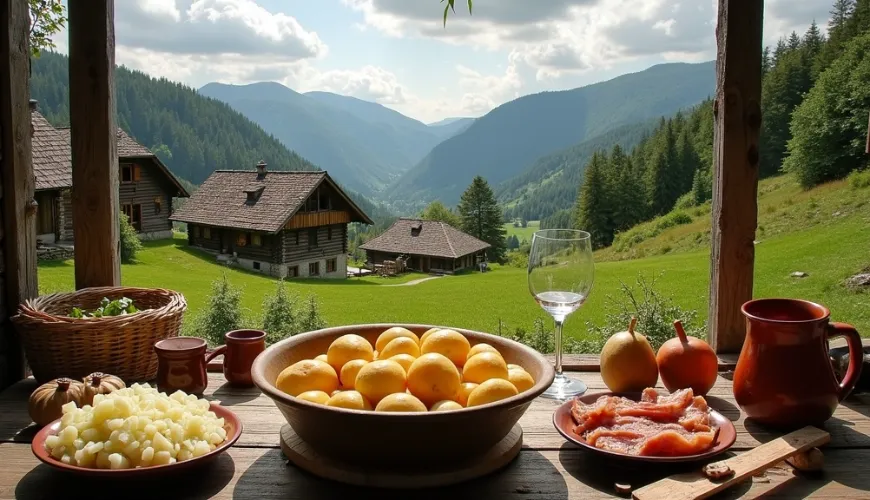
Valašský Kontrabáš - A Forgotten Treasure of Folk Cuisine
In the heart of Wallachia, nestled among the hills of the Beskydy Mountains and traditional wooden cottages, is a dish that for many is synonymous with honesty, simplicity, and the flavors of childhood. Valašský kontrabáš, as this dish is called, may be less known today than halušky or lard spread, but in the time of our great-grandmothers, it was one of the basic pillars of home cooking. And it’s no surprise. The combination of potatoes, cabbage, and bacon can still lift your spirits and warm your soul today.
Although the name might evoke a musical instrument – a double bass – it is, in fact, a hearty dish that was primarily prepared in poorer mountainous areas. True Valašský kontrabáš has its history deeply rooted in folk traditions, and its preparation and taste are a small celebration of common sense and the ability to create maximum enjoyment from minimal ingredients.
What is Valašský Kontrabáš and Why Should You Try It?
The word "kontrabáš" likely originates from the German language – “Konterpartie,” meaning counterpart or complement. In this case, it is a complement to cabbage or bacon, but also a dish that “contrasts” with other meals – with its richness, simplicity, and ease of preparation. It was often served on its own, but you can also find it called Valachian kontrabáš with cabbage, where sauerkraut is one of the main components.
The main ingredients are potatoes, onions, lard, often smoked meat or bacon, sometimes a bit of flour, and other basic ingredients that were commonly available in almost every household. It’s not a complicated recipe with a long list of items. On the contrary – simplicity is what makes this dish so exceptional.
Today, as many people are returning to traditional values, home cooking, and local ingredients, Valašský kontrabáš is experiencing a quiet comeback. Restaurants focused on regional cuisine are reintroducing it to their menus, and food blogs are reviving grandmother’s recipes that might otherwise be forgotten.
Recipe for True Valašský Kontrabáš
The foundation of everything is quality ingredients – preferably potatoes from your own garden, homemade sauerkraut, and genuine smoked bacon. If you don’t have your own, look for products from local farmers or stores that emphasize freshness and origin.
Ingredients:
- 1 kg potatoes (ideally of cooking type C)
- 200 g smoked bacon or lard
- 1 large onion
- about 300–400 g sauerkraut
- lard for frying
- salt, pepper
- optionally a tablespoon of plain flour
The process is simple, but its charm lies in patience and properly frying each component. First, peel and finely grate the potatoes. Then, melt lard in a pot, add chopped onions and bacon, and let them render to golden brown. Add the potatoes, and stir constantly while frying until they change consistency to a thick mash with crispy edges. If adding flour, do so at this stage and briefly toast it.
Separately, briefly stew the sauerkraut in a pan, which is then served either mixed directly with the potato base or as a side dish.
In some families, kontrabáš is made sweet – instead of cabbage, plums were added, for example. This variation is rare and depends on the specific region or family tradition.
Why Is Kontrabáš Worth Including in Your Diet Today?
At a time when there is increasing talk about sustainability, seasonality, and local ingredients, Valašský kontrabáš represents a great example of how to cook not only deliciously but also ecologically. It doesn’t require exotic ingredients, doesn’t create unnecessary waste, and the ingredients used have a long shelf life. Moreover, it’s a meatless dish – if you omit the bacon, it’s perfect for vegetarians too.
What’s more, making kontrabáš is economically affordable. Compared to modern "superfoods" or ready meals, it offers higher nutritional value, less chemistry, and more satiety. After all, it’s no coincidence that kontrabáš was the main meal for hard-working Wallachians – lumberjacks, shepherds, and carpenters.
A beautiful example can be found in a family from Valašská Bystřice, who revived old recipes from their grandmother and now run a small inn with home cooking. They serve kontrabáš with crispy bread and fresh kefir – a dish that quickly won the hearts of not only tourists but also locals. "It's a dish that smells like home. People remember it from childhood, they just forgot how it tastes," says Mrs. Marie, who has been passing the recipe on for three generations.
A Tradition That Speaks to Today
Perhaps one could say that Valašský kontrabáš is a kind of gastronomic minimalism. From a few basic ingredients, you create a dish that is honest, hearty, and rich in flavor. It’s a reminder that cuisine doesn’t have to be complicated to be good. And that returning to roots is not just nostalgia but a practical challenge – to cook economically, without waste, and with regard to health.
From a gastronomic standpoint, what’s fascinating about kontrabáš is how it slightly differs in various regions. In some parts, garlic is added, elsewhere cabbage is replaced with fermented beets, or cottage cheese is mixed into the potatoes. Each region has its variation, but the foundation remains the same – simple but nutritious.
And what is most interesting? This dish has survived centuries without being recorded in festive cookbooks. Yet, you’ll find it in the heart of anyone who grew up in the countryside or visited a Wallachian cottage. It’s a silent hero of folk cuisine, capable of competing with modern gastronomic trends.
So perhaps it’s time for you to try at home how the cuisine of our ancestors tasted. All you need are a few potatoes, a bit of lard, and a handful of determination. And who knows – maybe Valašský kontrabáš will become your new family treasure.