
Sunday Syndrome or Why We Cook Differently on Weekends
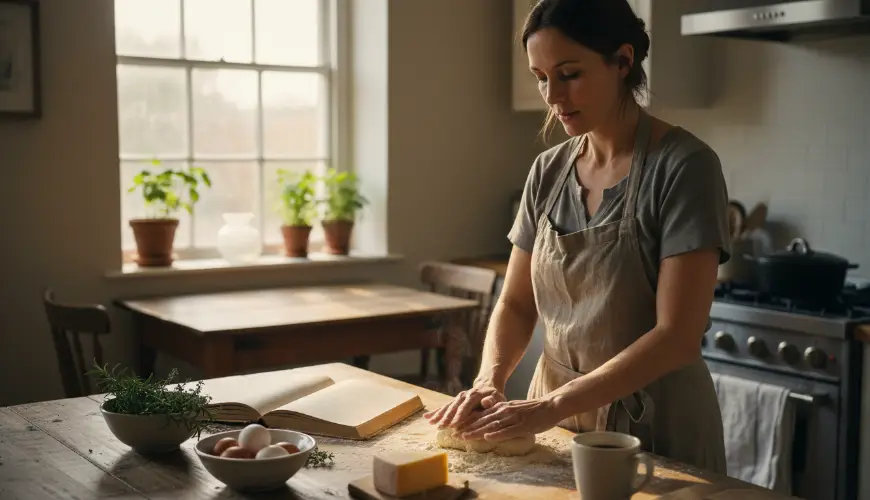
Friday afternoon. The working week is finally coming to an end, and with it the daily merry-go-round of quick lunches, reheated leftovers, and dinners made from whatever happened to be on hand. The weekend brings not only rest, but also a special transformation in the kitchen – suddenly there is time, desire, and energy to cook differently, more carefully, with greater joy. This phenomenon, which could be called the Sunday syndrome, is familiar to almost everyone who has ever spent a Sunday over a pot of slowly bubbling goulash or with hands greasy from homemade bread dough. But why does it actually happen? What causes the same person who on a Tuesday evening opens a tin of tomatoes and considers it cooking, to spend Saturday morning studying complex recipes and going out to buy fresh herbs?
The answer is not as simple as it might seem. It is a combination of psychological, social, and cultural factors that together create an entirely different relationship with food and its preparation depending on the day of the week. And understanding this phenomenon can surprisingly reveal a great deal about how modern people think about food, time, and their own lifestyle.
Try our natural products





Weekday versus weekend: two different kitchens under one roof
On weekdays, cooking is primarily a logistical problem. A person comes home tired, with limited time and mental capacity drained by work obligations. Psychologists call this phenomenon "decision fatigue" – after a whole day full of decisions, whether professional or personal, the brain simply refuses to tackle more complex culinary challenges. The result is simple, quick meals that fill the stomach but bring no particular experience. Pasta with a ready-made sauce, a sandwich, fried eggs – these are the symbols of the weekday kitchen.
At the weekend, the situation changes radically. The brain has space. It is not under the pressure of deadlines or meetings. Time subjectively expands, and what would seem like an unacceptable waste of two hours spent cooking on a Wednesday transforms on a Sunday into a pleasant afternoon. Cooking ceases to be an obligation and becomes an activity – a form of relaxation, creativity, or meditation. It is no coincidence that the word "hobby" and cooking appear so naturally together in the context of the weekend.
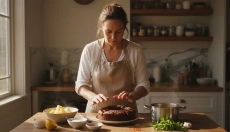
Take Markéta, for example, a thirty-six-year-old project manager from Brno. Throughout the week she lives mainly on canteen food and quick dinners. But on Saturday morning she gets up, makes herself a coffee, and opens a cookbook. She does not plan it in advance – it simply happens. She picks a recipe for a French quiche, drives to the farmers' market for fresh eggs and cheese, and spends an hour and a half cooking something that would never have crossed her mind on a Wednesday. And she feels great throughout. What changed? Markéta did not change. The context changed.
This transition between working time and leisure time is well documented in psychology. Research shows that a sense of autonomy – the ability to do things at one's own pace and of one's own free will – significantly increases satisfaction and motivation. Cooking at the weekend is almost always an autonomous choice, whereas cooking on a weekday tends to be perceived as a necessity.
Ritual, nostalgia, and the social dimension of Sunday cooking
But the Sunday syndrome has yet another, perhaps deeper dimension – and that is tradition. In Czech culture, as in many other European cultures, Sunday lunch holds a special place. It is a time when the family gathers at the table, when the "real" food is cooked – svíčková, roast duck, homemade dumplings. This cultural memory is powerful and persists even in generations that otherwise live very modern lifestyles.
The sociologist Norbert Elias, in his works on the civilising process, wrote about how shared dining shapes social bonds and strengthens a sense of belonging. Sunday lunch in this sense is much more than just a meal – it is a ritual that affirms family and friendship ties, bringing a sense of stability and continuity. Food prepared with care and time is also a form of love, a way of telling other people that they matter.
It is therefore not surprising that people reach for more complex recipes, higher-quality ingredients, and spend significantly more time in the kitchen at the weekend. Cooking becomes a performance in the best sense of the word – the act of preparing food is part of the experience, not merely its result. That is also why weekend cooking so often involves guests, friends, or the whole family. Sharing the process is just as important as sharing the outcome.
But why does this impulse towards ritual cooking come specifically at the weekend and not, say, on a Tuesday evening, even if there would theoretically be time for it? The answer lies in the psychology of time frames. The weekend is marked in our minds as "free time", and this label activates entirely different sets of behaviour and expectations. The brain literally switches into a different mode – and the kitchen is the first to feel it.
Another factor is conscious presence, to which modern psychology is devoting increasing attention. Cooking at the weekend tends to be slower, more focused, less automatic. A person notices scents, textures, colours. This form of mindfulness in the kitchen brings demonstrable psychological benefits – it reduces stress, improves mood, and strengthens a sense of competence. A study published in the Journal of Positive Psychology showed that small everyday creative activities, of which cooking is undoubtedly one, are associated with higher levels of wellbeing and energy.
How the Sunday syndrome changes shopping behaviour and the relationship with food
This phenomenon naturally also influences what people buy and where. The weekday shop is quick, purposeful, focused on practicality. The weekend shop is different – slower, more exploratory, open to novelty and quality. Farmers' markets, specialist organic shops, delicatessens – these are the places that see their greatest footfall precisely at weekends, and that is no coincidence.
Interest in high-quality, local, and ecological food grows markedly at the very moment when people have time to think about what they eat. Shoppers who on a Wednesday would unhesitatingly reach for a cheaper conventional product will, on a Saturday morning, carefully read labels, ask about the origin of ingredients, and be willing to pay more for a product that aligns with their values. The weekend, then, is not just a different time for cooking – it is a different mental state in which people are more open to conscious decision-making.
This shift is also observable in the area of sustainable shopping. Ecological products, zero-waste alternatives, or fairly produced foods find their way into shopping baskets primarily when the customer has the time and mental capacity to think about the broader impact of their decisions. The weekend is ideal ground for such decisions. It is therefore no surprise that the growing interest in a sustainable lifestyle goes hand in hand with the trend of mindful, slow cooking that takes place precisely at weekends.
Also interesting is the relationship between the Sunday syndrome and planning. Many people use the weekend not only for cooking itself, but also for preparing for the week ahead – so-called meal prepping. They cook larger quantities of food, prepare the bases of sauces, or marinate meat. Weekend cooking thus paradoxically helps to solve the weekday problem of a lack of time and energy. It is an elegant bridge between two worlds, in which the weekend joy of cooking serves as a practical investment in the week ahead.
It is worth mentioning, however, the darker side of the Sunday syndrome. For some people, weekend cooking can become a source of pressure and stress – a feeling that they "must" cook something exceptional because it is, after all, the weekend. Social media amplify this pressure further; perfectly photographed Sunday brunches and elaborate desserts can create the impression that one's own efforts are not good enough. As British chef and writer Nigel Slater reminds us: "The best food is that which brings joy to the one who cooks it, not only to the one who eats it." This thought is perhaps the best antidote to the perfectionism that sometimes builds up around weekend cooking.
The Sunday syndrome is, in the final analysis, a beautiful example of how deeply food is intertwined with our inner lives. It is not just about caloric need or gastronomic experience – it is about time, freedom, relationships, and values. The way a person cooks at the weekend reveals something about what truly matters to them: whether they long for connection with family, for creative expression, for slowness as a counterweight to the hurried week, or simply for the taste of home-cooked food that no canteen can provide. And perhaps that is precisely why that Sunday pot of goulash or freshly baked bread always seems a little better than anything else – because a person has put into it not only ingredients, but also a piece of themselves.