

Microdosing nature or 20 minutes outside every day
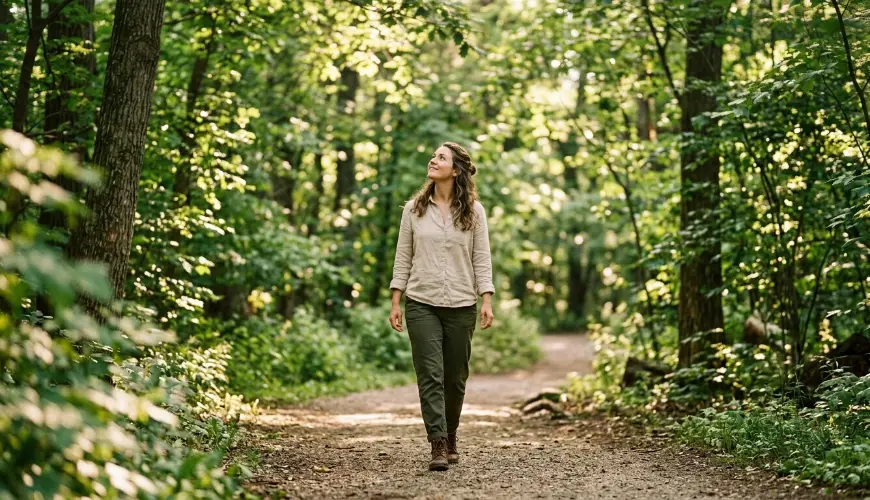
We live in an era when nature feels increasingly distant. Cities are growing, working days are getting longer, and screens consume us from morning to evening. Yet there is a surprisingly simple way to reverse the negative effects of the modern lifestyle on both body and mind – and it requires neither a weekend trip to the mountains nor expensive wellness retreats. All it takes is twenty minutes a day spent outdoors, in contact with nature. This approach, which scientists and psychologists are increasingly referring to as nature microdosing, is slowly becoming one of the most widely discussed topics in the field of mental health and stress prevention.
The term draws on the concept of microdosing, which was originally associated with pharmacology – that is, administering very small doses of substances in order to achieve a subtle but measurable effect. Translated into the world of nature and psychology, the principle is the same: instead of waiting for holidays or weekends when we can finally "get our dose of nature," we incorporate it into everyday life in small, regular doses. And the results that science is delivering are more than convincing.
Try our natural products



What happens to the brain and body when we go outside
Research published in the academic journal Frontiers in Psychology showed that just twenty to thirty minutes spent in a natural environment – whether in a park, a garden, or on a forest path – significantly reduces cortisol levels, the stress hormone. Scientists from the University of Michigan, who led the study, found that this twenty-minute threshold represents a kind of turning point: up until that point, the body is still "switching" into a calmer mode, and after it, measurable physiological changes begin to take hold. In other words, a shorter walk certainly has its effect too, but twenty minutes is the magic threshold at which the benefits truly start to manifest.
And it is not just about cortisol. Regular time spent in nature influences a whole range of physiological processes – from blood pressure and heart rate to sleep quality and immune system function. The Japanese concept of shinrin-yoku, literally "forest bathing," which is recognised in Japan as part of preventive medicine, demonstrates that trees release phytoncides into the air – volatile organic compounds that have been shown to increase the activity of natural killer cells in the human body. These cells are crucial for the body's immune defences, and their activity remains elevated for several days after returning from the forest. The Japanese National Research Programme on Forest Therapy confirms this data across dozens of studies conducted across different age groups.
At the same time, what happens in the mind also changes. Nature acts on the brain in a way that psychologists call attention restoration – a theory formulated by Rachel and Stephen Kaplan, which holds that natural environments require a different type of attention than urban or work environments. While in an office or on a street we must constantly filter stimuli, concentrate, and respond, in nature the brain shifts into what is known as involuntary attention – passively perceiving the surroundings without the need for active effort. This state is deeply restorative for the brain, much as sleep restores the body.
It is therefore no surprise that after a walk in the park, people feel fresher, more creative, and less overwhelmed. A 2015 Stanford University study even found that people who went for walks in nature had lower activity afterwards in the part of the brain associated with rumination – that is, repetitive dwelling on negative thoughts, which is a hallmark symptom of depression and anxiety.
Nature microdosing in practice: how it works in everyday life
Theory is one thing, the reality of everyday life is another. Most people know they should spend more time outdoors, but there is a wide gap between knowing and actually changing habits. This is precisely where the ingenious simplicity of the nature microdosing concept lies – it does not require a radical reorganisation of life, but rather the conscious integration of nature into things we are already doing anyway.
Imagine Kateřina, a thirty-three-year-old project manager from Prague who works from home and whose greatest challenge is getting out of her flat at all. She did not start with hour-long walks in the forest. She started by taking her morning coffee and drinking it on the balcony instead of at her computer. Then she added a short walk around a nearby park before lunch – not as exercise, not as an achievement, just as a break. Within three weeks, she noticed she was sleeping better, procrastinating less, and finding it easier to concentrate during afternoon work sessions. Twenty minutes a day. Nothing more, nothing less.
This very undemanding nature is key. Nature microdosing works because it is sustainable. You do not need special equipment, a club membership, or ideal weather. You just need intention and a little routine. Psychologists recommend anchoring a new habit to something you already do automatically – such as your commute to work, lunch, or an afternoon coffee break. If you walk part of the way through a park instead of taking the metro, you fulfil your "nature quota" without any extra effort whatsoever.
It also matters how you spend your time outdoors. Research suggests that being present in the moment is key – that is, consciously perceiving your surroundings, rather than taking a mechanical walk with headphones and a podcast. This does not mean you have to meditate or practise mindfulness in its formal sense. It is enough to occasionally look up from your phone, notice the colour of the leaves, the texture of tree bark, or the sound of birds. Such micro-moments of attention deepen the restorative effect of nature and shift a walk from the category of "movement" into the category of "genuine restoration."
As environmental psychologist Ming Kuo puts it: "Nature is not a luxury. It is a basic need of the human brain, just like sleep or food." And it is precisely this perspective that changes the way we should think about our relationship with nature – not as a hobby or a reward, but as a daily mental health hygiene practice.
Why modern people underestimate nature – and how to change that
It is paradoxical that in an age when we have access to more health information than ever before, we spend less time in nature than our grandparents did. According to various studies, the average European spends more than 90% of their life indoors. Children play outside significantly less than previous generations. And although most people intuitively know that spending time in nature does them good, few actively incorporate it into their day as a conscious priority.
Part of the problem lies in how we think about productivity. Going for a walk in the middle of a working day can feel like a waste of time – something we can allow ourselves only once we "have everything done." But this logic is precisely backwards. Twenty minutes in nature increases productivity, creativity, and the ability to concentrate – and to a degree that far outweighs the time we "lost." It is an investment with an immediate return.
Another factor is urbanisation. More than half of the world's population lives in cities, and many people do not have easy access to forests or natural landscapes. But even this is not an insurmountable obstacle. Research shows that even spending time in an urban park, a garden, or simply near trees on a street brings measurable benefits. The World Health Organization, in its recommendations for healthy cities, emphasises that access to green spaces should be seen as a public health priority, not an aesthetic luxury.
For those who want to deepen their relationship with nature at home as well, there are interesting options – from growing herbs on a windowsill to choosing natural materials in the home, or using products that connect everyday routines with nature. For example, using natural cosmetics, essential oils, or textiles made from organic materials can serve as a kind of extension of the nature experience into the interior. It is not a substitute for spending time outdoors, but rather a cultivation of a conscious relationship with the natural world as such.
Nature microdosing is ultimately about a shift in perspective. About stopping to see nature as a destination we occasionally travel to, and starting to see it as an everyday companion. The trees in the park on the way to work, rain on your face, the scent of freshly cut grass – these are all small doses of something that our brains and bodies deeply need. And as both science and common sense show, very little is truly enough. Twenty minutes. Every day. Outside.