

# Shoe Care Everyone Forgets About
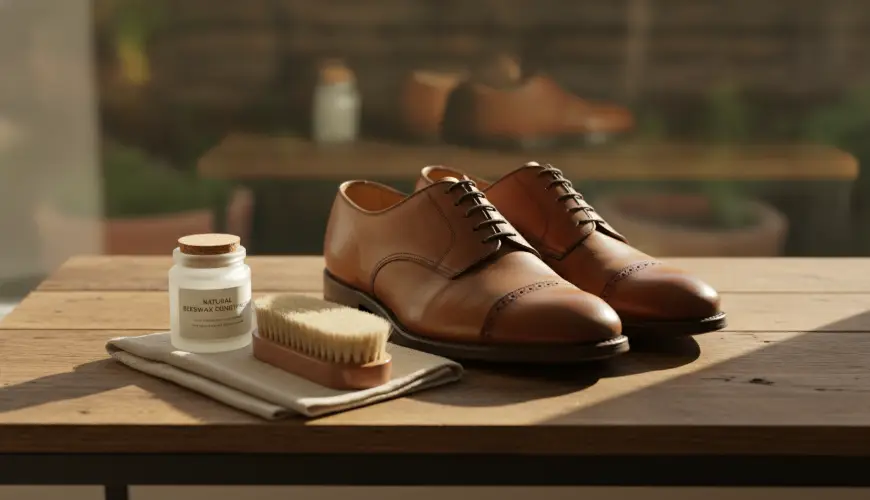
The average Czech person owns approximately ten pairs of shoes, yet few people devote more than a few minutes a year to their maintenance. Shoes are simply worn, worn out, and eventually thrown away – and the whole cycle repeats itself. But this approach is not only costly for the wallet, but also for the planet. Producing one pair of leather shoes generates an average of over 15 kilograms of CO₂, which is comparable to driving a car approximately 70 kilometres. If everyone extended the lifespan of their shoes by just a year or two, the environmental impact would be enormous.
The truth is that proper shoe care is neither complicated nor expensive. It does, however, require a little knowledge and above all consistency – which is precisely what most of us lack. This article focuses on specific practices that actually work, yet almost nobody follows them.
Try our natural products
Why shoes deteriorate faster than they need to
Before we get to the care itself, it's worth understanding why shoes actually fall apart. The biggest enemies of shoes are not so much intensive wear, but rather moisture, salt, heat, and a lack of material conditioning. Leather is a natural material that needs hydration – just like human skin. If it doesn't receive it, it dries out, cracks, and loses its structure. Synthetic materials are more resistant to moisture, but more susceptible to mechanical damage and delamination.
Another factor is the way shoes are worn. Most people wear the same two or three pairs of shoes in rotation, giving them no time to "breathe". The sweat and moisture that gets into a shoe during the day needs at least 24 hours to evaporate. If you put the shoe on again the very next morning, the moisture remains inside and gradually damages both the inner lining and the very construction of the upper.
Salt is a problem that gets less attention. During the winter months, pavements are treated with chemical de-icing agents that leave white stains on leather or fabric and gradually break down the material. Yet all it takes is wiping the shoes with a damp cloth after every winter outing and letting them dry – and yet most people don't do it.
Care that nobody thinks about
There are several steps in shoe care that are generally well known, but in practice almost nobody follows them. The first is regular waterproofing. A waterproofing spray or wax creates a protective layer on the surface of the shoe that repels water and dirt. Most manufacturers recommend waterproofing shoes every four to six weeks with regular wear – in practice, however, people do it once a season, if at all.
Similarly underrated is sole care. While the upper of the shoe is visible and people at least occasionally polish it, the sole receives minimal attention. Yet it is the sole that bears the entire weight of the body and is the first to wear out. Regular inspection of the sole and timely repair at a cobbler's can extend the life of a shoe by months, sometimes even years. Experienced cobblers say that most shoes that come to them could have been repaired much earlier – but the owners waited until it was too late.
Take the example of Martin, a man in his thirties from Brno, who three years ago bought a quality pair of leather derby shoes for four thousand crowns: in the first year he didn't take any particular care of them, only occasionally wiping them with a cloth. After the winter season, the shoes had white salt stains on the sides and the leather was beginning to crack at the toe. Only then did he take them to a cobbler and start conditioning and waterproofing them regularly. Today, three years later, the shoes look almost like new. Martin estimates that proper care has saved him at least two or three pairs of shoes – and thus several thousand crowns.
This story is not an exception. It is exactly the kind of experience that changes one's approach to maintaining things in general. As the writer and philosopher Matthew Crawford once wrote in his book Shop Class as Soulcraft: "Things we care for serve us longer – and at the same time teach us patience."
Specific steps that will genuinely extend the life of your shoes
Shoe care varies depending on the material, but there are general principles that apply to most types of footwear. Below are steps that work and yet few people actually follow:
- Rotate your pairs of shoes – ideally have at least two to three pairs in rotation, so each pair has time to dry out and return to its original shape.
- Use shoe trees or stretchers – wooden shoe trees absorb moisture and maintain the shape of the shoe, preventing deformation of both the upper and the sole.
- Clean your shoes after each wear – a dry or slightly damp cloth is sufficient to remove dirt before it soaks into the material.
- Condition leather regularly – natural conditioners based on beeswax or lanolin are gentle on both the material and the environment.
- Waterproof before each season – and repeat every four to six weeks during active wear.
- Visit a cobbler preventively – don't leave repairs until the last moment when the sole is completely worn through.
It may seem like too many steps, but in reality the entire routine care takes only a few minutes a week. And the result? Shoes that last twice, three times, or even longer.
The material matters – and so does the method of care
Different materials require different approaches, and this is precisely where many people make mistakes. Leather shoes need regular conditioning and polishing, while suede or nubuck shoes require a special brush and waterproofing designed specifically for these materials – regular leather cream would irreversibly damage them. Fabric trainers can in many cases be washed in a washing machine at low temperatures, but manufacturers warn against drying in a tumble dryer or in direct sunlight, as heat breaks down the adhesives bonding the sole to the upper.
Environmentally conscious customers also have an increasing number of natural shoe care products available today – without aggressive chemicals, in glass packaging or in solid form without plastic packaging. Such products are not only gentler on the shoe material, but also on the environment. At Ferwer, you can find eco-friendly shoe care products that combine effectiveness with respect for nature – from natural conditioners to waterproofing sprays free of harmful substances.
Interestingly, according to research by the Ellen MacArthur Foundation, extending the lifespan of clothing and footwear by just nine months would reduce their carbon footprint by 20 to 30 percent. That is a figure that speaks for itself – and shows that caring for things we already own is one of the most effective ways to reduce our ecological footprint without dramatic lifestyle changes.
Proper shoe storage is another aspect that tends to be overlooked. Shoes should not be stored in closed plastic boxes without air circulation, because moisture has nowhere to go and the material begins to mould or become sticky. Breathable fabric bags or original boxes with openings are ideal. You should also avoid storing shoes in direct sunlight or near heat sources – UV radiation and heat cause degradation of both leather and synthetic materials.
Another topic that is almost never addressed in shoe care is laces and inner insoles. Replacing old laces with new ones costs literally a few pennies and immediately improves the appearance of the entire shoe. Insoles are even more important – they absorb sweat and dirt, and if they are not replaced, they become a breeding ground for bacteria and fungi that then damage the inner lining. Anatomical or antibacterial insoles are available at a reasonable price, and replacing them regularly significantly extends the hygienic life of the shoe.
It could be said that shoe care is essentially an investment – and on several levels at once. Financial: a quality pair of shoes that is properly cared for can last five, ten, or more years, while cheap shoes without care wear out within a season. Ecological: fewer discarded shoes means less waste in landfills and less demand for new production. And aesthetic: well-maintained shoes simply look better and complement the overall impression of an outfit.
It is also worth knowing that quality repairs at a cobbler's are increasingly accessible today – in many cities, traditional cobbler's workshops operate, but modern repair shops with online booking or even the option of sending shoes by post are also growing in number. Organisations such as Ševci sobě in the Czech Republic actively promote a culture of repair and show that repair is not just an economic choice, but also a conscious decision for a more sustainable way of life.
Finally, we return to the question posed at the beginning: why do so many people neglect the care of things they use every day and for which they paid a considerable sum? The answer is probably a combination of a lack of habits, information, and to some extent a culture of fast consumption that has taught us to replace things rather than repair them. But this culture has its price – and we pay it, as does the planet. Changing our approach to shoe care is a small step, but one that can have a surprisingly large impact – and it can begin this very evening, with a cloth and a bottle of conditioner in hand.