

Try coconut kefir instead of the classic one
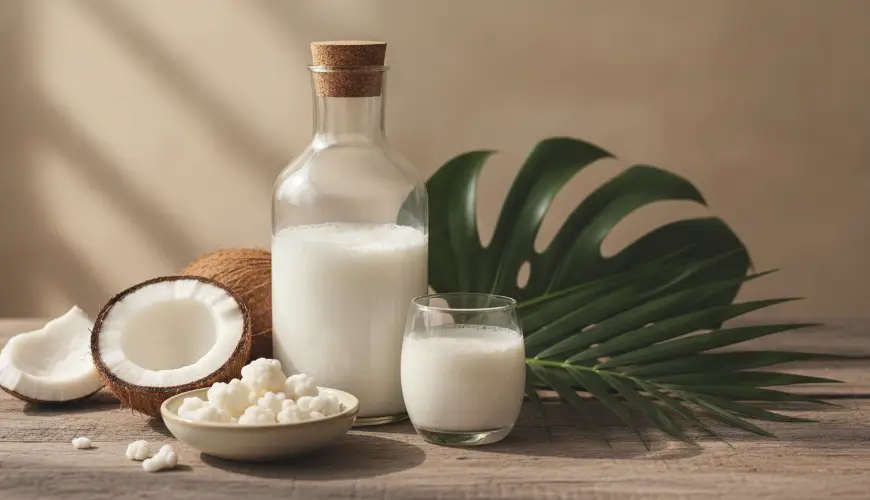
The world of fermented beverages has been experiencing a true renaissance in recent years. People are increasingly interested in what they eat and drink, seeking natural paths to better health and rediscovering forgotten traditions that their grandparents took for granted. Coconut kefir belongs precisely to this movement – a drink that combines thousands of years of fermentation wisdom with a modern approach to nutrition free from animal products. This is no mere passing trend, but a genuinely valuable alternative for anyone seeking a probiotic drink without lactose.
Traditional kefir, as most people know it, originates from the Caucasus and is made by fermenting cow's, goat's, or sheep's milk using so-called kefir grains – a symbiotic culture of bacteria and yeast. The result is a lightly sparkling, tangy drink full of beneficial microorganisms. The problem arises for people with lactose intolerance or those who have chosen a vegan lifestyle. For them, traditional kefir was long out of reach – until it was discovered that kefir grains work wonderfully in coconut milk or coconut water as well.
Try our natural products

What exactly is coconut kefir and how is it made?
Coconut kefir is produced by fermenting coconut milk or coconut water using the same cultures as those used in making classic kefir. Kefir grains contain dozens of different species of bacteria and yeast that live in symbiosis and together convert the sugars found in coconut into lactic acid, carbon dioxide, and a whole range of beneficial compounds. The resulting drink is lightly sparkling, pleasantly tangy, and carries a characteristic coconut aroma that sets it apart from classic kefir.
Fermentation is no modern invention – it is one of the oldest methods of food preservation that people have used for thousands of years. As writer and fermentation expert Sandor Ellix Katz wrote in his book The Art of Fermentation: "Fermentation is a living process that connects us to nature in a way that is rarer today than ever before." Coconut kefir is precisely such a living product – each batch is slightly different, influenced by temperature, fermentation time, and the specific cultures involved.
Making it at home requires only kefir grains, quality coconut milk or coconut water, and a little patience. The grains are placed in the liquid, the container is covered, and left to ferment at room temperature for approximately 24 to 48 hours. The longer the fermentation continues, the more sour and less sweet the resulting drink will be. After the process, the grains are strained out and ready for the next use – they can be used indefinitely if properly cared for.
The difference between the coconut milk and coconut water versions is noticeable. Coconut milk yields a thicker, creamier result with a higher fat content, while coconut water produces a lighter, more refreshing drink with a lower caloric value. Both variants are naturally lactose-free and gluten-free, making them suitable for people with a wide range of dietary restrictions.
Why is a probiotic drink without lactose so important?
Lactose intolerance is far more widespread than many people realise. According to data from the World Health Organization, approximately 65–70% of the adult world population is unable to properly digest lactose, and in some parts of the world, such as Asia or Africa, this figure can reach up to 90%. In the Czech Republic, it is estimated that lactose intolerance affects roughly 15–20% of the population, though the true figure may be higher, as many people attribute their difficulties to other causes.
For those who cannot or do not wish to consume dairy products, replacing probiotics is challenging. Yoghurts, kefirs, and fermented dairy products are among the most natural sources of beneficial bacteria in the diet, and when a person eliminates them from their menu, they must seek alternatives. This is precisely where coconut kefir as a probiotic drink without lactose emerges as a logical and tasty solution.
Take the example of Markéta, a thirty-five-year-old teacher from Brno who had struggled with digestive problems her whole life. For years she thought her bloated stomach and feeling of heaviness after meals were normal. Only after an examination did she discover she suffered from lactose intolerance. Switching to a lactose-free diet helped, but she felt her gut microbiome needed support. Classic probiotic dietary supplements were too expensive for her and not always well tolerated. Then she discovered coconut kefir – and within a few weeks of regular consumption, she described a significant improvement in digestion, more energy, and fewer unpleasant symptoms.
Stories similar to Markéta's are not uncommon. Scientific interest in the gut microbiome has exploded in recent years, and with it an understanding of the crucial role beneficial bacteria play in overall human health. Studies published in journals such as Nutrients repeatedly show that regular consumption of fermented foods is associated with better gut health, stronger immunity, and even a positive effect on mental wellbeing – through the so-called gut-brain axis.
Coconut kefir delivers probiotics in a natural, bioavailable form. Unlike dietary supplements in capsule form, it contains live cultures in an environment that naturally supports their survival in the digestive tract. The fermented liquid also contains prebiotics – substances that serve as food for beneficial bacteria – as well as various organic acids that favourably influence the environment in the intestines.
Another reason coconut kefir is gaining an ever-growing following is its natural absence of lactose. This is not a product from which milk sugar has been artificially removed or broken down by enzymes. Coconut simply does not contain lactose – and therefore coconut kefir is a safe choice even for people with very severe intolerance or allergy to cow's milk.
Coconut milk itself brings a whole range of interesting nutrients. It contains medium-chain fatty acids (MCT), primarily lauric acid, which have antimicrobial properties and are easily utilised as a source of energy. After fermentation, some of these fats are further transformed, but the beneficial properties are preserved. Coconut kefir is therefore not only a source of probiotics, but also a valuable part of a varied and balanced diet.
It is also worth noting that coconut kefir is considerably more planet-friendly than classic dairy kefir. Coconut production has a significantly lower carbon footprint compared to dairy cattle farming, and if one chooses an organically certified coconut product, they can be assured they are also supporting more sustainable agricultural practices.
But how should coconut kefir be incorporated into everyday life? The simplest way is to drink it on its own, in the morning on an empty stomach or as part of breakfast. Thanks to its lightly tangy flavour, it complements fruit smoothies wonderfully, where it also serves as a liquid base. It works excellently in salad dressings in place of yoghurt, or as a base for healthy ice creams and panna cotta. People who enjoy experimenting in the kitchen also use it in pancake or crêpe batters – the fermented liquid lends them lightness and a characteristic flavour.
When choosing ready-made coconut kefir in a shop, it is important to pay attention to the ingredients. A quality product should contain a minimum of additives – ideally only coconut milk or coconut water and live cultures. Added sugar, stabilisers, or artificial flavourings are a sign of lower quality and unnecessarily reduce the resulting health benefits. It is also worth looking for the label "live cultures" or "live probiotics" on the packaging, which guarantees that fermentation has actually taken place and the bacteria are still active.
Home production is surprisingly easy and economical. The one-time investment in kefir grains pays off quickly, as with proper care they last practically indefinitely. After each use, the grains are rinsed, stored in a little coconut water in the refrigerator, and are ready to use again the next day. The entire process is minimalist, requires no special equipment, and is fully in line with the philosophy of a sustainable and mindful lifestyle.
Is coconut kefir, then, just another passing wellness trend that will be forgotten within a year? It seems not. The combination of scientifically supported benefits of fermented foods, growing demand for lactose-free alternatives, and the naturally sustainable character of coconut as a raw material gives this drink a solid foundation. For people with lactose intolerance, vegans, and those who simply want to enrich their diet with a natural probiotic, coconut kefir as a probiotic drink without lactose represents one of the most interesting choices currently available on the market. And that is reason enough to give it a chance.