

Meals that satisfy without overeating will help you maintain energy throughout the day.
Hunger can be a surprisingly persistent adversary. You have a "little something," and an hour later you're reaching for a cookie, and by evening, you feel like you've eaten half the fridge without really getting full. However, there are foods that satisfy without overeating – not because they are "heavy," but because they are cleverly composed. In practice, this means less random snacking, more stable energy throughout the day, and often a better mood. Anyone who has experienced an afternoon slump, when the mind gets foggy and the body craves sugar, knows how much of an everyday advantage a balanced meal that satisfies really is.
It's important to note that satiety isn't just about willpower. It's partly about biology: the body responds to a combination of proteins, fiber, healthy fats, and meal volume. It also helps how quickly we eat, how much we drink, and whether we really "perceive" the food. It's no secret science – just a few repeatable principles that can be translated into everyday cooking and busy days when relying on tips and recipes for quick meals that satisfy is crucial.
Try our natural products
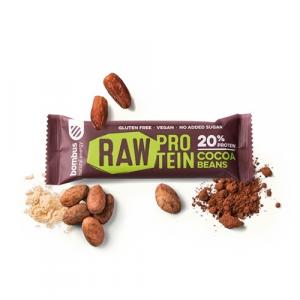
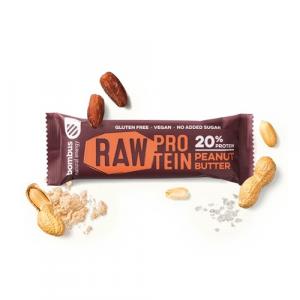
What Really Satisfies: Simple Principles That Work
Satiety can be simplified as the feeling that "it's enough" – and that it will last. This usually results from a combination of several things that support each other. If something is missing from the meal, it often shows: either you're soon hungry again, or you feel the need to snack on "something extra."
The basic building block is usually protein. It's not just athletes who live off it – proteins help maintain a feeling of fullness for longer and also support muscle mass retention. In a typical diet, they can be obtained from eggs, fish, dairy products, legumes, tofu, or quality meat. It's important for them to appear in every main meal, even breakfast, which is often the most "carbohydrate-heavy" and quickly leaves you hungry.
Next to them is *[fiber](https://www.ferwer.cz/blog/jak-doplnit-vlakninu)*. It's a somewhat underrated hero – it doesn't sound as appealing as "protein," but it does a lot for satiety. Fiber slows down digestion, helps stabilize blood sugar levels, and supports the microbiome. Great sources include legumes, oats, whole grains, vegetables, fruits, seeds, and nuts. You can roughly follow the recommendations of authoritative institutions, such as the World Health Organization (WHO) which has long supported higher fiber intake as part of a healthy diet.
Thirdly, there are healthy fats. Fats slow down stomach emptying and add "substance" to meals – but they only need to be used wisely. Olive oil, avocado, nuts, seeds, fatty fish, or quality butter in small amounts do a great service. Fats also help absorb some vitamins (A, D, E, K), so it's not just about satiety but also about nutrition.
And then there's the often overlooked factor: volume and structure of the meal. A big plate of salad with legumes, vegetables, and cheese satisfies differently than a small bar with the same number of calories. Meals with a higher water and fiber content (soups, vegetable mixes, porridge with fruit) can fill the stomach and send a signal to the brain that the body is fed.
In practice, there's a simple rule: when preparing healthy and nutritious meals, they should include some protein, a large portion of vegetables or other fiber, and an appropriate amount of fat. It sounds almost too ordinary – but that's where the strength lies. Once this framework becomes automatic, the need to "catch up" on energy with sweets or a second dinner disappears.
When Time is Pressing: Quick Meals That Satisfy, Even on Weekdays
The alarm rings in the morning, the kids want snacks, meetings pile up at work, and in the evening there's only a few minutes left. On such days, it's decided whether the diet will rely on improvisation or simple certainties. The good news: tips and recipes for quick meals that satisfy don't need to be complicated or expensive. Often, just a few basic ingredients at home and a minimal plan are enough.
A real example? Imagine a typical workday when someone leaves the house with just coffee and "hopes for the best." Mid-morning hunger calls for sweet pastries. After a canteen lunch, fatigue sets in after an hour, and cookies save the afternoon. By evening, hunger is such that you eat quickly and a lot. But if the same day starts with a breakfast that has protein + fiber, often the whole chain breaks: fewer cravings, more stable energy, less need to snack.
For quick cooking, foods that work as "building blocks" are useful: eggs, Greek yogurt or skyr, oats, canned legumes, tuna or sardines, frozen vegetables, leafy salads, whole grain tortillas, quality bread, cheese, tofu, rice, or couscous. From these, you can create surprisingly many variations that are both balanced and satisfying.
A simple list of "rescue" combinations, ready in 10-15 minutes and not based on extremes, can also serve as a practical tool:
- Yogurt/skyr + oats + fruit + nuts/seeds (filling breakfast or snack)
- Eggs (omelet) + vegetables + cheese (quick dinner that holds)
- Chickpeas/beans + vegetables + olive oil + herbs (lunchbox salad)
- Tuna/sardines + whole grain bread + vegetables (quick lunch without cooking)
- Tofu + frozen vegetables + rice/couscous (warm meal in 15 minutes)
This single list is enough for many people as a foundation. At the same time, it's easy to vary it according to season and taste, so the food doesn't become monotonous.
And now more specifically – without unnecessary complication, but in a way that allows for immediate cooking.
Oatmeal That Holds: "Not Just a Sweet Finish"
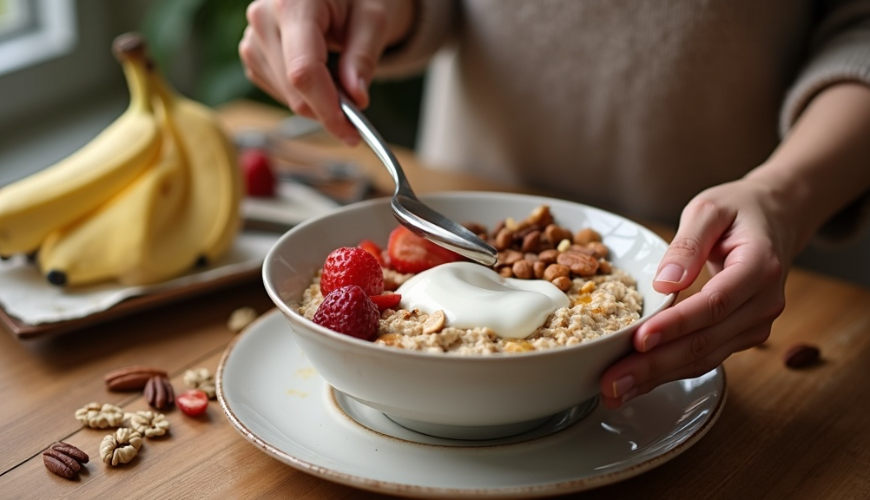
Oatmeal has a reputation as a diet food that disappears after an hour. Often, the problem is that it's only based on oats and fruit. When you add protein and fat, you get a healthy and nutritious meal that really satisfies.
Base: cook oats in milk or plant-based milk, add a pinch of salt (yes, even to the sweet version), then mix in skyr or Greek yogurt. Top with fruit, a spoonful of nuts or seeds, and maybe some cinnamon. The result is a creamy porridge that holds energy longer than a roll with jam. For even more "hold," you can add a spoonful of peanut butter or chia seeds.
Savory Breakfast in 10 Minutes: Eggs, Vegetables, and Something Crunchy
Eggs are quick, accessible, and filling. Just cook them in a pan with spinach, tomato, and a bit of cheese, add a slice of quality bread, and you're done. At that moment, an ordinary breakfast becomes a balanced meal that satisfies, and it often means fewer cravings for sweets in the morning.
"Lunchbox" Salad That Isn't Sad: Chickpeas as a Base
Salad is often seen as something that leaves you hungry. But a salad without protein and energy is more of a side dish than a meal. When you take chickpeas (even from a can, well-rinsed), add cucumber, bell pepper, tomatoes, red onion, olive oil, lemon, salt, pepper, and a handful of herbs, you create a meal with fiber and protein. For even more satiety, adding feta or tuna is a good idea. It's exactly the type of meal that satisfies without overeating, because the portion can be large yet nutritionally sensible.
Warm Meal "From the Freezer" Without Guilt: Tofu Stir-fry
Frozen vegetables are often underestimated, yet they save time and help keep vegetables on hand. In a pan, sauté garlic, add tofu (or chicken), frozen vegetables, a bit of soy sauce, and finish with sesame. Serve with rice or couscous. Done. The result is quick, colorful, and mainly satisfying – a typical example where quick meal doesn't mean "empty meal."
Soup as a Secret Weapon Against Evening Wolf Hunger
Soups can be surprisingly filling because they combine volume, warmth, and often fiber. Lentil, bean, or vegetable soup with potatoes works great. If you add legumes or a piece of meat and a little quality fat, it becomes a full meal. Sometimes a simple sentence, which people remind themselves of in practice, is enough: "Hunger often gets worse when you're tired and dehydrated." Warm soup and a glass of water can do more than expected.
How to Assemble a Balanced Meal That Satisfies Without Counting and Stress
There are plenty of tips circulating online, but in everyday life, those that can be done consistently win. Instead of counting calories or chasing "perfect" macronutrients, simple plate composition proves effective. You eat, have energy, and don't need constant monitoring.
The idea that the plate should consist of half vegetables (raw or cooked), a quarter protein (eggs, fish, legumes, tofu, meat, quark), and a quarter side dish (potatoes, rice, whole grain pasta, bread) works well. Add a bit of fat – like a spoonful of olive oil or a handful of nuts. From such a foundation, you can create a thousand meals, most of which will belong to meals that satisfy without overeating.
A big difference is also made by how you eat. Fast swallowing in front of a screen often leads to the brain not catching the satiety signal. It helps to slow down, take the first bites consciously, and give yourself time. It's not necessary to turn every meal into a meditation, but even a small change – like putting down your phone – can reduce the need for extra snacking.
And then there are "subtle" triggers for overeating: lack of sleep, long gaps between meals, stress, or, on the contrary, a too restrictive diet that is unsustainable in the long run. It's no coincidence that authoritative institutions' dietary recommendations emphasize variety, plenty of vegetables, and whole grains – for example, Harvard T.H. Chan School of Public Health and their Healthy Eating Plate offer an understandable framework that can be translated into Czech cuisine without significant expense.
When it all comes together, the result is a rather reassuring picture: healthy and nutritious food doesn't have to be complicated or "perfect." It just needs to be regularly based on good foundations – protein, fiber, vegetables, and a reasonable amount of energy. And when a few quick ingredients are kept at home, the familiar evening dilemma of "what to quickly eat now" disappears.
Perhaps the most practical thing is to ask yourself a simple rhetorical question before the next meal: Will this meal satisfy for two hours, or just for ten minutes? The answer often hints at what's missing from the plate. And if it's missing, it can be easily added – a handful of legumes to the salad, a spoonful of seeds to the yogurt, an egg on top, vegetables with bread. These small adjustments turn regular food into a balanced meal that satisfies – and turn a regular day into one where eating is done with more calmness and less need for "something more."