
A Basic Grocery List to Simplify a Healthy Diet Even During a Busy Week
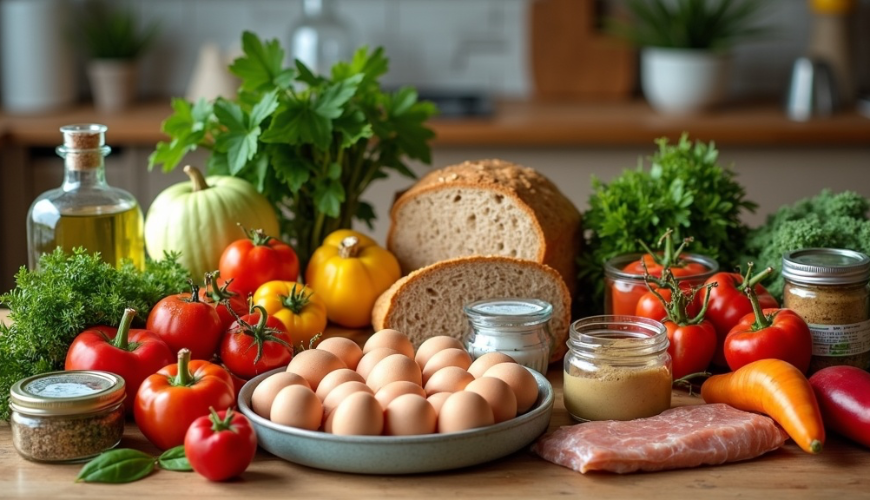
Maintaining a healthy diet during a typical week often falters not due to a lack of willpower but because of simple logistics. When there is nothing to cook with at home, a bread roll with ham, food delivery, or a sweet treat that was supposed to be an exception often wins out. That's why it makes sense to have a basic grocery list on hand—one that doesn't require perfectionism or a fully stocked pantry, just smart essentials. And primarily: so that "what to cook" doesn't become an evening mystery.
Basic groceries are not a diet. They are ingredients that last, can be easily combined, and help create meals that make you feel good. When people hear "basic grocery list for a healthy diet," many envision strict rules, exotic superfoods, and a fridge full of containers. In reality, it's more about a simple system: having a few stable pillars at home (proteins, fiber-rich carbohydrates, fats, vegetables/fruits) along with seasonings that ensure meals aren't boring. It's not about cooking "fit" at all costs but simplifying daily life so that the healthier choice is the easiest one.
This approach aligns with common nutritional recommendations: more vegetables and fruits, enough fiber, reasonable amounts of quality proteins and fats, less highly processed foods. Those who want to delve into the details can look at the World Health Organization's recommendations (WHO) for healthy eating or the overview of nutritional guidelines on the Harvard T.H. Chan School of Public Health website (Healthy Eating Plate).
Try our natural products



Why It's Worth Having Basic Groceries at Home (and Not Just "Something")
There's a difference between a fridge where "something is there" and a household where a quick meal can be put together at any time. What to buy and always have at home for the basics of a healthy diet becomes most apparent when a challenging day comes: you arrive late, you're very hungry, and your energy is low. If there is rice, legumes, frozen vegetables, and perhaps eggs on hand, dinner can be made in twenty minutes. If only ketchup, cheese, and a few cookies are available, the choice is clear—and your body will remind you of that the next day.
A well-stocked pantry also saves money. Instead of impulse purchases of "whatever the eyes see," you buy durable basic groceries that are gradually replenished. And there's another advantage that's rarely mentioned: peace of mind. When there are a few certainties at home, the stress of "there's nothing" disappears—even when there's actually plenty in the kitchen, just not enough to make a meal.
In practice, it often looks like just changing a small thing. A real-life example: in one household, the scenario "quick dinner = bread + something" kept repeating. Once frozen vegetables were added to the freezer and red lentils to the pantry, the evening pace changed. Lentils cook in a few minutes, vegetables are tossed in a pan, spices and a yogurt dip are added—and suddenly it's a meal that satisfies and isn't heavy. Not because someone started living "perfectly," but because they had the right basics at home.
Basic Grocery List for a Healthy Diet: Pillars That Work
There isn't one universal list for everyone. Some eat meat, others don't; some tolerate dairy products, others don't. Yet, you can create a basic grocery list for a healthy diet that is flexible and can be adjusted according to taste and budget. It's important that it includes ingredients for quick meals as well as for more ambitious cooking and covers typical situations: breakfast, lunch, dinner, and snacks.
Carbohydrates That Satisfy (and Aren't Just "Side Dishes")
Carbohydrates aren't the enemy if they contain fiber and provide energy gradually. It's worth having oats in the pantry (for porridge, overnight oats, homemade granola), rice (ideally both natural/jasmine according to taste), pasta (whole grain or classic—depending on what the family actually eats), barley or bulgur, and also potatoes. Potatoes are often underrated, yet they are accessible, versatile, and when prepared carefully, fit well into a healthy regimen.
Add quality bread (ideally rye, sourdough, whole grain—or simply what tastes good and satisfies), and you have a foundation that can support you even in a week when there's no time.
Proteins: Simple Sources That Can Be Combined
Proteins often decide whether a meal satisfies for two hours or five. In a basic setup, it's useful to have several options: eggs (quick omelet, hard-boiled for salad, scrambled eggs), legumes (lentils, chickpeas, beans—both dry and canned), quality canned fish (sardines, tuna in its own juice), and depending on preferences, chicken, turkey, or tofu/tempeh.
Fermented dairy products are also very practical if they suit you: plain yogurt, kefir, skyr. They are suitable for breakfast, as a dip, or as a quick fix when you're hungry and don't have time to cook. And if dairy products aren't an option, a plant-based yogurt with higher protein content or hummus can serve a similar purpose.
"Eat real food. Not too much. Mostly plants." This often-quoted sentence (Michael Pollan) is simple but captures the direction well: more basic ingredients, fewer complex products promising miracles.
Fats and Seasoning: It Won't Taste Good Without Them
A healthy diet doesn't mean dry plates. Quality fat helps absorb certain vitamins and gives food flavor and satiety. It's useful to have olive oil at home (for cold dishes and light sautéing), possibly canola oil for everyday cooking, nuts and seeds (walnuts, almonds, sunflower, pumpkin, chia/flax), and also nut butter without unnecessary additives.
Ordinary things that make a huge difference belong in the "basic" category too: salt, pepper, garlic, onion, lemon, or apple cider vinegar. And then spices: paprika, cumin, turmeric, oregano, curry. When you have a few favorite combinations at home, even frozen vegetables with rice start to taste like a plan, not a last resort.
Vegetables and Fruits: Fresh and Frozen, Mostly Accessible
Vegetables are often the first item to "run out" because they spoil quickly. That's why it's smart to combine fresh with more durable options. It's useful to have carrots, cabbage, beets, onions, and garlic in the fridge—things that last. Add seasonal leafy salads, cucumber, tomatoes, and peppers. And in the freezer, frozen vegetables (peas, spinach, broccoli, mixes) and even frozen fruit for porridge or smoothies.
Frozen foods aren't "worse." They are often frozen shortly after harvest and are a great backup for everyday cooking. Anyone who has ever stood in front of an empty vegetable drawer in the evening knows how handy it is to have at least one "for sure" package in the freezer.
Basic "Quick Fixes": When There's No Time or Desire to Think
This is where the rubber meets the road. When you're hungry, simplicity wins. That's why it's good to have a few items at home that allow for meals without much cooking and yet won't be just "something to nibble on." Canned chickpeas and beans work great, passata or canned chopped tomatoes, stock cubes without unnecessary additives (or homemade frozen), sauerkraut as a quick side dish, and quality cheese or a plant-based alternative when needed.
From these ingredients, you can quickly make a soup, pasta sauce, or warm salad. And that's exactly the type of homemade "fast food" that supports a healthier rhythm without feeling like you constantly have to monitor yourself.
Beverages and "Sweets" So They Don't Misbehave
The drinking regime is a chapter in itself, but it's also worth having basics at home: clean water, herbal teas, quality coffee according to habit. And when it comes to sweets, it helps to have something on hand that satisfies the craving but doesn't cause a sugar rush: dark chocolate with a higher cocoa content, dried fruit in moderation, or fruit as is.
It's not about a ban. It's about ensuring sweets aren't the only "quickly available" option. When there's fruit in a bowl and nuts in the pantry, a snack puts itself together.
How to Make It a Functional Shopping System (and Avoid Overbuying)
Having a basic grocery list is one thing, but even more important is knowing how to use it. The most common issue isn't "too few healthy foods," but chaos: there are five types of pasta, three sauces at home, but no vegetables and no protein source. That's why a simple rule proves useful: replenish something from each group with every purchase. It doesn't have to be much, just enough to be combinable.
A small routine helps too: a quick weekly check of the pantry and fridge. What's running low? What's spoiling? What can be cooked with what's already at home? This, by the way, is one of the most practical ecological steps in the kitchen, because less food ends up in the trash. And sustainability often begins right here—in simple planning and respect for what's already been produced, transported, and paid for.
For those who want things even simpler, you can create a "rotation" of meals: a few tried-and-true breakfasts, a few quick lunches/dinners, and two "emergency" options for challenging days. Basic ingredients are then purchased naturally because it's already clear what they'll be used for.
If there were just one short list that answers the question what to buy and always have at home for the basics of a healthy diet, it might look like this (and it's also the only list worth possibly saving to notes):
- Oats, rice/bulgur/barley, pasta, potatoes, quality bread
- Eggs, legumes (dry and canned), canned fish/tofu, plain yogurt/kefir (or alternative)
- Olive/canola oil, nuts and seeds, lemon or vinegar, basic spices
- Vegetables (some durable: carrots, cabbage, onions; some fresh according to season), frozen vegetables, fruit
- Canned tomatoes/passata, sauerkraut, dark chocolate, or fruit for a "sweet treat"
And then it's just a game of combinations. Oats + yogurt + fruit + seeds. Rice + beans + frozen vegetables + spices. Potatoes + eggs + salad. Pasta + tomato passata + chickpeas. All these are common things, no magic.
In the end, a question arises that sounds almost too simple: isn't the biggest secret to healthier eating that the kitchen is stocked with ingredients that can actually be cooked into meals? When the kitchen is prepared, a healthy diet stops being a project and becomes a natural part of the day. And therein lies perhaps the greatest relief: instead of seeking perfection, just create an environment where making a good choice is easy—and repeatable.