

How to Reduce Food Waste by Using the Freezer and Turning Leftovers into Quick Meals
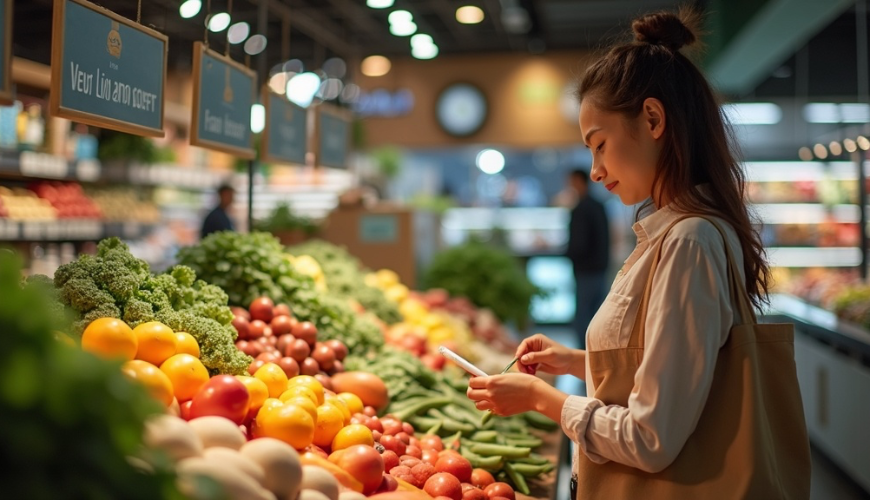
Food waste often seems like a distant problem "somewhere in the system" — in stores, in mass production, in restaurants. However, the quietest and most common losses occur in the most ordinary ways: in the fridge, in the pantry, and in the kitchen bin. That's why it makes sense to ask practically and without moralizing: how to reduce food waste in a typical household when days are hectic, tastes change, and the family doesn't always eat according to plan?
The good news is that how not to waste food is not a discipline for perfectionists. Usually, a few habits that gradually settle in are enough, and suddenly less is being thrown away at home, shopping is smarter, and the kitchen feels calmer. Moreover, it's not just about money. Food waste means wasted energy, water, soil, and the labor of people who grew and transported the food. For context, it is worth looking at overviews such as FAO on food loss and waste or the data framework UNEP Food Waste Index, which show that households play a large role.
Whether the goal is a sustainable household, savings, or simply less chaos in the fridge, the principles are surprisingly the same: knowing what is at home, planning with ease, and cooking in a way that leftovers become ingredients, not problems. In the spirit of zero waste, it's not about perfection but about direction.
Try our natural products





Why food waste in households occurs more often than we think
Waste rarely arises from disrespect for food. More common is a combination of several small things: buying "just in case," promotions like 2+1, overly optimistic cooking plans, and a fridge where things are layered deep. The result? A cucumber forgotten at the back softens, yogurt passes its date, the remaining rice turns into a forgotten container.
It helps to realize that what is most often thrown away is what appears "small" at first glance: a piece of cheese, the last slice of bread, half a pepper, leftover cream, withered herbs. Yet these small things add up. And in the normal operation of a household, it is treacherous how easily "this will still be eaten" turns into "I'd better throw it away."
Confusion around dates on packaging also plays a role. “Best before" does not mean that the food automatically belongs in the bin the next day — it is often more of an indicative quality threshold. On the other hand, “use by" is a safety date for sensitive foods (typically fresh meat, fish), and there caution is necessary. Those who clarify this quickly find that a large part of throwing away was just uncertainty, not actual spoilage.
Then there is the psychological moment: a full fridge feels like security. Yet paradoxically, it leads to food getting lost in excess. One simple sentence sums it up: "The cheapest food is the food that gets eaten." And that is precisely the point where household economics meet sustainability.
How to reduce food waste: habits that work even in a busy week
The biggest difference usually comes from changes before shopping, not after. If too much or mismatched items are bought, rescuing cooking from leftovers becomes a daily crisis discipline. Whereas if shopping is done thoughtfully, leftovers arise naturally and can be easily utilized.
It starts with a simple inventory. It doesn't have to be a three-page list — often a minute at the fridge and pantry is enough: what needs to be used sooner rather than later? What is already open? What can be used as the basis for dinner? Many households help themselves with a "first aid shelf": one place in the fridge where foods destined for early consumption are placed. Once this becomes routine, throwing away decreases almost by itself.
Similarly effective is gentle meal planning. Not a military meal plan, but a framework: two quick dinners, one meal in reserve, one day "from the fridge." In practice, this means that it is accounted for in advance that sometimes there won't be time, other times there will be a craving for something else. This reduces the number of situations where ingredients for a "big cook" are bought and then not used in time.
Working with the freezer also makes a big difference. The freezer is not just for ice cream and pizza but for time. If bread is leftover, it can be frozen sliced. If a tomato passata is opened and not all used, it can be frozen in a small jar or an ice cube tray. If there are too many herbs, they can be chopped and frozen with a little oil. Suddenly, "excess" becomes a homemade semi-finished product that saves dinner during the week.
And because the question "tips on how to reduce waste" often targets specific actions, here is one single but essential list that can be stuck on the fridge and works without much talk:
Practical tips on how not to waste food at home
- Shop with a short list based on what is already at home and stick to it (even if promotions are tempting).
- Store food so it is visible: new in the back, older in the front; "for quick consumption" in one place.
- Cook a little smarter, not more: plan meals that share ingredients (e.g., roasted vegetables one day, the next day in a salad or tortilla).
- Store leftovers immediately in transparent containers and ideally label them (a date on the lid with a marker is enough).
- Freeze in portions and preferably smaller amounts so that only what will be eaten can be easily thawed.
- Learn to distinguish dates on packaging: best before vs. use by.
It may sound trivial, but it's trivialities that make up kitchen reality. Anyone who has ever thrown away a spoiled bunch of radishes knows that the problem wasn't the radishes — but that they weren't visible and no one thought of them.
Correct storage also plays a part. Some fruits and vegetables "accelerate" each other — for example, apples and bananas release ethylene, which can speed up the ripening of other produce. Sometimes it is enough to separate a few pieces into another bowl. And for herbs, a simple glass of water with a loosely draped bag works as a small home "greenhouse." Details that extend the life of food by a few days often decide whether they are eaten or end up in the bin.
Interestingly, even a small change in shopping helps a lot: instead of one big shop a week, sometimes it works better to do a smaller shop twice, especially for fresh items. It doesn't suit everyone, but for households that often throw away vegetables, it can be surprisingly effective. A sustainable household does not arise from buying the "right" products but from truly using them.
Zero waste in the kitchen without stress: leftovers as ingredients, not guilt
The term zero waste sometimes gives the impression that not even a crumb should be created in the kitchen. However, real life is different: there will be peels, bones, and sometimes things won't turn out. The aim is not zero waste at all costs but minimal waste and better handling of what is already at home.
Leftovers can be viewed as "semi-finished products." Leftover rice is the base for quick fried rice with vegetables. Leftover cooked potatoes can be turned into fried cubes in a pan or potato pancakes. Stale bread can be baked into croutons or blended into breadcrumbs. Overripe bananas are ideal for banana bread or smoothies. And if there's a little leftover roasted vegetables, often all it takes is broth or water, spices, and in ten minutes, it's a creamy soup.
The "sauce logic" works very well: if there's leftover yogurt, lemon, and herbs, a dressing is made. If there's leftover tomato sauce, it can be used as a base for shakshuka or a quick vegetable pan. When several small leftovers come together, a tortilla, baked pasta, or "fridge" salad, where a good dressing and something crunchy on top are important, saves the day.
A real-life example from a typical household shows how little it takes. Imagine a Sunday lunch: roast chicken, potatoes, salad. On Monday, a few pieces of meat are left, a handful of potatoes, and the bowl of salad doesn't look its best anymore. Instead of throwing it away, the meat is picked, potatoes are diced and fried with onions in a pan. Add a bit of spice, eggs, and you have a quick "potato pan" in the style of hash. The wilted salad is turned into a warm side dish — briefly tossed in a pan with garlic and a drop of oil. The result is a dinner that tastes intentional, not like a makeshift. And most importantly: nothing was lost just because it wasn't "perfect."
Portion size also plays an important role. Often more is cooked "just in case," to ensure there's enough, but if leftovers are not planned, they end up in the bin after two days. It's better to cook either appropriately or consciously so that another meal is created for the next day — and immediately store it in a container. Leftovers left in the pot and "somehow eaten" have a much shorter life than leftovers that have a clear plan from the start.
And if something does have to be thrown away, it can be done more considerately. In households where it makes sense, the next step could be composting — whether in the garden, in a community compost, or through municipal organic waste collection. It's not an excuse for waste, but a better end to the story for what truly couldn't be saved.
In all this, the kitchen naturally intersects with the theme of a sustainable household. Sustainability is not only about materials and packaging but also about everyday decisions: whether what is at home is used, whether shopping is done thoughtfully, whether "not perfect" foods are given a chance. Sometimes a small change is enough — for example, getting used to putting less in the basket but more often, or having a few homemade staples in the freezer to replace an impulsive food order.
Perhaps this is ultimately the most practical answer to the question of how to reduce food waste in a typical household: to make the kitchen a place where food doesn't get lost in excess but circulates in a simple rhythm. When you know what's at home, when leftovers are visible, and when there are a few favorite "rescue" meals, waste decreases without feeling like you have to give something up. And what's most pleasant about it? The silent stress of something spoiling in the fridge suddenly disappears — replaced by the feeling that the household operates a bit more lightly and naturally.