
# Jak správně skladovat zeleninu, aby vydržela déle Správné skladování zeleniny může výrazně prodlo
Everyone knows the feeling. Freshly bought vegetables sit in the fridge, full of promises of healthy cooking, and within a few days they turn into a sad, wilted pile headed straight for the bin. But it doesn't have to be this way. Proper vegetable storage is a skill that can be learned, and once you understand it, you'll save not only money but also a great deal of unnecessary food waste.
The average Czech household throws away hundreds of crowns every month simply due to spoiled food that ended up in the bin before it had a chance to serve its purpose. Yet the key to change doesn't lie in buying expensive gadgets or special chemicals – it's enough to understand how vegetables work and what they need to stay fresh for as long as possible.
Try our natural products




Vegetables are living organisms – and we must treat them as such
It may sound surprising, but vegetables are still alive even after harvest. They breathe, respond to temperature, humidity and light, and if we provide them with the right conditions, they can maintain their freshness significantly longer. This is where most people make their first mistake – they assume the fridge is a universal solution for all vegetables. But it's not that simple.
Take tomatoes, for example. Storing them in the fridge seems like a logical step, but in reality, the cold harms them. Low temperatures disrupt the tomato's cellular structure and halt the ripening process, causing the vegetable to lose its flavour and aroma. Tomatoes should be stored at room temperature, ideally stem-side down, to slow down drying out. The same applies to cucumbers, peppers and aubergines – these varieties come from warm climates and simply don't do well in cold environments.
At the other end of the spectrum are root vegetables such as carrots, parsnips and beetroot. These, on the contrary, love cold and moisture. Carrots stored in the fridge in an airtight container with a damp paper towel can easily last three to four weeks – and that's precisely the kind of difference people mean when they say vegetables can last twice as long as we're used to.
Ethylene also plays a crucial role – a gas naturally produced by fruit and some vegetables during ripening. Apples, pears and bananas are major producers of it, and if stored alongside sensitive vegetables such as broccoli, spinach or lettuce, these will yellow and wilt more quickly. This is one of the least known but most important facts about food storage. Research published on the UC Davis Postharvest Technology portal confirms that properly separating ethylene-sensitive crops from those that produce ethylene can extend vegetable shelf life by tens of percent.
Practical tips for every part of the kitchen
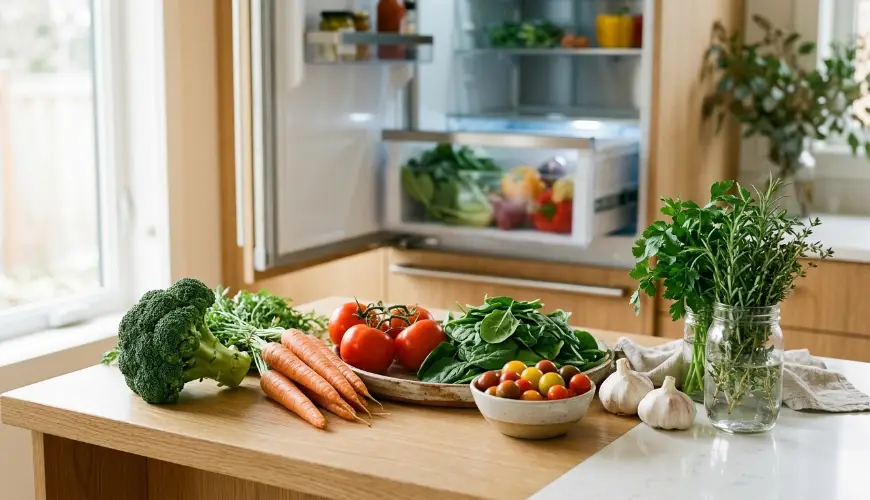
Let's consider a specific situation: Jana does a big vegetable shop on Saturday to last the whole week. She buys broccoli, carrots, spinach, tomatoes, garlic and onions. At home, she puts everything in the fridge without thinking, and four days later she discovers that the spinach has dissolved into a sticky mass, the broccoli has turned yellow and the tomatoes are flavourless. Yet if she had known what goes where, the situation would have looked completely different.
Onions and garlic have no place in the fridge whatsoever. They need a dry, dark and well-ventilated spot – ideally a basket in a pantry or larder. Moisture is their greatest enemy, as it causes mould and sprouting. When stored correctly, onions can last one to two months and garlic even longer.
Broccoli and spinach, on the other hand, love the fridge, but need the right conditions within it. Broccoli is best wrapped in a damp paper towel and stored in an open bag – not in an airtight container, as it needs some air. Spinach is very sensitive to moisture, so it should be dry, stored loosely in a container lined with a paper towel that absorbs excess moisture. Prepared this way, spinach will keep in the fridge for up to a week, whereas poorly stored spinach spoils in just two days.
Herbs are a special chapter of their own. Fresh parsley, coriander or basil can be kept like cut flowers – simply place them in a glass with a little water and cover with a loose plastic bag. Basil is one of those that dislikes the fridge, and is better left at room temperature in a bright spot. Parsley and coriander, on the other hand, will keep for up to two weeks in the fridge in a glass of water.
Vegetables such as leeks, asparagus or spring onions also keep excellently in a glass of water in the fridge. Asparagus stored this way stays fresh for nearly a week, whereas stored "dry" in a bag, it loses its crispness and flavour in just two or three days.
As leading British food writer Harold McGee says in his book On Food and Cooking: "Every ingredient has its own story – and if we understand it, we stop fighting nature and start working with it." This thought applies perfectly to vegetable storage.
Several things that help keep vegetables fresh for longer
Beyond storing vegetables in the right place, there are several other habits that make a big difference:
- Don't wash vegetables in advance if you don't plan to use them straight away. Water speeds up decomposition and encourages the growth of bacteria and mould. Always wash vegetables just before preparing a meal.
- Don't chop vegetables ahead of time more than necessary. Cut surfaces oxidise and vegetables deteriorate more quickly. The exception is when you immediately store them in an airtight container with a drop of lemon juice.
- Use specially designed containers and bags for food storage. Silicone bags or containers with humidity control, for example, help maintain the optimal environment for different types of vegetables. On Ferwer you can find eco-friendly bags and containers for food storage, which are both functional and environmentally friendly.
- Regularly check your supplies and remove any vegetables that are beginning to deteriorate. A single rotting tomato or mouldy carrot can speed up the spoilage of an entire basket through the gases and microorganisms they release.
- Make use of the bottom drawers of the fridge – the so-called crisper drawer – which are designed to maintain higher humidity and optimal temperature for vegetables. Many modern fridges even have adjustable humidity settings in these compartments.
Another practical aid is vacuum sealing. Although it may seem like a luxury, even simple manual vacuum pumps available for a few hundred crowns can significantly extend the shelf life of vegetables by removing oxygen from the packaging, which accelerates oxidation and decomposition.
An interesting and increasingly popular trend is also fermentation. Cabbage, cucumbers, carrots or radishes preserved in brine will, when prepared correctly, last for months and are additionally enriched with probiotic cultures beneficial to the gut microbiome. Fermentation is one of the oldest methods of vegetable preservation in the world and is enjoying a well-deserved comeback in modern households. More detailed information about vegetable fermentation is available, for example, at Výživa je základ, where you can also find specific recipes and procedures.
Freezing is another option that is ideal for vegetables we can't manage to consume fresh. Broccoli, peas, sweetcorn or green beans freeze very well, provided they are briefly blanched beforehand – that is, submerged for two to three minutes in boiling water and then immediately cooled in ice water. This step deactivates the enzymes that would otherwise cause loss of colour, flavour and nutritional value even in the freezer.
Conscious and thoughtful vegetable storage is part of a broader approach to sustainable living. Food waste is a global problem – according to data from the Food and Agriculture Organization of the United Nations (FAO), approximately one third of all food produced for human consumption is wasted globally. Everyone who learns to handle vegetables better in their own fridge contributes – however modestly – to reducing this figure.
It's not about perfection or complicated systems. It's about gradually building habits that over time become a natural part of everyday cooking and shopping. You can start with the simplest step – next time, before putting vegetables in the fridge, just pause for a moment and think about whether they actually belong there.