

Try miso glazed sweet potatoes as a side dish
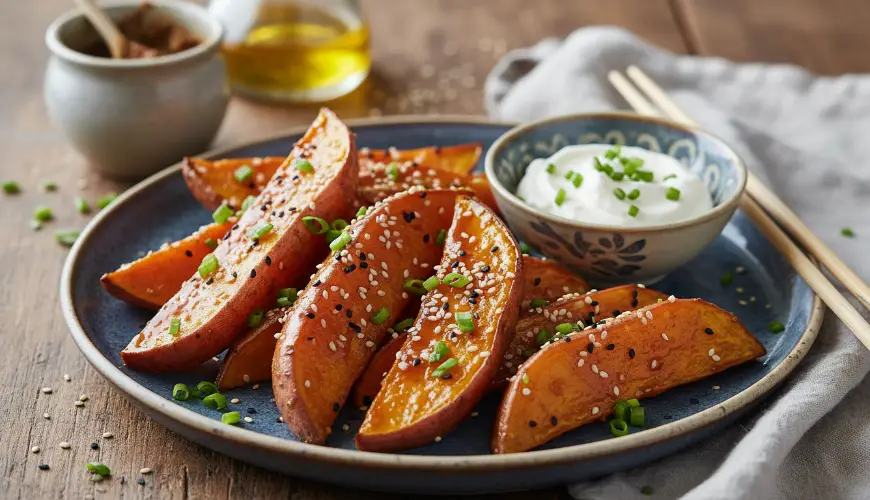
There are dishes that surprise you from the very first bite. Miso-glazed sweet potatoes are exactly that kind of dish - simple at first glance, yet unexpectedly complex when tasted. It is a recipe that stands at the intersection of two seemingly distant worlds: Korean fermentation tradition and the Czech fondness for hearty, satisfying vegetable dishes. And it is precisely this combination that gives rise to something that will be loved by fans of Asian cuisine and those just discovering it alike.
Korean-Czech fusion in the kitchen is not just a passing trend - it is the natural result of how Czechs are changing the way they shop, cook, and think about food. More and more households are reaching for higher-quality ingredients, experimenting with fermented products, and looking for recipes that are nutritious, delicious, and sustainable all at once. Miso-glazed sweet potatoes are exactly that kind of recipe.
Try our natural products





What makes miso so exceptional?
Miso is a fermented paste made from rice, soybeans, and barley, which has been used in Japanese and Korean cuisine for thousands of years. Its flavour ranges from gently sweet to distinctly salty and earthy - depending on the fermentation time and the ingredients used. What sets miso apart from ordinary condiments is the presence of umami - the fifth basic taste, which gives food depth and fullness without being oversalted or oversweetened.
From a nutritional standpoint, miso paste is a true treasure. Fermentation naturally enriches the product with probiotics that support the health of the gut microbiome. Research published in sources such as the Journal of Nutritional Science and Vitaminology has repeatedly confirmed that regular consumption of fermented foods has a positive effect on immunity, digestion, and overall wellbeing. Miso also contains B vitamins, manganese, zinc, and a range of amino acids - substances the body genuinely needs.
It is important, however, to choose a quality miso paste without unnecessary additives, preservatives, or artificial flavourings. The live cultures that are key to its beneficial health effects survive only in unpasteurised products. This is worth keeping in mind when shopping.
Sweet potatoes are the ideal partner in this recipe. Their natural sweetness beautifully balances the salty, fermented flavour of the miso, and the resulting glaze achieves just the right balance. Sweet potatoes are also one of the most nutrient-dense vegetables available - they are packed with beta-carotene, fibre, potassium, and vitamin C. According to the Harvard T.H. Chan School of Public Health, sweet potatoes are considered one of the healthiest sources of complex carbohydrates, providing the body with long-lasting energy without sharp fluctuations in blood sugar levels.
How the recipe comes together and why it works
The foundation of the miso glaze is a combination of miso paste, sesame oil, rice vinegar, a little honey or maple syrup, and garlic. All of these ingredients are mixed together into a smooth paste, which is then applied to pre-cut sweet potatoes. The result after roasting in the oven? A lightly caramelised surface, a soft interior, and an aroma that will immediately draw the entire household into the kitchen.
The Korean influence in the recipe is most apparent in the emphasis on fermented ingredients and the harmony of contrasting flavours - sweet, salty, sour, and umami. This approach is characteristic of Korean cuisine and distinguishes it from other Asian traditions. The Czech touch is reflected in the way the dish is served: miso-glazed sweet potatoes work wonderfully as a side dish for roasted meat or tofu, but they stand equally well on their own with a little sour cream or fresh herbs - such as chives or parsley.
Consider a real-life example: Markéta, a thirty-year-old graphic designer from Brno, began making miso-glazed sweet potatoes by chance when she was looking for a quick lunch from what she had at home. "I had sweet potatoes, miso paste from an Asian shop, and a few things in the fridge. The result completely surprised me - it was a dish I would have ordered in a restaurant," she says. Today she makes it regularly, tries different variations, and adds local ingredients such as pumpkin or beetroot.
This flexibility is one of the recipe's greatest strengths. The miso glaze works on virtually any root vegetable and can easily be adapted to the season, whatever happens to be in the fridge, or the taste preferences of the whole family. In summer, it is nice to add some fresh ginger and lime juice; in winter, cinnamon or chilli lend a warming touch.
Fusion cuisine as a natural evolution of the Czech table
Czech cuisine has been changing for a long time. Just twenty years ago, miso was an unfamiliar concept for most households; today it can be found in ordinary supermarkets and at farmers' markets. This shift is no coincidence - it reflects a broader trend in which Czechs travel more, taste new things, and bring inspiration home with them. Fusion recipes like miso-glazed sweet potatoes are the natural result of this opening up to the world.
As British chef and healthy cooking advocate Yotam Ottolenghi says: "Cuisine is the best way to get to know another culture - and the most beautiful moments happen when cultures meet in the pot." This is precisely what happens when the Czech love of roasted vegetables meets the Korean philosophy of fermentation. The result is neither traditional Czech nor traditional Korean cuisine - it is something new that belongs to both and to neither.
Fusion cooking also naturally supports sustainability. When cooking with local vegetables and seasoning with fermented pastes, the resulting dish has a lower carbon footprint than meals dependent on imported or animal proteins. Sweet potatoes can be grown in the Czech Republic or purchased from domestic farmers, miso paste keeps in the fridge for months, and sesame oil is used in only small quantities. This approach to cooking is kind to both the wallet and the planet.
It is worth noting that interest in fermented foods in the Czech Republic has grown significantly in recent years. Kimchi, kombucha, kefir, and miso paste are becoming part of the everyday diet of an increasing number of families. This trend is confirmed by data from the Czech health food market, where the fermented products category has been growing by tens of percent annually. People are realising that health begins in the gut, and they are looking for enjoyable ways to consume probiotics naturally - not in the form of supplements, but through food.
Miso-glazed sweet potatoes are an ideal entry point in this regard. The recipe is simple, the ingredients are accessible, and the result is delicious enough to win over even the biggest sceptics. There is no need to be an experienced cook or to have a well-equipped kitchen - all you need is an oven, a roasting tin, and a willingness to experiment.
For those who want to try the recipe at home, a few basic principles are worth keeping in mind. Sweet potatoes are best cut into equal-sized pieces so they roast evenly. The miso glaze should be applied only after the first twenty minutes of roasting, to prevent it from turning bitter. And before serving, it is worth adding a sprinkle of toasted sesame seeds and fresh spring onion - these finishing touches will elevate the dish to a level that will impress both guests and family.
- White miso (shiro miso): the most delicate flavour, ideal for those just starting out with miso paste
- Red miso (aka miso): more pronounced and earthy, excellent for autumn and winter versions of the recipe
- Mixed miso (awase miso): a compromise between the two, the most versatile choice for glazes
Choosing the right type of miso paste can fundamentally transform the entire recipe, which is why it is worth experimenting to find the one that best suits your own taste preferences.
Miso-glazed sweet potatoes are not just a trendy dish for foodies or vegans - they are a genuinely democratic meal that appeals to children and adults, meat-eaters and vegetarians, experienced cooks and beginners alike. They bring together the best of Korean fermentation tradition with the Czech love of hearty, satisfying vegetables, and demonstrate that fusion cuisine need not be complicated or out of reach. Sometimes all it takes is an oven, a few quality ingredients, and a willingness to try something new - and the result can be surprisingly good.