

# Saunaing and Its Benefits for Body and Mind
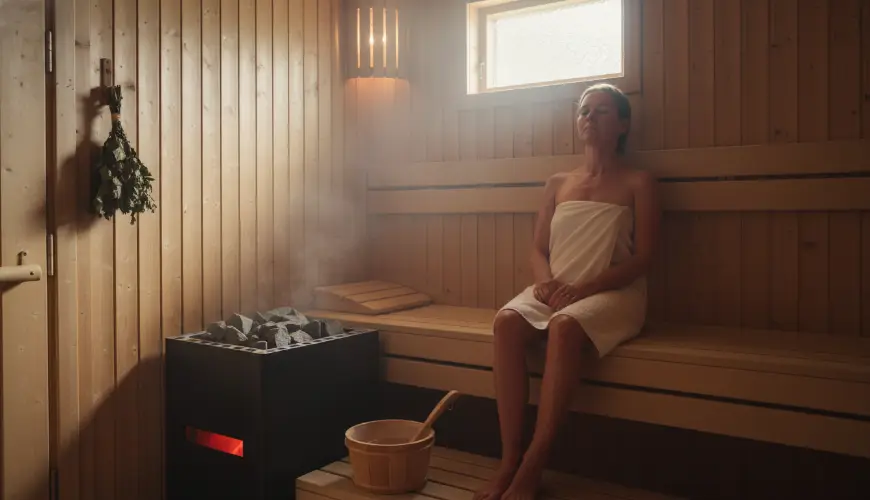
Sauna bathing is one of the oldest wellness rituals in the world. Finns have practiced it for millennia, and to this day the sauna remains an integral part of their everyday life – in a country of five million people, there are over three million saunas. It is not merely a fashionable trend or a luxury indulgence of modern times. It is a tradition deeply rooted in culture, which maintains its popularity precisely because it genuinely works. But what does sauna bathing actually bring to the body and mind, how should one sauna correctly, and for whom is it unsuitable?
The answers to these questions are surprisingly complex. Over the past twenty years, science has significantly deepened our understanding of what happens in the body during sauna bathing, and the results are more than encouraging.
Try our natural products

What happens in the body during sauna bathing and what are its benefits
When a person enters a sauna, the air temperature typically ranges between 80 and 100 °C. The body responds to this heat stimulus immediately – blood vessels dilate, the heart begins to beat faster, and body temperature rises slightly. The skin becomes flushed, pores open, and intense sweating begins. This process resembles mild physical exertion and has similar effects on the body as aerobic exercise.
Regular sauna bathing demonstrably lowers blood pressure and improves the function of the heart and blood vessels. A Finnish study published in the journal JAMA Internal Medicine followed over two thousand men for nearly twenty years and found that those who visited the sauna four to seven times per week had a 63% lower risk of sudden cardiac death compared to those who saunaed only once a week. These figures are striking and provide a scientific basis for what Finns have intuitively known for generations.
In addition to cardiovascular benefits, sauna bathing significantly contributes to the recovery of muscles and joints. Heat releases tension in muscle tissue, alleviates pain, and accelerates the removal of lactic acid that accumulates in the body after physical exertion. This is why athletes around the world incorporate the sauna into their recovery programmes. But they are not alone – anyone who spends the entire day at a computer and suffers from tension in their back or neck can use sauna bathing as a pleasant and effective form of relief.
The effect on the immune system is also significant. Repeated exposure of the body to heat stress stimulates the production of white blood cells and increases the body's resistance to infections. Some experts compare this effect to the effects of a fever – the body's natural defence response that destroys pathogens. Regular sauna users therefore often report falling ill less frequently, particularly during the winter months.
Sauna bathing also has a profound impact on the mind. When exposed to heat, the brain releases endorphins – happiness hormones that induce a sense of wellbeing and relaxation. At the same time, levels of cortisol, the primary stress hormone, decrease. It is therefore no coincidence that many people describe sauna bathing as one of the most effective methods of relieving everyday tension and counteracting the overload of the modern world. As Finnish writer Juhani Aho once remarked: "In the sauna, all men are equal." This sentence captures something essential – the sauna is a place where not only clothing is set aside, but also social roles and worries.
How to sauna correctly so that it makes a difference
Sauna bathing is not simply a matter of sitting in a hot room and waiting. The correct procedure and adherence to certain principles determine whether the experience will be pleasant and beneficial, or unnecessarily demanding.
Before entering the sauna, it is essential to shower thoroughly and dry the body. Wet skin sweats less effectively, which reduces the overall effect. Equally important is good hydration – before sauna bathing, a person should drink at least half a litre of water, as sweating causes the body to lose large amounts of fluids and minerals. Alcohol before the sauna, on the other hand, is inadvisable and can be directly dangerous.
The time spent in the sauna should not exceed ten to fifteen minutes in a single session. For beginners, it is advisable to start on a lower bench, where the temperature is milder, and gradually move higher as the body acclimatises to the heat. After leaving the hot room, cooling down follows – and this is often the most challenging yet most important part of the entire ritual.
Cooling down can take place gradually under a lukewarm shower, or more vigorously – by immersing oneself in cold water or cooling down outdoors in winter. Alternating between heat and cold is a key element that activates what is known as vasomotor training of the blood vessels. The vessels alternately dilate and contract, thereby improving their elasticity and the overall function of the circulatory system. After cooling down, a rest period of at least ten to fifteen minutes should follow, during which the body returns its temperature to normal and recovers. Only then does it make sense to repeat the entire cycle – ideally two to three times in a single sauna session.
During the rest period, it is advisable to replenish fluids, preferably with plain water or herbal tea. Mineral drinks or electrolyte drinks are particularly suitable after longer sauna sessions, as sweating causes the body to lose not only water but also sodium, potassium, and magnesium. Eating before the sauna is not recommended – a full stomach and heat make for an unpleasant combination. A light snack after sauna bathing, on the other hand, helps the body replenish its energy.
A practical example of the right approach might be Jana, a forty-four-year-old teacher from Brno, who began sauna bathing regularly once a week on the recommendation of her general practitioner due to chronic back pain. After three months of regular sauna bathing, she describes a significant improvement – the pain has eased, she sleeps better, and feels less stressed. "At first I found it strange that simply sitting in the heat could help so much. But it works," she says with a smile.
An important part of the sauna ritual is also skin care. Heat opens the pores and the skin is at that moment ready to absorb nourishing substances. After sauna bathing, many people therefore apply natural body oils or moisturising creams, which are better absorbed and leave the skin soft and supple. Some saunas also offer the option of a peeling treatment during the sauna session, in which dead skin cells are removed and the skin naturally renews itself.
For whom is the sauna suitable and for whom does it pose a risk
Sauna bathing is suitable for the vast majority of healthy adults. Regular sauna visitors across age groups confirm the benefits for both physical and mental health. Seniors can benefit from sauna bathing just as much as young athletes, though in older individuals it is important to start more cautiously and shorten the time spent in the sauna.
However, there are groups of people for whom sauna bathing is not suitable, or for whom increased caution is necessary. Pregnant women should avoid sauna bathing, particularly in the first trimester, when high body temperature can pose a risk to the development of the foetus. Experts from Mayo Clinic recommend that pregnant women consult their doctor before visiting a sauna.
People with severe heart conditions, uncontrolled high blood pressure, or those who have recently had a heart attack should avoid sauna bathing or consult a cardiologist beforehand. Although the sauna generally has a positive effect on the heart and blood vessels, acute conditions or unstabilised illnesses can cause complications when combined with heat stress.
Contraindications also include acute inflammatory illness, fever, or a recent injury. In these cases, heat worsens the condition rather than improving it. Similarly, people suffering from epilepsy should exercise caution and ideally sauna in the company of another person.
Children may visit the sauna, but with the awareness that their thermoregulation is not as developed as that of adults. Young children should spend no more than five minutes in the sauna, and the temperature should be lower than for adults. Cooling down should be gradual, without a cold shock.
For clarity, the most common groups requiring caution or medical consultation can be listed as follows:
- pregnant women, particularly in the first trimester
- individuals with unstabilised heart conditions or those who have recently had a heart attack
- people with uncontrolled high blood pressure
- individuals with acute inflammation, fever, or a recent injury
- people with epilepsy without a companion present
- young children without adult supervision
Sauna bathing is therefore a ritual with a rich history and scientifically supported benefits, deserving of more attention than merely being part of a wellness weekend. Regularity is the key – a one-off sauna visit will provide a pleasant experience, but the true health benefits only manifest with long-term and repeated sauna bathing. Whether it is a matter of improving cardiovascular fitness, relieving muscle tension, boosting immunity, or simply finding a moment of calm away from the daily rush, the sauna offers something that very few other rituals can combine in one place – care for both body and mind at the same time.