

Try zucchini fettuccine alfredo as a lighter option
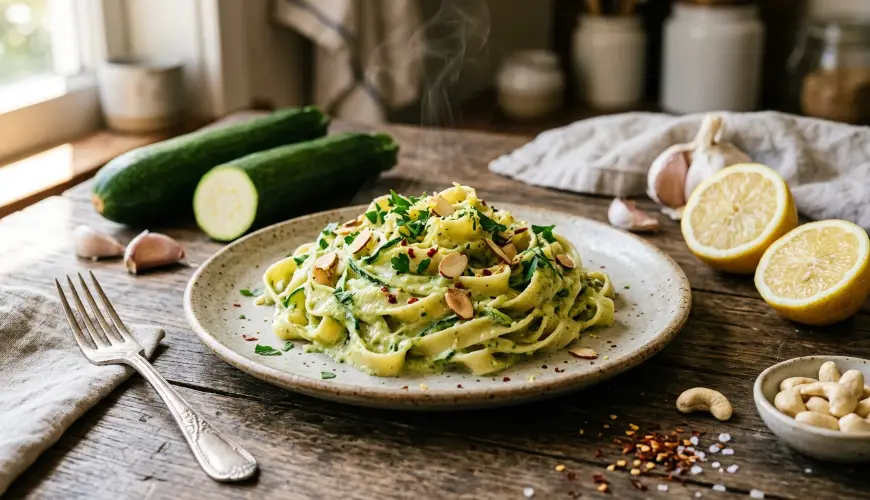
There are dishes that look so rich and enticing that one automatically assumes they require complex preparation and carry a heavy caloric load. Fettuccine alfredo undoubtedly belongs among such classics – a silky, creamy sauce coating every ribbon of pasta is for many synonymous with Italian comfort and culinary indulgence. But what would lovers of this dish say if they learned that a version exists that is not only equally creamy and satisfying, but also prepared entirely without cream and with zucchini as the star ingredient? That is precisely what this recipe is about – a clever, flavour-surprising, and nutritionally superior approach to a classic.
Zucchini fettuccine alfredo is a dish that has been gaining more and more fans in recent years, both among vegans and among those seeking lighter alternatives to beloved recipes. And for good reason. Zucchini is a vegetable with an exceptionally delicate flavour, a high water content, and the ability to absorb the taste of spices and other ingredients as if it were made for exactly this role. It can also be prepared in two ways – either as the base of a sauce, or as a substitute for the pasta itself in the form of so-called "zucchini noodles," or zoodles.
Try our natural products


Why zucchini, and why without cream?
The answer to this question is simpler than it might seem. Classic alfredo sauce may taste divine, but it is also extremely caloric – the combination of butter, cream, and a large amount of parmesan makes it a dish that many of us cannot enjoy every day. Yet the craving for a creamy, satisfying sauce does not disappear simply because we decide to eat more healthily. And this is precisely where zucchini enters the picture.
When zucchini is cooked and blended together with a little broth, garlic, lemon juice, and perhaps a spoonful of tahini or soaked cashews, the result is a sauce with a surprisingly smooth texture. The resulting consistency is genuinely creamy, while the entire dish contains a fraction of the fat and calories of the original. Moreover, zucchini itself is rich in B vitamins, vitamin C, and potassium, as noted by the USDA nutritional database, for example. This makes it an ingredient that adds not only texture but also nutritional value.
Another reason for omitting cream is the growing interest in plant-based eating. Whether driven by ethical choices, lactose intolerance, or simply a desire to include more vegetables in one's diet, plant-based alternatives to classic sauces are now part of the everyday cooking of millions of households around the world. And this is not merely a passing trend – according to a report by the EAT-Lancet commission, shifting towards a more plant-based diet is one of the key steps towards improving both personal health and the state of the planet.
An interesting real-life example is offered by Jana, a thirty-three-year-old mother of two from Brno, who decided to reduce her intake of dairy products due to digestive issues. Fettuccine alfredo had been her favourite dish, but after switching to a lactose-free diet she thought she would have to give it up. When she tried the version with zucchini sauce, however, she was surprised – her children ate the dish without complaint, and she herself admits that she now makes it even more often than the original recipe.
How to prepare zucchini fettuccine alfredo
The foundation of the recipe is, of course, the pasta itself. Classic durum wheat fettuccine can be used, as can a wholegrain variety, or for gluten-free eating, pasta made from rice or corn flour. For those who want to go even further in reducing carbohydrates, or simply want to maximise their vegetable intake, zoodles are the ideal choice – zucchini noodles that can easily be made using a spiraliser or a simple vegetable peeler. The heart of this dish is a delicious zucchini alfredo sauce – and the best part is that its preparation is surprisingly simple.
Ingredients
- 2 medium zucchini
- 4 cloves of garlic
- 1 tablespoon of olive oil
- juice of ½ lemon
- a pinch of nutmeg
- salt and white pepper to taste
- a handful of pre-soaked cashews (for creaminess) or 1 tablespoon of nutritional yeast (for a cheesy note)
- 1 tablespoon of parmesan (optional, for the non-vegan version)
- fresh parsley, toasted almond flakes, or chilli flakes for garnish
Method
Simply take two medium zucchini, cut them into larger pieces, and sauté them together with four cloves of garlic in a tablespoon of olive oil until softened. Then transfer everything to a blender, add the juice of half a lemon, a pinch of nutmeg, salt and white pepper – and depending on what you have to hand or what you prefer, add either a handful of pre-soaked cashews for extra creaminess, or a tablespoon of nutritional yeast, which gives the sauce a pleasant cheesy note without using actual cheese. Those who do not follow a vegan diet can finish the whole thing with a spoonful of good parmesan – this deepens the flavour even further. Blend everything until smooth, and if the sauce is too thick, add a little pasta cooking water, which is in fact the secret weapon of many Italian cooks – it helps the sauce adhere beautifully. The result is a silky, light green sauce with a gentle garlicky flavour and a surprisingly rich texture. Cook the pasta al dente, drain it, and immediately toss it with the sauce. Serve straight away – sprinkled with fresh parsley, toasted almond flakes, or a pinch of chilli flakes for those who enjoy a little heat. The entire preparation takes about twenty minutes, making it an ideal choice for a weekday evening when there is simply no time or inclination for complicated cooking.
It is worth noting that the quality of the ingredients used plays a key role. Fresh, firm zucchini without any soft spots and good-quality cold-pressed olive oil are the foundation of the flavour. In the summer months, when zucchini is at the peak of its season and available at every farmers' market, the flavour of the dish is significantly better than in winter, when the vegetables have travelled hundreds of kilometres. Seasonal cooking makes sense not only from an ecological perspective, but above all in terms of flavour and nutritional value.
Variations worth trying
The basic recipe is intentionally simple, so that everyone can easily adapt it to their own preferences. Some cooks add roasted garlic to the sauce instead of raw for a sweeter, less pungent flavour. Others complement the dish with sautéed cherry tomatoes, which add a colourful contrast and a sour note. A popular variation is also the addition of peas or blanched green beans for more protein and texture.
For mushroom lovers, a great option is adding sautéed button mushrooms or wild mushrooms directly to the dish – their earthy flavour pairs wonderfully with the zucchini sauce. And for those who want to enrich the dish with animal protein, sliced grilled chicken breast or a few prawns sautéed in garlic and butter work very well.
As the famous French chef Auguste Escoffier once remarked: "Good cooking is the foundation of health, happiness, and prosperity." And it is precisely this philosophy that is perfectly reflected in zucchini fettuccine alfredo – it is a dish that combines the pleasure of eating with a mindful approach to what we put into our bodies.
An interesting alternative is also a version with butternut squash, which behaves very similarly to zucchini but gives the sauce a more vivid orange colour and a gently sweet flavour. This variation is particularly popular in autumn, when squash is in full season and its naturally creamy consistency after cooking and blending creates a sauce with almost no need for additional thickeners.
An equally interesting option is adding a little white miso paste, which gives the sauce depth of flavour and a pronounced umami character. This Japanese fermented paste may seem far removed from the Italian classic, but in the world of modern cooking, such seemingly incompatible combinations work surprisingly well. Fermented foods in general bring a complexity to dishes that is otherwise difficult to achieve, and they are also beneficial for the gut microbiome, as repeatedly confirmed by research published in journals such as Cell.
Zucchini fettuccine alfredo is a dish that challenges preconceptions. It shows that healthier cooking need not mean a compromise in flavour or in the enjoyment of food. On the contrary – a creative approach to ingredients and a willingness to experiment with textures and flavour combinations can lead to results that surpass even the most firmly rooted culinary expectations. Zucchini as the base of a creamy sauce may sound unusual, but anyone who tries this combination once will understand why so many cooks have fallen in love with it. And who knows – it may well become a new favourite recipe that even displaces the original, cream-drenched classic.