

How to Clean an Oven When It's Very Dirty and You Don't Want to Scrub All Saturday
An oven has a special talent: it can produce fragrant bread or burnt cheese that lingers for weeks, reminding you with every subsequent baking. This is when a question arises that almost everyone at home will ask sooner or later: how to clean the oven so that it’s clean again, not sticky, doesn’t smoke, and doesn’t spread old smells into new dishes? The good news is that it can be done without aggressive scrubbing and pungent fumes—it's just a matter of choosing the right approach depending on whether you're dealing with regular dirt or figuring out how to clean an oven from burnt residues and build-ups that resemble geology.
Cleaning the oven is more than just about aesthetics. Burnt fat remnants can re-burn at high temperatures, causing unpleasant odors and sometimes smoke. Anyone who has baked a cake with the "scent of yesterday’s pizza" knows it can ruin an otherwise perfect recipe. However, reaching for the strongest chemicals at the outset isn’t necessary. There are several gentle, effective options—and often it’s enough to know what to clean the oven with and how to simplify the task.
Why the oven gets dirty faster than it seems (and why it's worth acting sooner)
An oven is like a silent workhorse in the household: it works at high temperatures, alternating between humidity and dryness, and fat tends to splatter in places you wouldn’t expect. When sweet marinades, cheese, butter, or meat juices are added, a mixture is created that gradually turns into a hard, dark crust during baking. The longer it's delayed, the more a "quick wipe" turns into a major Saturday morning operation.
In practice, the biggest problem is usually the bottom of the oven and areas around the fan or corners. That’s where build-ups cling the most, and a regular sponge wipe won’t suffice. If you're dealing with how to clean a very dirty oven, it's worth thinking like a journalist: what exactly happened, when, and what type of dirt is it? Fat and burnt sugar behave differently and sometimes need a different approach.
One thing is almost always true: time helps the most. Not in the sense of "let it be," but giving a cleaning agent or homemade mixture the chance to work. Instead of furious scrubbing, a well-chosen method, a bit of patience, and gentle mechanical cleaning often suffice.
Oven cleaning methods: from the gentlest to the "heavy-duty"
When looking for oven cleaning methods, a simple rule is useful: start as gently as possible and toughen up only when necessary. This is not just for the sake of surfaces and seals, but also for the air in the kitchen and household comfort.
Before starting: the oven should be turned off and cooled. Remove trays, racks, and side rails if possible. Dirt often comes off easier outside the oven. Another small tip that surprisingly helps: place an old towel or newspapers under the door or on the floor in front of the oven—something always gets released and drips when wiping.
Gentle classic: steam and "soaking" dirt
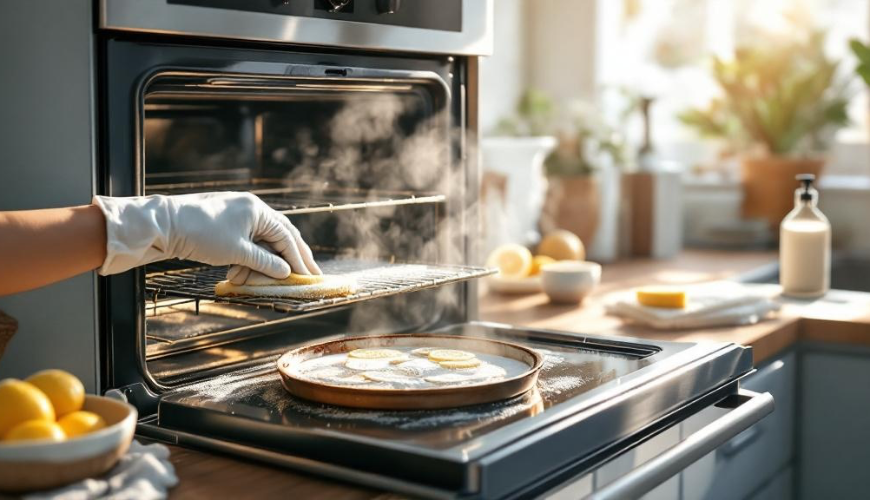
When the oven isn’t extremely dirty, simple steaming often works. Place water (even with lemon slices) in a baking dish and heat the oven to approximately 100–120 °C for 15–20 minutes. The resulting steam softens dried-on dirt, making it much easier to wipe inside.
This method is excellent for regular maintenance or as a first step before other procedures. It’s like "persuading" burnt residues to surrender without a fight.
Baking soda: when dealing with how to clean the oven from burnt residues
If you bake frequently and there are dark stains inside that won’t budge, baking soda comes into play. This is one of the best-known tips because it’s accessible, cheap, and relatively gentle when used correctly.
Here's how: make a paste from baking soda and a little water. Spread it on the dirty areas (avoid heating elements, the fan, and the door seal if it's sensitive). Let it work ideally for several hours, even overnight. The soda has time to penetrate the build-ups and "release" them. In the morning, wipe the paste with a damp cloth and clean up any remaining residues. If a white film remains, simply wipe with clean water.
This is exactly the type of solution people look for when searching how to clean the oven from burnt residues—because it’s not about a quick wipe but a process that works for you.
Vinegar and citric acid: for grease and odor
Vinegar (or a citric acid solution) is mainly useful for grease and neutralizing odors. It’s often combined with soda, but it's good to know what's happening: soda is alkaline, vinegar is acidic—when they meet, they fizz and can help loosen dirt mechanically, but part of their effects also neutralize each other. The practical use is usually allowing soda to work first, wiping it off, and then cleaning with vinegar water.
Lemon water also leaves a nicer scent than vinegar, which is appreciated especially in homes where the kitchen is connected to the living room.
When and how to clean the oven when it’s really dirty
Sometimes an oven reaches a state where homemade paste isn’t enough. Typically after a long period without maintenance, after baking greasy foods without covering, or when something overflowed and repeatedly baked on. In such a situation, addressing how to clean a very dirty oven realistically means either splitting the process into multiple cycles or opting for a more effective cleaner.
There are oven cleaners on the market designed specifically for burnt grease. However, it's important to read the instructions, ventilate, and protect your hands. For more eco-friendly options, look for products with clearly described compositions and without unnecessarily aggressive fragrances. In a household focused on a healthier environment, a compromise is often chosen: gentle methods first, and only for the worst spots, a targeted stronger cleaner—not applied all over the oven.
And sometimes the smartest strategy is simply time: better two rounds of gentler cleaning than one "all or nothing" that can irritate the respiratory system or damage the surface.
"The best cleaner is the one you don’t have to use in large quantities—because you didn’t let the dirt get out of hand."
A real-life example from a household: when a tray overflows and the oven starts smoking
Imagine a common scenario: lasagna is baked in too shallow a dish, the sauce overflows at one point and lands on the oven floor. At that moment, it might not even look dramatic. But with the next baking, the remnants start to burn, the oven smokes, and there's a pungent smell in the kitchen. Many people deal with it by "putting up with it" until guests come or it smokes a lot.
In such a situation, a step-by-step approach works: first steaming to soften the surface, then baking soda paste on the worst spots overnight, morning wiping, and cleaning with vinegar water. If done the day after the "accident," it often takes just a few dozen minutes of work spread over two days. If left for a month, it becomes an afternoon project.
Practical details that matter: racks, glass, and seals
Once it's clear how to clean the oven, the second part of success comes into play: not underestimating the details. Dirt often "pretends" to be just at the bottom, but odor and greasy film also cling to racks and door glass.
Racks and trays are generally best cleaned outside the oven. If they're very dirty, it helps to put them in a bathtub or large basin, pour hot water over them and add a bit of soda or a gentle degreaser. After soaking, most dirt comes off more easily. If using a sponge, choose one that won’t scratch the surface.
The glass door is a chapter in itself because every film is visible on it. For general grease, warm water with a bit of dish soap and subsequent polishing often suffices. For burnt spots, baking soda paste works here too, just be gentle. In some ovens, the glass can be partially disassembled (outer and inner layers), but if uncertain, it’s better to stick to the manufacturer's instructions.
The seal around the door is sensitive. That’s where using highly corrosive agents or hard scrubbing doesn’t pay off. A damp cloth usually suffices, possibly a mild soap solution, and then everything should be well dried. When a seal loses its elasticity or gets damaged, the oven retains heat less effectively, making baking more expensive—which is a shame for a few minutes of careless cleaning.
What about self-cleaning functions? Pyrolysis can be effective, but it costs energy, and in some households, the smell during the process is bothersome. Hydrolytic cleaning (steam) is gentler. It’s always good to follow the manual for a particular oven and not take "universal advice" as gospel.
A single list that's handy to have on hand
What to prepare before starting to clean
- Baking soda (for burnt residues and build-ups)
- Vinegar or citric acid (for cleaning and odors)
- A bowl for water (for steaming)
- Microfiber cloths and a gentle sponge
- Gloves and an open window (especially with stronger agents)
This equipment covers most situations from "quick maintenance" to when dealing with how to clean the oven after long neglect.
How to save yourself work next time (and why it’s not just about tidiness)
Oven cleaning is one of those household chores that no one plans as a hobby. But it can be made significantly more bearable by not letting dirt "bake" into the next week. A simple habit helps: after baking, when the oven cools to a comfortable temperature, quickly wipe visible drops and crumbs. Not perfectly, just enough to prevent them from reburning. And if baking something prone to splattering, it’s worth using a lid in the oven or a higher dish, or baking paper where it makes sense.
It’s also worth reminding that a "clean oven" isn’t a sterile laboratory environment. It’s more about not having layers of burnt fat inside that affect the smell, taste, and comfort of baking. And when it comes down to it: isn’t it nicer to turn on the oven without worrying that smoke will appear in a few minutes and the detector will go off?
For credible advice on the safe use of cleaning agents and ventilation during work, it’s worth following recommendations from authoritative institutions, such as the European Chemicals Agency (ECHA): https://echa.europa.eu/ or general recommendations for the safety of chemical mixtures at home. For a specific oven, the manufacturer’s instructions always help—especially regarding surfaces, self-cleaning modes, and seal care.
In the end, the most pleasant realization is that questions like how to clean the oven, how to clean the oven from burnt residues, how to clean a very dirty oven, or what to clean the oven with don’t have a single magical answer. They are more like different scenarios of one household reality. When the method is chosen based on the level of dirtiness, the oven can be restored without unnecessary effort—and baking then smells like what it should: fresh food, not last week.