

Ecological anxiety spreads as climate news accelerates, and one loses a sense of control
Ecological anxiety, often referred to by the English term eco anxiety, has shifted from a fringe concept to common parlance in recent years. It's no surprise: news of record temperatures, fires, droughts, or floods comes so quickly that a person sometimes doesn't even have time to process one event before reading about another. Added to this are everyday concerns – guilt over driving a car, uncertainty about whether it's "right" to buy new clothes, or endless pondering over whether recycling actually makes a difference. Thus, a question arises more and more frequently, which sounds simple but is surprisingly challenging: what is ecological anxiety and what causes it – and most importantly, how to prevent ecological anxiety without resigning from responsibility?
Ecological anxiety typically does not manifest as a fear of one specific thing but as long-term tension, sadness, helplessness, or irritability connected with concerns about the state of the planet and the future. For some, it's a weight on the chest when reading the news, for others insomnia, overload, or the feeling that "it's too late." It's important to note that it's not a fad or "oversensitivity." The American Psychological Association describes this type of anxiety as a rational response to a real threat, which can be intensified by long-term stress and a feeling of lack of control – a useful context is offered, for example, by the American Psychological Association's overview on the topic. In other words: the problem is not that a person is "afraid unnecessarily." The problem is when fear and pressure start to spill over into everyday functioning and drain energy where it is needed.
Try our natural products


What is ecological anxiety (eco anxiety) and how can it manifest
Eco anxiety is most often described as a mental burden associated with the climate crisis and environmental degradation. Sometimes it's also referred to as "climate anxiety," while at other times it includes concerns about biodiversity loss, pollution, or resource depletion. In practice, it can be a mix of emotions: fear, sadness, anger, shame, helplessness, but also a kind of numbness. Some people feel they must constantly educate themselves and follow the news, while others escape reality and completely shut down the topic – and then they feel guilty for "ignoring it."
Typically, ecological anxiety often has no clear beginning or end. It's more like a background noise that surfaces with a specific trigger: an article about extreme weather, a political debate, a documentary about plastics in the ocean, or a personal experience like "there was barely any snow in winter." While general anxiety sometimes responds to vague danger, here the source of the threat is uncomfortably specific – and it extends beyond the individual. This is one reason why people find it difficult to handle: it cannot be "solved" with a single decision.
At the same time, it's helpful to distinguish when it is a natural reaction and when it is a state that deserves attention. If climate concerns lead to long-term insomnia, panic states, concentration problems, or the feeling that one can no longer plan for the future ("there's no point"), it's worth considering support – whether in the form of talking to loved ones or a professional. In recent years, health authorities have also commented on this; for example, the World Health Organization (WHO) highlights the impacts of climate change on health, which includes mental well-being, even though it's often talked about less than physical risks.
What causes ecological anxiety: when reality meets helplessness
When seeking an answer to what causes ecological anxiety, it often turns out that it is not just the information about the climate itself. The trigger is a combination of several layers that reinforce each other. The first layer is logical: a person perceives that changes are happening that affect nature, the economy, and everyday life. The second layer is psychological: the brain is designed to respond to threats, but long-term and complex threats are harder to process. The third layer is societal: the feeling that individuals bear some responsibility while large systems change slowly.
A significant role is played by the information environment. Headlines are often sensational, social media amplifies extremes, and a person can easily slip into the mode of "I have to follow everything to be prepared." Yet constant scanning of bad news is exhausting. A paradox arises: the more a person tries to have the situation under control, the more helpless they may feel because control in this case is limited.
Another silent driver of anxiety enters the scene: a feeling of personal failure. Modern ecological debate often emphasizes individual choices – recycling, buying better, traveling less, eating differently. All of this makes sense, but if it becomes a measure of moral value, it sets the stage for a problem. Instead of motivation, a person experiences pressure. And pressure over time turns into anxiety or resignation.
It helps to notice that ecological anxiety sometimes grows from empathy and values. Those with a strong connection to nature often feel the loss more intensely – similar to when home changes or something that was taken for granted disappears. In professional debates, the term "eco grief" also appears, meaning sadness over what has already been lost or seems likely to be lost. It's not a weakness; it's a reaction to real change.
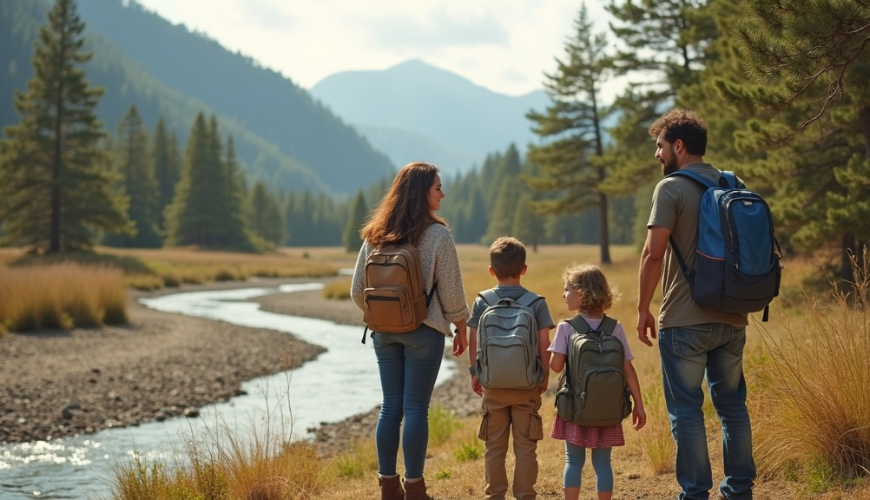
One situation from everyday life can illustrate this very clearly. Imagine a family that has gone to the same place in Vysočina every year: cross-country skiing in winter, a stream full of water in spring, pleasant coolness in the forest in summer. But in recent years, the stream dries up earlier, the bark beetle has changed parts of the forest, and winter is more muddy than white. The children ask why it's no longer "like it used to be," and the adults seek an answer that is neither falsely reassuring nor terrifying. At that moment, ecological anxiety does not appear as an abstract concept from the internet but as a concrete feeling: something is changing and it's unclear how quickly and where it will lead.
How to prevent ecological anxiety: less pressure, more support, and meaningful steps
The question of how to prevent ecological anxiety does not mean "how to not feel it at all." The goal is not to numb or disconnect. The aim is to find a way to live with concerns so they do not become paralyzing stress. In other words: to maintain sensitivity without losing stability.
Often, even just naming it helps. When a person knows that something like ecological anxiety (eco anxiety) exists, they can stop feeling "weird" or "exaggerating." Accepting emotions is paradoxically the first step towards not letting them grow. Instead of a fight like "I mustn't think about it," a gentler approach can be tried: "It's understandable that this worries me." As a frequently quoted thought aptly summarizes: "It is no measure of health to be well adjusted to a profoundly sick society." (J. Krishnamurti) In the ecological context, it reminds us that anxiety can be a signal of values, not personal failure.
Then comes the practical side. For many people, it's crucial to limit so-called doomscrolling – endlessly scrolling through bad news. Not because the information isn't important, but because the brain needs dosing. A simple rule helps: choose one or two quality sources, set a time to read the news, and protect the rest of the day. Trustworthy information about climate and risks is offered, for example, by the Intergovernmental Panel on Climate Change (IPCC), whose reports are sober and data-based. Reading IPCC from morning to evening is not a plan for mental well-being – rather it's a compass to occasionally return to.
Another powerful tool is shifting from pure anxiety to action, but with a reasonable measure. Action returns a sense of influence. At the same time, overly perfectionist efforts can worsen anxiety because one can never achieve "perfect sustainability." Instead, it's healthier to seek sustainable habits that are feasible in the long term and do not require constant self-denial. And here it often turns out that "ecological" and "mentally bearable" do not have to be mutually exclusive: fewer things at home, better quality materials, gentler cleaning without aggressive chemicals, repairs instead of throwing away, or gradually changing a wardrobe towards timeless pieces.
In everyday life, a surprising effect often comes from when sustainability stops being seen as a solitary project and becomes a social matter. Conversations with friends, community clothing swaps, neighborly exchanges of things, sharing tips for package-free shopping – all of these reduce the feeling of isolation. And isolation is fertile ground for anxiety. When a person sees they're not alone in this, the tension often eases, even if the world doesn't change overnight.
For the prevention of ecological anxiety, working with the body is also important. It sounds ordinary, but long-term stress is stored physically: accelerated breathing, tense shoulders, fatigue. Regular outdoor exercise, a walk in the park, gardening, or just a moment without a screen signals safety to the nervous system. A relationship with nature is not only a source of concern – it can also be a source of renewal. When a person focuses on what is within their reach right now (trees on the street, birds on the balcony, local landscape), they switch from a mode of catastrophic scenarios to a mode of presence.
And then there's one more thing that is talked about less but is crucial: boundaries. Not everyone has to be an activist, a climate expert, and a flawless consumer all in one. For many people, it's healthier to say: "I'm doing what is within my possibilities, and the rest belongs to public debate, politics, and corporate responsibility." When responsibility is distributed more fairly, internal pressure decreases as well. A helpful question that can curb perfectionism might be: Is this decision really about impact, or more about my guilt?
If one guideline were to be chosen, it would be seeking a balance between being informed, meaningful action, and taking care of one's mental health. It's not necessary to do everything. It's necessary to do something – and do it in a way that can be repeated even six months from now.
Practical steps that often work (without chasing perfection)
- Dosing news and avoiding endless watching of catastrophic scenarios, especially in the evening before sleep.
- Choose one area where change is easiest to implement (household, transport, clothing, food) and start gradually.
- Replace part of the routine with gentler alternatives that simplify life (e.g., concentrated or natural household products, reusable tools, quality timeless clothing).
- Talk about it with loved ones and seek community, because a shared journey is mentally lighter than a solitary struggle.
- Notice when care for the planet becomes self-punishment, and return to what makes sense and provides energy.
Ecological anxiety is, in a sense, the price for not being indifferent to the world we will live in. It's not necessary to deny it or romanticize it. It’s enough to take it as a signal that it is necessary to rely on reality, choose a few concrete steps, and let the rest be – not out of indifference, but out of care for one's own capacity. Because long-term change, whether at home, in consumption, or in the community, does not arise from panic. It arises from perseverance, which is best maintained when there is also room for an ordinary calm day.