
How to Identify Fragrance-Free Cosmetics When Packaging Promises More Than Ingredients
Cosmetics are everywhere today – in the bathroom, in the handbag, at the gym, and at work. And even though the composition of products is being talked about more than ever before, one thing remains surprisingly unclear: what does "fragrance-free" actually mean in cosmetics? Is it the same as "unscented"? Is such a product automatically gentler? And how to recognize fragrance-free cosmetics when the packaging sometimes says one thing and the small print on the back another? The topic is important not only for people with sensitive skin but also for anyone who wants less clutter and more peace in their body care routine.
Fragrance in cosmetics is indeed a special chapter. On one hand, it can turn ordinary hand washing into a pleasant ritual. On the other hand, it's the fragrance that is among the most common triggers of irritation, allergic reactions, or headaches. And sometimes a practical question arises: is it necessary for a face cream to smell like a tropical cocktail when its main goal should be hydration and protection of the skin barrier?
Try our natural products
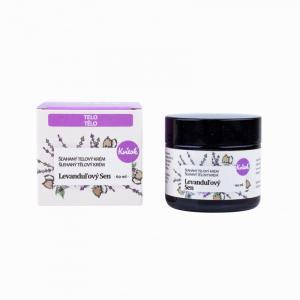
What "fragrance-free" means in cosmetics and why it matters
The label "fragrance-free" in cosmetics should mean that no fragrance component has been intentionally added to the product, neither synthetic fragrance blend nor essential oils for scent. In practice, however, it's not always so straightforward because cosmetics can have a natural "base" smell – for example, from plant oils, butters, or some active ingredients. Fragrance-free does not mean that the product will have no scent, but that the scent is not the goal and is not created by fragrance ingredients.
Confusion often arises between the terms "fragrance-free" and "unscented." In English, "fragrance-free" is used for products without fragrance components, while "unscented" sometimes refers to products where the scent is just masked – meaning it may contain substances that neutralize odor but can themselves be potentially irritating. In Czech, this often merges into one category on the packaging, so it's good to look not only at the marketing message but also at the composition.
And why does it matter? Because fragrance is among the most common contact allergens. European dermatological sources have long pointed out that fragrance components are a significant cause of contact dermatitis. A well-usable overview of the issues of fragrance allergy is offered by DermNet – Fragrance allergy, which clearly explains why fragrance can be problematic even for people who previously reacted "only occasionally."
It’s fair to add that not every fragrance automatically harms and not everyone will react. However, in skincare, a simple rule applies: the more sensitive or weakened the skin barrier, the less room for experiments. And fragrance in many products is more of a bonus than a necessity.
"The fewer potential irritants in the routine, the easier it is to keep the skin calm – and fragrance is often one of the first things dermatologists recommend limiting."
How to recognize fragrance-free cosmetics: packaging isn't enough, INCI decides
When trying to figure out how to recognize fragrance-free cosmetics, the first instinct is clear: look at the packaging for the inscription "fragrance-free," "unscented," or "fragrance-free." This is a good start, but not always foolproof. The most reliable way is to look at the INCI – the list of ingredients. That's where it will show whether the product contains a classic fragrance blend or fragrance allergens.
In the INCI, fragrance often appears as Parfum (or Fragrance). If these terms are in the composition, it is not fragrance-free cosmetics. With natural cosmetics, the situation is a bit more sophisticated: instead of "Parfum," essential oils are often used, which have an aromatic character but are still fragrance components. In the INCI, they are recognized by their Latin names (e.g., Lavandula Angustifolia Oil, Citrus Aurantium Dulcis Peel Oil, Eucalyptus Globulus Leaf Oil). Even though they seem "purely natural," for sensitive skin, they can be problematic just like synthetic fragrances – sometimes even more so because they are complex mixtures of many substances.
It’s also important to watch out for so-called fragrance allergens, which must be listed in the EU if they are above a certain limit. These include Limonene, Linalool, Citral, Geraniol, Eugenol, Citronellol, and many others. These substances often occur in essential oils and fragrance blends. If you see them in the composition, the product most likely smells of "something extra," even if the packaging seems innocent.
Sometimes it also happens that the product is not fragranced but contains aromatic plant extracts that have a natural scent. This in itself may not be a problem – it depends on the concentration and whether it's an ingredient added for effect or scent. For the average consumer, it's practical to stick to a simple rule: if someone truly wants fragrance-free cosmetics, they should ideally find neither "Parfum," essential oils, nor typical fragrance allergens in the composition.
And what does it look like in real life? Imagine a common situation: someone buys a "gentle cream for sensitive skin" that seems beautiful in the store, but at home discovers that after a few days of use, their skin burns, turns red, and tightens. When they look at the composition, they find "Parfum" along with Limonene and Linalool. The scent was pleasant – but the skin took away a completely different message than the nose. At that point, it makes sense to return to basics and look for a product where the scent is simply secondary, or none at all.
For better orientation, an authoritative explanation of what is considered fragrance components in cosmetics and how they are labeled can help. A practical context for safety and allergenic substances is offered by Scientific Committee on Consumer Safety (SCCS) at the European Commission, which has long been dedicated to risk assessment in cosmetics (it's more expert reading, but as a source, it's very solid).
What to watch out for when a product claims "fragrance-free"
Marketing can be creative. You can encounter formulations such as "without added fragrance," "without synthetic fragrance," or "lightly fragranced with natural extracts." Each of these can mean something different. Without synthetic fragrance often means that fragrance was replaced by essential oil. Without added fragrance sometimes leaves room for the product to contain aromatic components from other ingredients – and the result can still be a pronounced scent.
It's not about looking for traps at all costs, but setting expectations: if the goal is to minimize the risk of irritation, it's better to rely on INCI than on the front label.
Why fragrance-free cosmetics are better: less irritation, more control, and a calmer routine
The question of why fragrance-free cosmetics are better doesn't have one universal answer for everyone, but several reasons repeat across skin types and life situations. In practice, small things often decide: how one feels after application, how the skin looks in the morning, how often redness or dry patches appear.
The first and most common reason is simple: lower risk of irritation and allergic reaction. Fragrance is one of the most common causes of sensitization in cosmetics – a state where the immune system "remembers" a substance as problematic and reacts faster and stronger the next time. This can happen even after a long time without issues. A person may use a fragrant shower gel for years and then suddenly find that their skin starts to itch and dry out. It's not rare, but a typical story that dermatologists often hear.
The second reason is more practical: fragrance-free cosmetics give greater control over what happens in the routine. When a product is simple, it's easier to recognize what the skin likes and what it doesn’t. With fragrant products, it sometimes happens that a person confuses a "pleasant feeling" with "functional care." The scent creates an impression of cleanliness, luxury, or freshness, but the skin actually needs primarily hydration, protection, and calm.
The third reason concerns people with specific issues: eczema, rosacea, acne, perioral dermatitis, or very dry and reactive skin. In these cases, the skin barrier is weakened and fragrance can be an unnecessary risk. Similarly, for small children, it is often recommended to choose the gentlest options without scent, as their skin is more sensitive and thinner. This doesn't mean that everything must be sterile "without anything," but fragrance is usually the first thing worth limiting.
And then there's yet another aspect that is sometimes overlooked: fragrance can also be bothersome beyond the skin. Some react with headaches, nausea, or worsened allergy symptoms in environments where intense scents mix (offices, public transport, waiting rooms). In such a context, fragrance-free cosmetics can be a more considerate choice towards the surroundings – especially for products applied frequently (hand creams, deodorants, body lotions).
Fragrance-free does not mean "less effective" or "less pleasant"
A common myth says that if something doesn’t smell, it won’t work or won’t be "nice." Yet the effectiveness of cosmetics doesn’t rely on fragrance but on composition and consistency. A well-formulated cream without fragrance can be just as luxurious, only it won’t have a fragrance trace overshadowing the true character of the ingredients. Some may take a while to get used to the fact that, for example, shea butter or some plant oils have their natural smell. However, it usually dissipates quickly and it’s not a "fault" of the product – rather a sign that the scent wasn't masked.
Interestingly, perceptions change over time. Someone who has long used heavily fragranced cosmetics may feel that fragrance-free is "weird" or "bland." But after a few weeks, the opposite often proves true: the routine is calmer, the skin more stable, and the nose gets a break from intense scents. Suddenly, it makes sense that cosmetics should primarily do their job, not compete with perfume.
When fragrance can make sense and how to approach it sensibly
It would be unfair to claim that fragrance is always wrong. For some, scent is part of mental well-being, ritual, or relaxation. If the skin doesn’t react and one chooses products wisely, fragrant cosmetics can be fine. A sensible compromise often looks like this: leave fragrance in products that rinse off (shower gels), and choose gentler, ideally fragrance-free cosmetics for the face, eye area, or intimate parts.
And one more practical question: what if a "fragrance-free" product still smells? Then it's good to remember that the scent can be natural. However, if it smells "perfumey," it’s appropriate to check the composition. Sometimes fragrance is hidden in combinations of plant extracts or in essential oils, which at first glance don’t seem like a fragrance component.
The only list worth having on hand
When a selection needs to be quick and without unnecessary searching, a simple INCI check helps. When looking for fragrance-free cosmetics, it’s practical to monitor mainly this:
- "Parfum" / "Fragrance" in the composition (indicates fragrance),
- essential oils (often end in "Oil" and have Latin plant names),
- typical fragrance allergens like Limonene, Linalool, Citral, Geraniol, Eugenol, Citronellol.
If none of this is in the composition, there’s a high chance it’s a truly non-fragranced product.
At a time when cosmetics are often sold through emotions and "experience," it’s somewhat liberating to discover that fragrance-free can mean more peace and fewer random reactions. Whether the reason is sensitive skin, eczema, an effort to simplify the routine, or just the desire not to be surrounded by a mix of scents all day, it’s a choice that makes surprisingly often sense. Perhaps it’s worth asking a simple rhetorical question: if a cream did the same job but without the extra scent, would anything really be missing? In many bathrooms, it turns out that no – and that in simplicity lies the greatest comfort.