

How tepache tastes and why it's worth trying
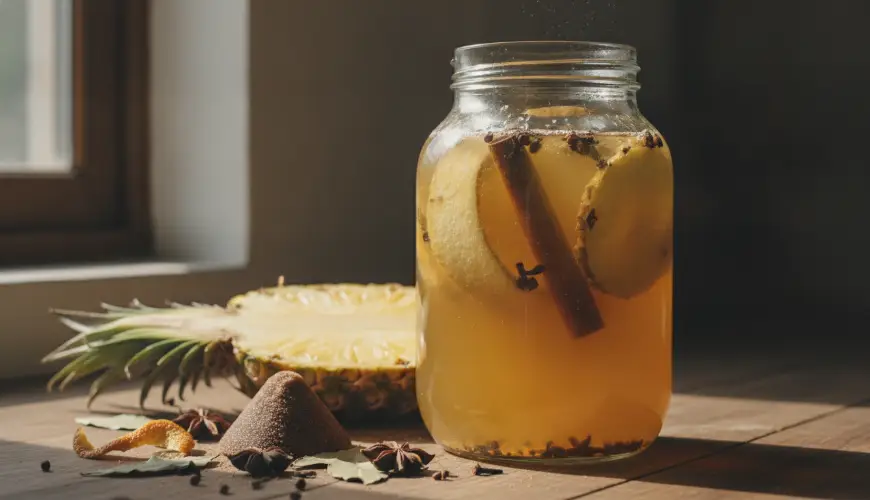
If we were to travel back several centuries to pre-colonial Mexico, we would encounter a drink that indigenous communities prepared from fermented corn dough. Over time, the recipe changed beyond recognition – corn was replaced by pineapple, and what was once a regional specialty became a drink that today fascinates chefs, bartenders, and health enthusiasts around the world. Tepache, pronounced approximately as "te-pa-che", is living proof that the best things in the kitchen sometimes come from what would otherwise end up in the bin.
At a time when more and more people are asking what they eat, what they drink, and where their food comes from, fermented beverages are experiencing an unprecedented comeback. Kombucha, kefir, kvass – and now tepache. This Mexican fermented pineapple rind drink comes with a story rooted deep in history, a flavour that surprises, and a preparation so simple that anyone can manage it at home on their kitchen counter.
Try our natural products




What exactly is tepache and what does it taste like?
Tepache is made by fermenting pineapple rinds – and this is where its magic lies. While the pineapple flesh itself ends up on a plate or in a smoothie, the rinds and core, which we would otherwise throw away, become the foundation of a drink full of life. Water is added, along with unrefined cane sugar piloncillo (or its commonly available substitute), cinnamon, cloves, and sometimes chilli. The whole mixture is left to ferment at room temperature for approximately two to four days, with the wild yeasts naturally present on the surface of the pineapple rinds kickstarting the fermentation process without any added starter culture.
The resulting flavour is surprisingly complex. Tepache is mildly sweet, gently acidic, lightly sparkling, and has a deep fruity aroma with warm spice notes. Alcohol is present only in minimal amounts – usually less than one percent, provided the fermentation is not prolonged too long. This means tepache falls more into the category of non-alcoholic or low-alcohol beverages, although at Mexican markets it was traditionally sold alongside beer and was sometimes mixed with it.
Imagine preparing pineapple for a Sunday breakfast. The rinds and core, which you would normally throw away, you place in a large glass jar, cover with a handful of brown sugar, add a cinnamon stick and a few cloves, pour over water, and cover with a cloth. Two days later, you have a drink on your table that smells like a tropical summer and tastes like nothing else you have ever drunk. This is exactly how it works in households across Mexico – and increasingly in Europe as well.
Fermentation as a foundation of health and sustainability
Fermented foods and beverages have come to the centre of attention of the scientific community and the general public in recent years, and for good reason. Research published, for example, in the journal Cell shows that a diet rich in fermented foods supports the diversity of the gut microbiome, which plays a key role in the immune system, digestion, and mental health. Tepache is no exception in this context – it contains live cultures of microorganisms, organic acids, and enzymes that are produced during the fermentation process.
It is important to say, however, that tepache is not a miracle cure. Like other fermented beverages, it contributes to the overall balance of one's diet, but one cannot expect miracles from it. What distinguishes it from industrially produced probiotic drinks, however, is its naturalness – no artificial additives, no preservatives, no pasteurisation that would destroy the live cultures.
And then there is another dimension that cannot be overlooked: tepache is a prime example of the zero-waste philosophy. It uses parts of the pineapple that would otherwise end up in the compost or the bin. At a time when, according to data from the Food and Agriculture Organization of the United Nations (FAO), approximately one third of all food produced in the world ends up as waste, this approach has significant symbolic and practical importance. Learning to cook and prepare drinks from what we have, and not throwing away leftovers – this is a shift in thinking that begins in the kitchen.
As Mexican chef Enrique Olvera, whose restaurant Pujol in Mexico City has long been ranked among the best in the world, once said: "Mexican cuisine is about the humility of ingredients and the depth of their preparation." Tepache embodies this idea perfectly.
The transition from industrial soft drinks to home-fermented beverages is for many people part of a broader life change – a reassessment of what they put into their bodies and how they approach consumption in general. Tepache fits naturally into this picture: it is inexpensive, simple, tasty, and has a story.
How to prepare tepache at home
Preparing tepache requires no special equipment or fermentation experience. The basic process is intuitive and forgiving – even beginners achieve very good results. You will need the rinds and core from one whole pineapple (ideally organic, so the rinds do not contain pesticides), approximately 150 to 200 grams of unrefined cane sugar, a cinnamon stick, four to five cloves, and one and a half litres of clean water. Some people also add tamarind, ginger, or even chilli for a more interesting flavour profile.
The process is straightforward: thoroughly wash the rinds and core, place them in a clean glass or ceramic container, add the sugar and spices, pour over the water, and stir everything until the sugar dissolves. Cover the container with a cloth or paper towel (not a lid – fermentation needs air) and leave to stand at room temperature. After the first day, you will begin to see small bubbles – this is a sign that fermentation is proceeding correctly. After two to three days, strain the tepache, chill it, and serve over ice.
The longer tepache ferments, the less sweet and more acidic it will be – and the higher the alcohol content will be as well. Two to three days are ideal for a fresh, lightly sweet result, while four days will yield more pronounced acidity and greater fizziness. If you leave it to ferment too long, it will begin to resemble vinegar – but even that has its uses in the kitchen.
An interesting variation is tepache mixed with dark beer in a one-to-one ratio – this drink is called "tepache con cerveza" in Mexico and is a popular street treat, especially during the summer months. In a more modern take, bartenders add it to cocktails as a base for a margarita or as a substitute for ginger beer in Moscow Mule recipes.
An important note for those embarking on fermentation for the first time: cleanliness of equipment is essential. All utensils should be thoroughly washed with hot water. If a white foam forms on the surface of the tepache, this is usually yeast and can simply be skimmed off with a spoon. However, if coloured mould appears (green, black, pink), it is best to discard the drink and start again.
Tepache has become part of a broader movement that has been spreading in recent years from North America through Europe to Asia – a movement that seeks alternatives to industrially produced beverages, returns to the roots of traditional fermentation, and appreciates foods with history and a story. In the American market, tepache has also begun to be sold in bottles – brands such as Tepache De La Calle brought this drink to supermarkets and attracted media and investor attention. In Europe, tepache remains largely a matter of home production or specialist bars, but interest is growing.
For those looking for a way to enrich their diet with fermented beverages without having to invest in complicated equipment or expensive ingredients, tepache represents an ideal entry point. It is accessible, seasonally flexible (pineapple is available year-round), natural, and – which should not be underestimated – genuinely good. At the same time, it serves as a reminder that a sustainable lifestyle does not have to be expensive or complicated. Sometimes it is enough simply to look a little differently at what we have to hand – or what we would otherwise throw away.