

Enjoy homemade herb butter
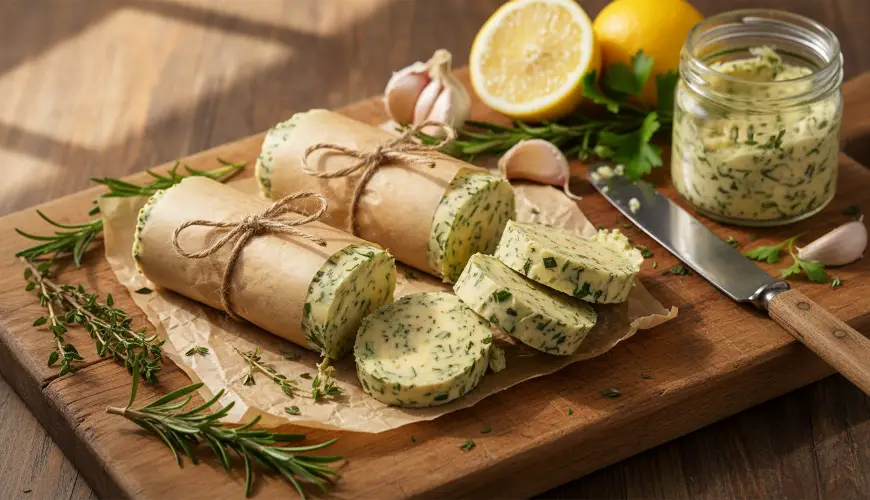
The scent of fresh thyme, rosemary or basil mixed with quality butter is one of those culinary experiences that can transform even the simplest dish into something extraordinary.
Yet many people perceive this delicacy as a restaurant speciality, rarely prepared at home – perhaps when a bunch of herbs is left over that would otherwise go to waste. In reality, however, homemade herb butter is not just a quick rescue for wilting herbs. It is a practical, tasty and sustainable alternative to industrially produced condiments that, moreover, keeps in the freezer for weeks without any loss of flavour or quality.
The magic of this simple preparation lies in the fact that it combines two things people have always loved – butter as one of the oldest fats in European cuisine and herbs as a natural way to add depth to food without added chemicals. And precisely this combination of both ingredients, properly prepared and preserved, becomes a small domestic treasure that always makes sense to have on hand.
Try our natural products
Why it is worth making herb butter at home
Industrially produced flavoured fats and spreads are convenient, but they rarely offer what one can mix together oneself. The composition of commercial products is often full of stabilisers, emulsifiers and flavourings that, while extending shelf life, simultaneously suppress the natural character of the herbs. Homemade herb butter, by contrast, contains exactly what one puts into it – quality butter, fresh or dried herbs, and perhaps a little salt, garlic or lemon zest.
From an economic standpoint, the preparation is also advantageous. A bunch of fresh thyme or parsley from a farmers' market costs a negligible amount, yet from it one can prepare a supply of herb butter that will last for several weeks of cooking. Furthermore, it eliminates waste – herbs that would otherwise wilt in the fridge within a few days and end up in the bin are given a second life in the form of an aromatic preparation capable of surviving in the freezer for two to three months without any loss of quality.
It is worth noting that this method of preserving herbs has deep historical roots. Storing aromatic plants in fats was common practice long before modern freezing methods arrived. Today, not only home cooks but also experts in sustainable eating are returning to them, seeking ways to reduce food waste. According to data from the Food and Agriculture Organization of the United Nations (FAO), approximately one third of all food production worldwide is wasted – and small decisions in the home kitchen, such as preparing herb butter from leftover ingredients, can be part of a larger solution.
Equally important is the question of flavour. Butter is a fat, and fats are carriers of aroma. When herbs are mixed with butter and left to rest – or frozen straight away – their essential oils are released into the fat and permeate it far more intensely than any industrial product could achieve. The result is a butter that, upon contact with a hot steak, fresh bread or braised vegetables, immediately releases a whole palette of flavours.
Many people have come to love herb butter precisely through such a simple incident: once they had a whole bunch of parsley left over at home after making soup. Instead of throwing it away, they blended it with butter, added a little garlic and lemon juice, and filled the entire mixture into ice cube trays. Three days later they had twenty small cubes of aromatic butter in the freezer, which they then used over the course of six weeks on grilled chicken, in pasta dishes and on toast. Since then, they have done it regularly.
How to properly prepare and freeze herb butter so it lasts as long as possible
The basic recipe is surprisingly simple, but there are details that matter. It begins with choosing the butter – ideally a quality one, preferably with a higher fat content (at least 82%), because it is precisely the fat that carries the flavour and at the same time protects the herbs from oxidation during freezing. In the Czech Republic and Slovakia there are a number of excellent butters from smaller dairies that are significantly superior in quality to industrial alternative fats.
The butter must first be left to soften at room temperature – for approximately an hour, so that it can be worked easily. The herbs should be washed, dried and finely chopped. The choice of combination depends on the intended use. Rosemary, thyme and garlic work excellently with steaks and grilled meat, while dill or tarragon with lemon zest suits fish, and for bread and breakfast spreads, basil with Parmesan or honey with lavender works wonderfully.
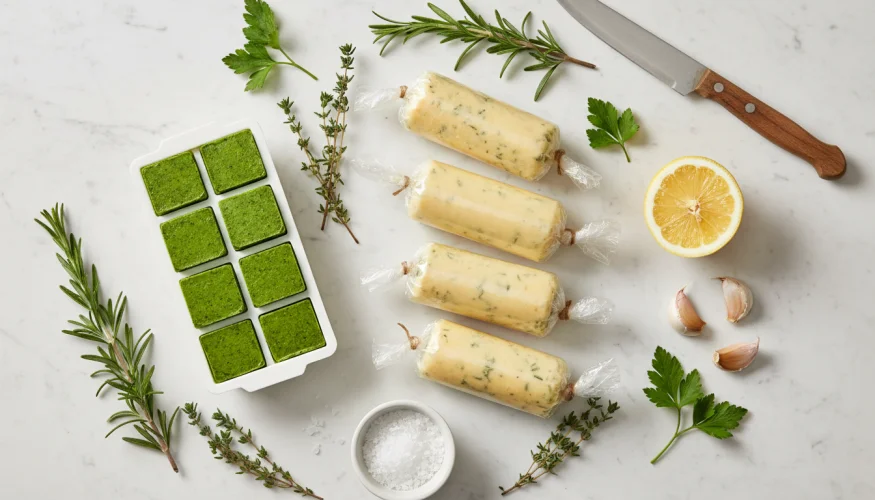
The softened butter is mixed with the herbs – either by hand with a fork, or using a mixer for a smoother consistency. At this point, salt, pepper, lemon juice or other seasonings can be added to taste. Then comes the key phase: shaping and freezing. There are essentially three tried-and-tested methods:
- Rolls in cling film – the butter is spread onto the film, rolled into a log shape and the ends are twisted tightly. When needed, the roll is taken out, slices are cut off and the remainder is returned to the freezer. This method is the most practical for regular cooking.
- Ice cube trays – the butter is filled into ice cube trays, frozen and then the cubes are transferred to a resealable bag. Each cube corresponds to approximately one portion, making measuring easy.
- Small glass jars – more suitable for short-term storage in the fridge (up to two weeks), but can also be used for the freezer if they are not filled right to the brim.
Properly wrapped and frozen herb butter keeps in the freezer without any loss of quality for two to three months. Some cooks cite even longer periods, but after three months there may begin to be a slight reduction in the intensity of the aroma. The key is to prevent air from getting in – it is precisely air that causes the oxidation of fats and the unpleasant "frozen" flavour technically known as freezer burn.
Before freezing the butter, it is worth labelling each roll or container with the date of preparation and the type of herbs. This may seem like an unnecessary step, but after a month in a freezer full of various supplies, this detail is invaluable. Thyme and rosemary look very similar after freezing, and mixing them up when preparing a dessert or sweet baked goods can be an unpleasant surprise.
As the French chef Auguste Escoffier, whose influence on modern European cuisine remains unquestionable to this day, once remarked: "Good butter is the foundation of every good kitchen." Herb butter merely develops this idea further – adding to it a layer of nature, seasonality and personal taste that makes every dish something a little more personal.
Herbs, sustainability and conscious shopping
Preparing homemade herb butter naturally opens up a broader topic – namely where the herbs come from and how their cultivation or purchase affects the environment. Fresh herbs from a conventional supermarket are typically grown in greenhouses with high energy consumption, packaged in plastic and transported over long distances. Herbs from one's own balcony garden, from a farmers' market or from a local grower, by contrast, have a significantly lower ecological footprint.
For those who have neither a garden nor a balcony, an excellent alternative is growing herbs on a windowsill. Basil, chives, mint or thyme can survive even in a small pot on a windowsill and provide a fresh harvest throughout the summer. The surplus can then be processed into herb butter and frozen – thereby closing the circle of sustainable food management.
As for the butter itself, its origin is also worth considering. Butter from organic farming or from pasture-raised cows tends to be not only more flavourful in taste due to a higher content of beta-carotene and omega-3 fatty acids, but its production is also more environmentally friendly. Studies published in the specialist journal Journal of Dairy Science have repeatedly confirmed that milk from grazing cows has a different nutritional composition compared to milk from intensive farming. The choice of ingredient is therefore not merely a matter of taste, but also of values.
On Ferwer, a wide range of products can be found that align with this approach – from eco-friendly kitchen tools to sustainable storage containers and natural food supplements. A conscious kitchen does not begin solely with the choice of recipe, but also with what it is equipped with and what it is cooked from.
Herb butter is in this sense a small but eloquent symbol. It shows that a healthy lifestyle and sustainability need not be complicated or expensive. All it takes is a little planning, good ingredients and a willingness to devote fifteen minutes a week to preparation. The result is a freezer full of aromatic treasures that are always at hand – whether for a celebratory dinner, a quick side dish, or simply a slice of good bread with butter on a Sunday morning.