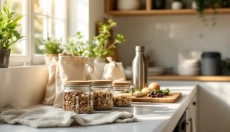

Biodegradable items are often confused with compostable ones; know the difference.

When sustainability is discussed today, one phrase appears almost everywhere: biodegradable. On labels, in advertisements, in e-shop descriptions, and in discussions about what an eco-friendly household should look like. But this is where the problem begins: not everything that claims to be biodegradable actually degrades quickly, safely, and without residue in the real world. And certainly not "anywhere" and "on its own." So what is truly biodegradable, how can it be recognized in practice, and what tips are useful for those who want to reduce waste at home without unnecessary illusions?
Try our natural products
What is Truly Biodegradable (and What Just Claims to Be)
The term biodegradability sounds simple: a material breaks down into natural components under the influence of microorganisms. However, in everyday life, the same word can cover very different situations. Some things decompose in a home compost in a few months, others only in an industrial composting facility at high temperatures and controlled humidity—and some "bio" products barely decompose at all outside ideal conditions.
The essential question is not just "is it biodegradable?", but rather: under what conditions and how long will it take? A material that only decomposes in an industrial composting facility can be great for a household—but only if there is a real way to get it there. If it ends up in mixed waste or in nature, the "bio" promise turns into a marketing label that eases the conscience but doesn't solve the problem.
There is often confusion between "biodegradable" and "compostable." Compostable is an even stricter term: it means that a material should decompose in a reasonable time and without toxic residues. Even here, there is a difference between industrially compostable and home compostable. The "home compost" is a stricter test in practice because temperatures are lower and the process is slower.
Standards and certifications help with orientation. For compostable products, the European standard EN 13432 is often mentioned, which pertains to packaging suitable for composting and biodegradation. Practically important is that it guarantees degradability under industrial composting conditions. For home composting, there are specific certifications (such as "OK compost HOME" in some certification systems), which are often more relevant for a typical eco-friendly household.
A sensible start to understanding the terms and connections can be found in an overview explanation of compostable plastics and decomposition conditions on the European Bioplastics website or information about the EN 13432 standard in the context of packaging on the European Commission's website.
Then there is another common misconception: "natural" does not automatically mean "safe for nature." Some materials do decompose, but they can release undesirable substances (dyes, adhesives, surface treatments) during the process. For products meant to end up in compost, it's important to consider not only the material but also what else is on it.
How to Recognize Biodegradable Items: Simple Signals That Work
In everyday shopping, there's no time to study chemistry. However, you can learn a few habits that help quickly distinguish truly biodegradable products from those that only use trendy terminology. It's not a perfect system, but rather a practical "mental check."
First signal: look for specifics. When a package says only "eco," "bio," "green," or "nature-friendly" without further explanation, it's suspicious. Conversely, it's good when the manufacturer clearly states whether the product is compostable, where (home vs. industrial compost), and according to which standard. Certifications and clear labeling are not a 100% guarantee but are significantly better than vague promises.
Second signal: "bioplast" is not automatically a win. People often imagine that if something is made of "bioplast," it will disappear in nature like a banana peel. However, bioplast can be made from renewable resources (like corn starch), but its degradability depends on the specific type of polymer. Some bioplastics are compostable, others are not. And even those that are compostable often require industrial conditions.
Third signal: beware of oxo-degradable plastics. These do break down into small pieces, but not always into harmless components. The result can be microplastics, just created more quickly. The European Union significantly restricts their use precisely because of the pollution risk. If you encounter packaging boasting "breaks down into small parts" but lacking information on true biodegradation, caution is warranted.
Fourth signal: paper isn't always "clean." Paper packaging and accessories can be a great step, but the surface treatment matters. Waxing, plastic lamination, or heavy color coatings can complicate composting. For kitchen aids (baking papers, bags), it's worth looking for variants specifically designed for compost or verifying the manufacturer's recommendations.
Fifth signal: ask yourself, where does it really belong? For biodegradable items, it's crucial they don't end up in the wrong waste stream. A compostable package does not belong in plastics (it can worsen recycling), but simultaneously, a compostable package in bio-waste makes sense only where bio-waste is truly composted or anaerobically processed. In some communities, bio-waste is collected by facilities that do not accept certain types of "compostable" packaging. It's less romantic than one might wish, but waste management reality is often local.
In practice, a simple question can help that is worth asking about each similar product: If I buy this, do I have a real way to dispose of it correctly? If not, sometimes a reusable alternative may be a better choice than a single-use "bio."
Eco Household Without Illusions: Tips for Truly Environmentally Biodegradable (and Mainly Meaningful) Choices
Building a more sustainable household is not about perfection. It's more about gradually replacing small things that are bought repeatedly: bags, sponges, cloths, cleaning agents, snack packaging. This is where a significant difference can be made—and often without dramatic price increases or lifestyle changes.
A typical situation from an ordinary day illustrates this well: after a weekend celebration, a family cleans the kitchen. Yogurt cups, cheese wrappers, vegetable scraps, paper napkins, disposable cloths, and a bread bag pile up on the counter. At one point, it becomes clear that the largest volume of waste wasn't from the food but from the surrounding items. And this is where the decision begins whether "eco" will be just a word or a practical change: replacing the most frequent disposables with something that either lasts or truly degrades in conditions the household can manage.
To be clear, so it's not an endless list, just a few typical areas where biodegradability is most often addressed:
In the kitchen and during cleaning, the biggest topics are washing dishes and wiping. Sponges made from synthetic materials wear out quickly and often end up in mixed waste. Alternatives can be natural options (like cellulose or loofah), which, when used correctly, are pleasant and after serving their purpose, have a better chance of a reasonable end of life. For cloths and rags, it often pays to go the reusable route: washable cloths last long and reduce the consumption of disposable papers. Biodegradability is a nice bonus, but it's even better if the item doesn't need to be thrown away as often.
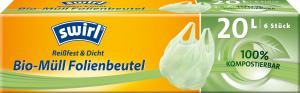
Regarding waste, the biggest focus is on bags. Compostable bags for bio-waste can make sense if the household truly separates bio-waste and knows that the local system accepts it. Where it works, they are especially pleasant in the kitchen: they keep the container cleaner and make handling easier. It's good to ensure that the bag is truly intended for compost (and ideally, clearly marked), because "degradable" bags without clear parameters can end up as another problem.
In the bathroom, biodegradability is often discussed with disposable products. Cotton swabs, tampons, wet wipes—all these are small items bought automatically. Wet wipes, in particular, are a typical example where marketing can be deceptive: even if the package says "biodegradable," it doesn't mean they belong in the toilet or will decompose in the sewage system. Many water companies have long warned that wipes (including "flushable" ones) cause blockages and costs. In this case, the more ecological path is often entirely different: reducing their use and replacing them with a cloth alternative or another solution depending on the situation.
For packaging and disposable tableware, it's good to distinguish when it's a necessity and when it's a convenience. Compostable cups and plates can be great at an event where bio-waste is truly collected separately and taken for processing. However, if they end up in mixed waste, the advantage diminishes. Sometimes, surprisingly, it can be more practical to invest in a few durable variants for repeated use (such as for family celebrations) because the greatest ecological benefit often doesn't come from something "nicely decomposing," but from not having to manufacture it again.
When talking about "everything about biodegradable things," one crucial thing is often forgotten: biodegradability isn't the only parameter of sustainability. Important factors also include production, transport, longevity, and whether the product replaces something problematic. In a household, it's worth looking at changes as a whole: fewer items being thrown away and more things that either last a long time or have a meaningful end of life.
If one simple approach that helps without much planning had to be chosen, it might look like this (and it's also a good way to align priorities in an eco-friendly household):
- First, reduce what's purely single-use and easily replaceable (cloths, napkins, certain packaging).
- Then replace with reusable where it makes sense (bottles, containers, cloths).
- And only then address whether a single-use item is truly compostable and where the household will realistically dispose of it.
This fits with a phrase that environmental organizations repeat in various variations and which still holds true: "The most ecological waste is that which doesn't occur." It may be overly simple, but in practice, this is what brings the greatest effect—and least frustration.
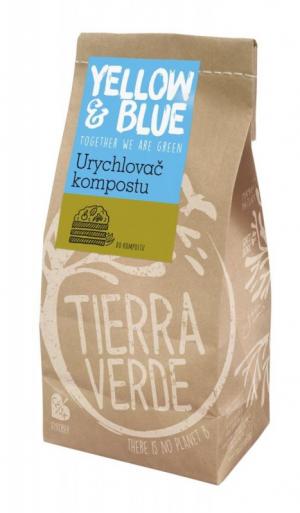
And what are the specific "tips for biodegradable" items that prove most useful? Within the household, these are mainly products made of paper and cellulose without problematic treatments, natural sponges and cloths, compostable bags for bio-waste with clear labeling and certification, and also cleaning agents designed to break down more gently in the environment. Here, it makes sense to follow the composition and brand credibility—and when possible, choose concentrated variants or refills, because even packaging is part of the story.
Finally, it's worth reminding one less popular truth: biodegradable doesn't mean it's okay to litter in nature. Even material that decomposes can harm animals or pollute the place in the meantime, and decomposition takes time. Sustainability isn't an excuse for litter, but rather an effort for the household to operate with a smaller footprint and with greater respect for where things go after use.
Once someone starts noticing details on labels and takes the effort to ensure "bio" isn't just a word, they usually find that sustainable choices aren't about a perfect catalog-home. They're about a few smart changes that happen every day—and that's why they matter. When biodegradability stops being seen as a magic label and starts being seen as a practical property with clear conditions, an eco-friendly household makes much more sense.