
# Jak často měnit houbičku na nádobí? Houbičku na nádobí byste měli měnit **každé 1–2 týdny**. Zde
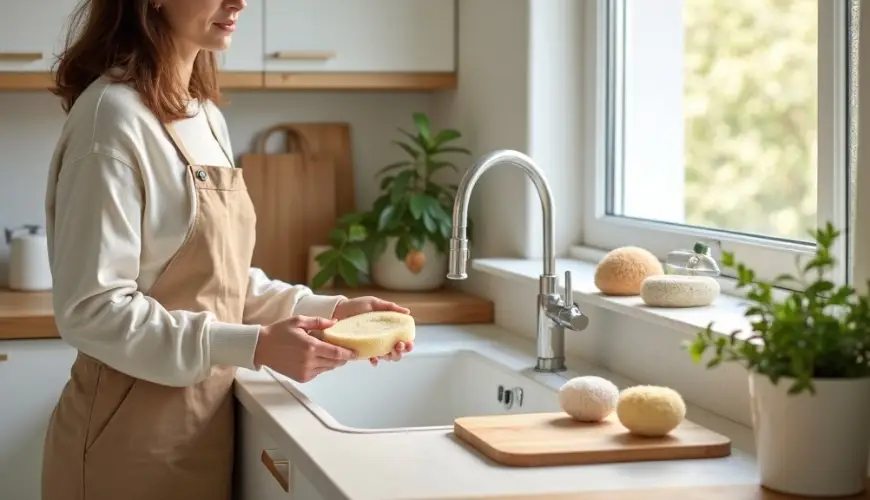
A small yellow sponge sits by every kitchen sink and seems like an absolute given. Nobody thinks much about it – until it starts to smell. And at that precise moment, most people do the only thing they know: throw it away and buy a new one. Yet behind this seemingly innocent ritual lies a whole series of questions worth asking. How often should a dishwashing sponge actually be replaced? And are there alternatives that are kinder to the planet and to your wallet?
The answer to the first question will surprise many households. According to recommendations from hygiene experts, including the American Centers for Disease Control and Prevention (CDC), a kitchen sponge should be replaced approximately every one to two weeks. That sounds like a lot, but the numbers behind this recommendation are compelling. A study published in the journal Scientific Reports found that a typical kitchen sponge can contain up to 54 billion bacteria per square centimetre – making it one of the most contaminated objects in the entire home. For comparison, a toilet seat tends to fare considerably better hygienically.
Try our natural products
-1-m.jpg)
-1-m.jpg)
-1-m.jpg)
-1-m.jpg)
-1-m.jpg)
Why a sponge is such a paradise for bacteria
The reason microorganisms thrive so well in a sponge is simple: it offers an ideal combination of moisture, warmth, food residues, and a porous material that provides bacteria with perfect shelter. The surface of the sponge is also almost constantly wet, which prevents the natural drying out that would otherwise eliminate some bacteria. Every wipe of the dishes, every contact with meat, vegetables, or raw eggs adds new microorganisms to this ecosystem, which then multiply rapidly.
A popular myth is the belief that regularly microwaving a sponge or running it through the dishwasher is enough to solve the problem. Research shows, however, that while this method does kill some bacteria, it can paradoxically cause the surviving microorganisms – the more resilient and potentially more dangerous ones – to multiply more quickly. In other words, disinfecting a sponge may temporarily reduce the bacterial count, but it cannot keep it safe over a longer period. As one of the authors of the aforementioned study, Markus Egert from Germany's Hochschule Furtwangen University, noted: "Regularly cleaning the sponge in the microwave or dishwasher doesn't help the way people think it does – hygienically problematic bacteria survive and quickly multiply again."
A practical guideline for everyday life can be a simple test: if the sponge smells, is visibly dirty, is falling apart, or has been in use for more than two weeks, it's time to replace it. Many households get into the habit of buying sponges in packs of ten and simply reaching for a new one each week – without overthinking it and without guilt. But this is precisely where we arrive at the second part of the whole problem.
A standard kitchen sponge is made from polyurethane foam – in other words, plastic. It is cheap, widely available, and functional – but its lifespan is short, and once discarded it becomes waste that takes decades to hundreds of years to break down in nature. The average Czech household uses dozens of such sponges per year, and when we multiply this figure by the number of households across the country, we arrive at an enormous amount of plastic waste that could have looked very different.
Eco-friendly alternatives that actually work
The good news is that the market for sustainable alternatives has grown considerably in recent years, and the range of eco-friendly replacements for the classic sponge is now diverse and accessible. Each has its own specific properties, so it comes down to the preferences and habits of each individual household.
Cellulose sponges are one of the most popular choices. Made from plant fibres, they are biodegradable and very similar in properties to a classic sponge – they absorb water well, can withstand warm washing, and are suitable for most surfaces. Once they have served their purpose, they can be composted, which is a significant advantage over the plastic alternative. Their drawback is that they too can start to smell fairly quickly if they are not dried out sufficiently between uses.
An interesting alternative is cloths made from organic cotton or bamboo, which can simply be washed in a washing machine and reused. They are durable, hygienic, and a single cloth can last months or even years in a household. The downside is that they are not ideal for scrubbing heavily burnt-on food, but for general cleaning of surfaces and dishes they are excellent.
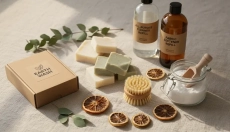
For lovers of natural materials, there are loofah sponges – dried fruits of the plant Luffa cylindrica, which belongs to the gourd family. Luffa is naturally abrasive, biodegradable, and surprisingly durable. It can be used both in the kitchen and the bathroom, and at the end of its life it breaks down in compost without any issues. It is even grown in some European countries, meaning its ecological footprint tends to be lower than that of products imported from the other side of the world.
Another option is wooden or bamboo dish brushes with replaceable heads. These brushes are particularly practical for washing pots, glasses, and bottles – places where a sponge's shape is not particularly helpful. The bamboo handle is biodegradable, and if a household opts for a model with a replaceable head, waste is reduced to a minimum. This approach – buy once and replace only the worn-out part – is the fundamental principle of sustainable consumption.
Also worth mentioning are dishwashing nets made from natural sisal or jute fibre. These coarser fabrics are excellent for removing food residues, and their production is considerably more environmentally friendly than synthetic materials. Like cotton cloths, they can be washed and reused.
The transition to eco-friendly alternatives is illustrated by the story of a family from Brno who decided two years ago to gradually eliminate single-use plastics from their home. They started with the sponge – first trying a cellulose sponge, then switching to a combination of a bamboo brush and cotton cloths. After an initial adjustment period, they found that their dishes were cleaner, their hands less irritated, and the waste from their kitchen had decreased significantly. They also discovered that investing in higher-quality and more durable tools pays off financially in the long run – even though the upfront cost of eco-friendly alternatives tends to be higher than a pack of cheap plastic sponges.
An important part of the whole discussion is also the proper care of any kitchen tool, whether it is a classic sponge or an eco-friendly alternative. The basic rule is to always wring it out thoroughly after use and leave it to dry freely – ideally in a place with good airflow. A damp environment is the main cause of rapid bacterial growth. Cellulose sponges and cotton cloths should also be washed regularly at a higher temperature to remove accumulated bacteria and odour.
It is also worth bearing in mind that different tasks in the kitchen do not have to be performed by the same item. Having a separate cloth for wiping surfaces and a different tool for washing dishes is considerably safer hygienically and also extends the lifespan of each item. This approach is completely standard in many Nordic households, and the low rate of food-borne illness caused by household contamination there speaks for itself.
When choosing an eco-friendly alternative, it is worth paying attention not only to the material of the product itself, but also to its packaging and origin. Certifications such as GOTS for organic cotton, FSC for bamboo products, or compostability labels are a useful guide for navigating the available options. The Czech market and online shops focused on sustainable living offer an ever-wider selection, so finding a suitable alternative is no longer as challenging as it was just a few years ago.
The question of how often to change a dishwashing sponge ultimately leads to a much broader topic: how we think about the objects we use every day without being particularly aware of them. The sponge is just a small example of how even an apparently insignificant household choice can have – when multiplied across millions of households – a far from negligible impact on the amount of plastic waste generated. Switching to more durable and natural alternatives requires no fundamental change in lifestyle. Next time, it simply means reaching for something different at the sink instead of the shelf with the classic yellow sponges.