

# How to Sleep Well Even on a Tropical Summer Night
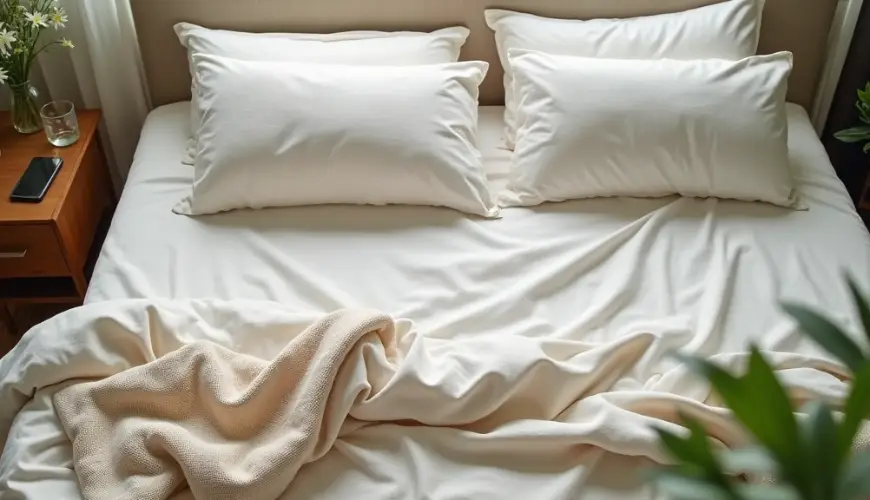
Summer nights can be merciless. While the temperature outside slowly drops, the bedroom is stuffy, resistant to any attempt at relief. You toss and turn from side to side, kick off the blanket, open the window and close it again – and wake up in the morning more tired than when you went to bed. This is no exaggeration: heat and sleep truly don't get along, and there is a physiological reason for it.
The body needs to lower its core temperature by approximately one to two degrees Celsius in order to achieve quality sleep. This process begins naturally in the evening, when the body starts to cool down as part of its preparation for rest. However, if the surrounding environment is too warm, the body cannot complete this mechanism – and the result is shallow, interrupted sleep or an inability to fall asleep at all. According to the National Sleep Foundation, the ideal bedroom temperature for an adult is between 15 and 19 degrees Celsius. But achieving such a temperature in July without air conditioning is a challenge in itself.
Yet it is not impossible. There are a number of practical steps that can transform a sweltering bedroom into a reasonably cool place for rest – and most of them require neither expensive technology nor structural modifications.
Try our natural products
Tips for cooling a bedroom without air conditioning
The first and most important rule is to work with windows strategically, not intuitively. Many people instinctively open their windows during the day to "air out" the room. In summer, however, this usually has the opposite effect – hot air from outside settles inside and the room heats up even further. The correct approach is to keep windows closed and ideally shaded during the day – with curtains, blinds or external shutters. Only after dark, once the outdoor temperature drops below the temperature inside the flat, does it make sense to open the windows and create a draught. If you have windows on opposite sides of the room, make full use of this: a cross-breeze can significantly lower the air temperature in a room in a short amount of time.
Another factor that is often underestimated is the choice of bed linen. Synthetic materials such as polyester retain heat and prevent the evaporation of sweat, which creates an unpleasant microclimate directly under the duvet in summer. Natural materials, on the other hand – cotton, linen or bamboo – are breathable and allow the body to breathe. Linen bedding in particular is highly valued for its natural thermoregulating properties: it cools in summer and warms in winter. Investing in quality summer bed linen made from natural fibres is therefore genuinely worthwhile.
The choice of duvet is equally important. A heavy down duvet is unsuitable for summer – it can be replaced with a lightweight cotton or bamboo duvet, or you can make do with just a sheet. There are also specialist cooling duvets with heat-wicking technology, which are becoming increasingly accessible. However, it is not necessary to reach for technological solutions straight away: sometimes it is enough to swap winter bedding for a light summer alternative.
When it comes to lighting and electronics, it is worth bearing in mind that every device in the room that is switched on or in standby mode emits heat. A television, chargers, a computer – all of these contribute to the overall temperature of the room. It is therefore worth unplugging everything unnecessary before going to bed and keeping the bedroom as a space truly dedicated to sleep alone.
A tried-and-tested trick is also a wet towel or sheet hung in front of an open window. Air passing through damp fabric cools naturally – it is a primitive but effective principle of evaporative cooling. Similarly, taking a cold shower before bed or wetting your wrists and temples with cold water can help. The thermal points on the body – wrists, ankles, neck and temples – are places where blood comes closer to the surface of the skin, and cooling them has a relatively quick effect on the overall sensation of heat.
When the heat won't let you sleep: What to do and what to avoid
One of the most common mistakes people make on hot nights is to reach for a fan and point it directly at themselves. While this brings immediate relief, it can cause drying of the mucous membranes, muscle pain or a stiff neck – and ultimately worsens the quality of sleep. A better approach is to position the fan so that it circulates air around the room, or place it in the window so that it draws cooler air in from outside. Even more effective is to place a bowl of ice or cold water in front of the fan – the air passing over the cooled surface will genuinely become cooler.
What you eat and drink before bed also plays an important role. Heavy foods rich in protein or fatty foods increase the body's metabolic activity, and with it its temperature. Dinner should be light, ideally at least two hours before lying down. Alcohol, despite inducing a feeling of drowsiness, disrupts sleep cycles and raises body temperature – making it doubly unsuitable on hot nights. Adequate hydration, on the other hand, is key: a glass of water before bed helps the body regulate its temperature and prevents night sweats caused by dehydration.
An interesting perspective on the issue of sleeping in the heat is offered by sleep expert Matthew Walker, author of the book Why We Sleep: "A drop in body temperature is one of the most powerful triggers of sleep. Anything that prevents this drop also prevents sleep itself." This simple idea explains why hot summer nights disrupt sleep so systematically – it is not merely an unpleasant sensation, but a genuine physiological conflict.
The choice of pyjamas can also help. Light, loose clothing made from natural materials is always better than sleeping in synthetic underwear or, conversely, with nothing on at all – surprisingly, a light cotton garment helps absorb sweat and keeps the skin drier than when the body is completely exposed.
Imagine a situation familiar to many people: it is Wednesday evening, there is an important meeting the next morning, the temperature outside is 32 degrees and the bedroom is unbearable. This is precisely when it pays to have a plan ready. Pull down the blinds in the afternoon, prepare linen bedding, take a lukewarm shower before bed – not a cold one, because that paradoxically stimulates the body to warm up as a defensive response – and place the fan in the window. Such preparation can lower the temperature in the bedroom by several degrees and ensure that even on a tropical night, you wake up rested in the morning.
More technologically minded households can opt for smart thermostats or portable air conditioning units that can be moved around as needed. Portable air conditioners are a compromise between cost and performance – they are not as efficient as permanently installed systems, but for a single room they can be sufficient. It is worth bearing in mind, however, that even a portable air conditioner needs to vent hot air outside, otherwise the unit simply heats the room itself.
For those looking for a more ecological approach, it is worth noting that proper insulation of a house or flat is the most effective long-term solution to interior overheating. Roofs and walls without adequate thermal insulation act as radiators in summer – absorbing heat during the day and releasing it into the interior at night. Investment in reflective blinds, external shutters, or green roofs and facades (covered with climbing plants) can dramatically reduce the thermal load on a building. According to the European Environment Agency, green facades are one of the most effective tools for reducing urban overheating in the context of climate change.
Another popular and natural aid is houseplants. Larger plants such as fig trees, monsteras or various species of palm naturally humidify the air and contribute to cooling the surrounding environment through the process of transpiration. The effect is not dramatic, but in combination with other measures, plants can contribute to a more pleasant microclimate in the bedroom.
Sleeping in the heat is a challenge that an increasing number of people have been grappling with in recent years – summer temperatures in Europe have been rising steadily, and tropical nights, when the temperature does not drop below 20 degrees even after midnight, are becoming ever more common. Adapting your bedroom and sleeping habits accordingly is not a luxury, but a genuine investment in your health. Chronic sleep deprivation increases the risk of a whole range of conditions – from cardiovascular problems to a weakened immune system, as well as mood disorders and difficulties with concentration. Good sleep is not merely pleasant – it is essential.
Whether you opt for linen bedding, strategic ventilation or a cleverly positioned fan, every step in the right direction counts. Summer nights need not be an inevitable ordeal – with a little preparation and the right habits, it is possible to find a way to truly rest even in the most intense heat.