
# How to Use Leftover Cooked Rice Instead of Throwing It Away Cooked rice keeps in the fridge for *
How many people end up after cooking with a pot of rice that's half leftover? Probably more than it might seem. Leftover rice is one of the most common food wastes in households, yet it's an ingredient with enormous potential. Instead of ending up in the bin, it can be transformed into the basic building block of quick, nutritious and surprisingly tasty meals. You just need to know how.
Rice is one of the most widespread grains in the world - according to the Food and Agriculture Organization of the United Nations (FAO), it is the staple food for more than half of the world's population. It's no wonder it's cooked in large batches and leftovers are completely commonplace. Yet while in Asian cuisines leftover rice is used in a completely natural and creative way, in Central Europe this practice is only slowly spreading. And yet using leftover cooked rice is not only economical, but also ecological - less food waste means a smaller burden on the environment.
It's worth mentioning the practical aspect too: cooled cooked rice that has spent the night in the fridge behaves differently from freshly cooked rice. The starch in it partially crystallises, making it easier to fry, it won't go soggy in soup and it holds its shape in fillings. This process, technically known as starch retrogradation, also has an interesting side effect - cooled rice has a lower glycaemic index than fresh rice, which is particularly appreciated by people who monitor their blood sugar levels. This is discussed, among others, by the British Journal of Nutrition, which has long studied the phenomenon of resistant starch.
Try our natural products





Fried rice and quick everyday dishes
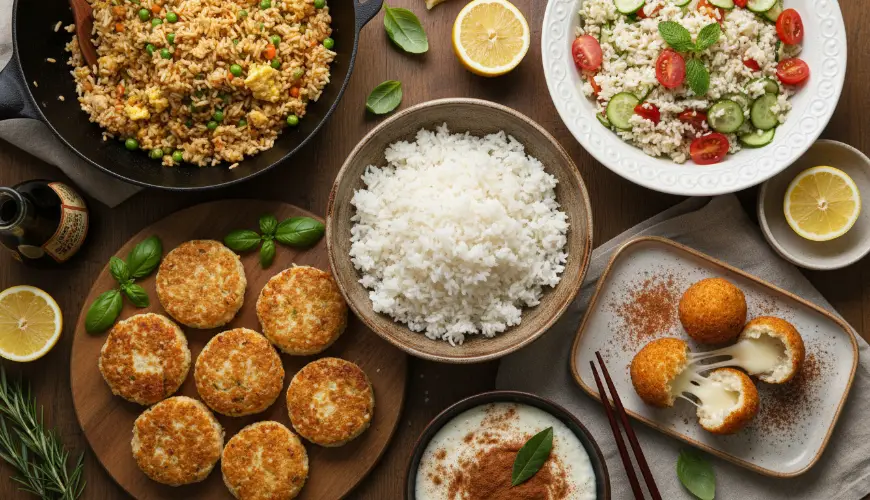
The best-known way to deal with leftover rice is undoubtedly Asian-style fried rice. It's a dish that takes literally ten minutes to prepare, yet can be filling, balanced and full of flavour. The basic method is simple: garlic, ginger or onion is sautéed in heated oil in a pan or wok, vegetables and optionally a protein are added - egg, tofu, prawns or leftover chicken - and finally cold rice is thrown in. A few minutes over high heat, a splash of soy sauce, sesame oil and it's done.
The key to success is precisely cold rice from the fridge. Freshly cooked rice would clump together in the pan and the result would be sticky and unappetising. Cold rice, on the other hand, separates beautifully and each grain gets coated in the tasty sauce. This principle has been used by cooks throughout Asia since time immemorial - in Thailand, China and Japan alike, fried rice from leftovers is considered perfectly normal and respectable cooking, not an improvisation born of necessity.
Equally quick is rice salad, which has become particularly popular among people with an active lifestyle. Cold rice works just as well as a salad base as quinoa or bulgur. Simply mix it with chopped vegetables - peppers, cucumber, cherry tomatoes - add chickpeas or beans for protein, drizzle with a lemon dressing and sprinkle with herbs. The result is a light yet nutritious lunch that takes five minutes to prepare and travels easily in a lunchbox to work.
Leftover rice also works wonderfully in soups. Asian congee, or rice porridge, is made by slowly cooking rice in broth until the grains break down into a creamy consistency. Using leftover cooked rice speeds up the process considerably - simply add it to hot broth and let it simmer. The result is a comforting, easily digestible dish that is ideal when you have a cold or as a light evening meal. As a Chinese proverb says: "Rice porridge is medicine for the body and soul."
Healthy recipes that will surprise even an experienced cook
But the possibilities for using leftover rice are far from limited to fried rice or soup. With a little creativity, it can be turned into dishes that no one would guess were made from what was left in the pot.
One of the most popular options is rice patties or cakes. Mix cold rice with egg, grated cheese, herbs and a little flour, shape into patties and fry them in a pan with a little olive oil. The result is crispy, golden little cakes that taste great on their own or with a salad and yoghurt dip. This option is particularly popular with families with children - little eaters receive it with enthusiasm and parents appreciate that it makes a healthy and quick snack or side dish.
Stuffed peppers or courgettes follow a similar logic. Rice mixed with sautéed vegetables, tomato purée and seasoning makes an excellent filling that bakes to the perfect consistency in the oven. The advantage is that this dish can be prepared ahead of time and reheated - it actually tastes even better the next day, when the flavours have had time to meld properly.
For those who like to experiment, rice pudding or sweet porridge can be an interesting choice. Leftover white rice is covered with plant-based or cow's milk, a little honey or maple syrup, vanilla and cinnamon are added, and it is slowly heated until a creamy porridge forms. Served with fresh fruit or stewed pears, it's a dessert that will delight the whole family while requiring almost no preparation. Incidentally, similar sweet rice dishes have a tradition across world cuisines - from Spanish arroz con leche through Indian kheer to Scandinavian rice pudding, which is traditionally served at Christmas.
An interesting and increasingly popular alternative is using leftover rice to make homemade sushi rolls. It's not as complicated as it sounds - the rice is seasoned with rice vinegar, sugar and salt, spread onto a nori sheet, favourite ingredients are added and the roll is rolled up using a bamboo mat. The result is not only visually attractive but also nutritionally valuable. For beginners, there are plenty of videos and guides available, for example on the Japan Centre platform, which is dedicated to Japanese cuisine and culture.
We must also not forget rice polpette in the Italian style, namely arancini. These are fried rice balls filled with mozzarella or meat sauce, coated in breadcrumbs. They are somewhat more labour-intensive than the other recipes mentioned, but the result is worth it - a crispy golden crust conceals a soft, cheesy filling inside. In Italian households, this is a classic way to use up leftover risotto, and the popularity of arancini has been spreading to Czech kitchens in recent years.
A practical example from everyday life is a situation many people will recognise: on Monday, a larger portion of rice is cooked as a side dish for dinner. On Tuesday morning, rice patties are made from the leftovers for breakfast. At lunchtime, the remainder goes into a salad bowl with chickpeas and vegetables as a packed lunch for work. And on Wednesday, the last handful of rice becomes the base of a soup with miso paste and tofu. From four portions of rice, four different meals are created - economical, practical and yet varied.
When it comes to proper storage, cooked rice keeps in the fridge for three to four days in a sealed container. It's important to cool it quickly after cooking and not to leave it at room temperature for more than two hours - warm rice is an ideal environment for bacteria to multiply, particularly Bacillus cereus, which can cause digestive problems. This is also highlighted by the British Food Standards Agency, which systematically addresses food safety. Rice can also be frozen - it keeps in the freezer for up to a month and after defrosting in the microwave is almost as good as fresh.
Leftover rice is therefore far more than just a by-product of cooking. It is a versatile ingredient waiting for its second chance - and with a little inspiration, it can be turned into a meal that surpasses even a carefully planned recipe. Whether it's a quick stir-fry for dinner, a nutritious packed lunch or a sweet dessert for the whole family, cold rice from the fridge is a reliable helper in any kitchen. All it takes is to stop throwing it away and start treating it for what it truly is - as the foundation for new, healthy and delicious adventures.