

# Why to collect colostrum before birth
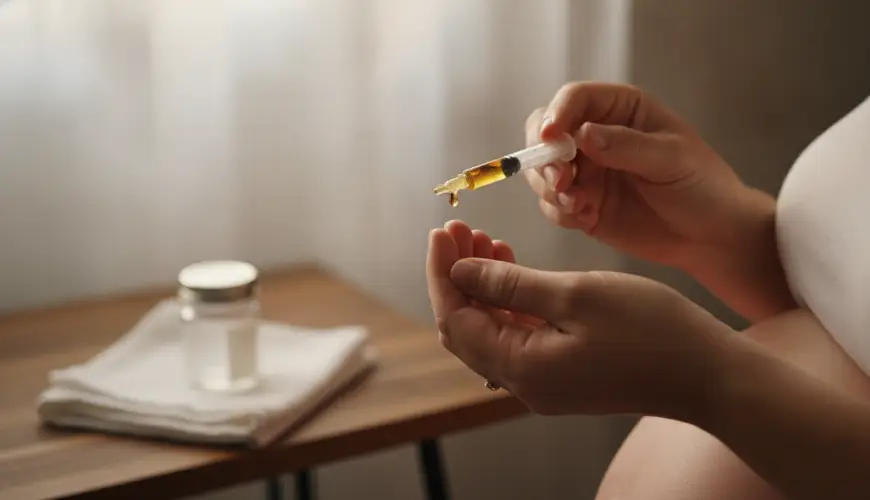
Pregnancy brings countless decisions that can affect the health of both the newborn and the mother. One topic that has been gaining increasing attention in recent years among expectant mothers and midwives alike is the so-called antenatal colostrum collection – referred to in English as colostrum harvesting. This is a process in which a woman manually expresses her first breast milk before giving birth, stores it, and prepares a supply for situations where her newborn may need it immediately after birth. It may sound unusual, but there is solid logic and a growing body of scientific evidence behind this approach.
Colostrum, known in Czech as mlezivo, is the first fluid produced by a woman's breasts. It is not yet classic breast milk – it is thicker, yellowish, and produced in small quantities. What it lacks in volume, however, it more than makes up for in composition. Colostrum is literally packed with antibodies, proteins, growth factors, and immunologically active substances that a newborn needs in the first hours and days of life as a foundation for developing their own immune system. The World Health Organization (WHO) identifies breastfeeding – and in particular the administration of colostrum immediately after birth – as one of the most important steps in protecting newborn health. It is therefore no surprise that an increasing number of women are interested in making the most of this golden liquid.
Try our natural products
Why collect colostrum before birth?
The answer to this question lies primarily in the reality of maternity wards and the postpartum period. Not every birth goes smoothly, and not every baby is immediately put to the breast after arriving in the world. Premature babies, newborns with low birth weight, infants with congenital heart defects, or babies born to mothers with diabetes – these are just some of the groups for whom direct breastfeeding in the first hours after birth may be difficult or entirely impossible. It is precisely in these situations that a pre-prepared supply of colostrum becomes invaluable.
Consider, for example, a situation where a baby is born by caesarean section and the mother is slowly coming around from anaesthesia after the operation. Or a newborn who must be immediately transferred to the neonatal unit after birth. In such moments, having a few millilitres of colostrum prepared in small syringes or special containers can be of literally life-saving value – the baby receives immune protection and nutrition at exactly the moment it is needed most, even without being directly put to the breast.
However, antenatal colostrum expression is not intended exclusively for high-risk pregnancies. An increasing number of women with physiological pregnancies are choosing this method preventively, as part of their overall preparation for birth and breastfeeding. Having a supply of colostrum in the freezer gives them a sense of security and peace of mind – and that is priceless in the final weeks of pregnancy.
The technique of expression itself is surprisingly simple. It involves manual massage of the breast and areola, in which the woman uses gentle pressure and movement towards the nipple to stimulate the release of colostrum. The small drops are then collected into a sterile container or syringe. The entire process usually takes only a few minutes and is recommended to be performed once or twice a day. The result is typically just a few millilitres – but even that is sufficient, because a newborn's stomach in the first hours of life is truly very small, roughly the size of a cherry.
When should expression begin? Most midwives and lactation consultants recommend starting at approximately 36 to 37 weeks of pregnancy, at a time when the foetus is already fully term and any stimulation of the breasts does not pose a risk of premature labour. This is precisely the key point that must be emphasised: antenatal colostrum expression is not suitable for every woman and in every situation. In high-risk pregnancies, threatened premature labour, multiple pregnancies, or in the presence of other complications, it is essential to consult this intention with an obstetrician or midwife before beginning.
How to work with colostrum and where to find reliable information
Proper storage of the expressed fluid is just as important as the expression itself. Colostrum can be stored in the refrigerator for approximately 48 hours, or in the freezer for up to six months. Special sterile containers or small syringes are used for this purpose, which are ideal for this use – they allow precise dosing and are easy to transport to the maternity ward. It is important to label each container with the date of expression.
The woman then brings her supply to the maternity ward in a portable cool bag or thermos with ice. The maternity ward staff should be informed about the supply in advance so that they can store it properly and use it if necessary. Experiences of mothers who have chosen this path show that open communication with the maternity ward in advance significantly eases the entire process – not all healthcare facilities have experience with this practice and may need time to prepare.
As stated by the Australian Australian Breastfeeding Association, which is one of the world's leading authorities in the field of lactation: "Antenatal expression of colostrum can be beneficial for mothers who are likely to experience breastfeeding challenges." This organisation also provides detailed guides and recommendations for correct technique, making it one of the most reliable sources for those who wish to explore the topic in greater depth.
In the Czech context, the topic of antenatal colostrum collection is increasingly being addressed by lactation consultants, whose network has grown significantly in recent years. Their role is irreplaceable – not only because they can demonstrate the correct technique in person, but also because they are able to assess whether a given woman is a suitable candidate for this practice. Contact details for a lactation consultant can be found, for example, through the Czech Lactation League, which brings together specialists in the field of breastfeeding and provides support to mothers throughout the country.
Interestingly, antenatal colostrum expression has a positive effect not only on the supply available for the newborn, but also on breastfeeding itself after birth. Regular stimulation of the breasts in the final weeks of pregnancy helps the body to "practise" the reflexes associated with breastfeeding and may contribute to a faster and more abundant onset of milk after birth. For women who are worried about not having enough milk, or who experienced difficulties with breastfeeding with previous children, this preparation can be psychologically very important.
The emotional dimension of the entire process should not be overlooked either. Antenatal colostrum collection gives a woman the feeling of actively participating in the care of her child even before it is born. It is a way of physically preparing for the role of a mother, of creating a ritual of care, and of entering the maternity ward with the knowledge that she has done everything within her power. Many mothers describe this process as calming and empowering – at a time when many uncertainties surround the birth, a tangible little supply of colostrum in the freezer is a source of reassurance.
The natural question arises: are there situations in which antenatal colostrum expression is not appropriate or may even be harmful? The answer is yes. Nipple stimulation can in some cases trigger uterine contractions, and for this reason this method is not recommended for women at risk of premature labour, women with cervical insufficiency, in cases of placenta praevia, or in the presence of other complications. The decision should always be discussed with the attending physician or midwife – this is not an area where one should experiment without professional guidance.
For healthy women with a physiological pregnancy, however, the risk is minimal and the potential benefit is significant. A study published in the academic journal BMC Pregnancy and Childbirth confirmed that antenatal colostrum expression in women with gestational diabetes was safe and contributed to higher rates of breastfeeding after birth. Research in this area is still ongoing and the expert community has not yet reached consensus on all aspects, but the data available so far are encouraging.
The practical side of things also includes the selection of appropriate equipment. No complex devices are needed for manual colostrum expression – clean hands, sterile containers, and patience are sufficient. Some manufacturers offer special silicone containers designed specifically for colostrum collection, which make it easier to capture every drop. Experts advise against using electric breast pumps at this stage, as their intensity may be too strong and unnecessarily increase the risk of stimulating uterine contractions.
The entire trend of antenatal colostrum collection reflects a broader shift in the approach to birth and motherhood – an emphasis on being informed, on active preparation, and on conscious decision-making. Women today want to know what is happening with their bodies, why it is happening, and how they themselves can contribute to the best possible start for their child. And colostrum – this golden, immunity-packed fluid – is precisely the place where the natural wisdom of the body meets modern scientific knowledge.
Whether or not an expectant mother decides to pursue antenatal colostrum expression, one thing is certain: the more she knows about her body and its possibilities, the better she can prepare for one of the most significant moments of her life. And therein lies the true value of this topic – not in pressure towards a single correct approach, but in expanding the options available to every woman.