
# Why Tap Water Is Better Than Bottled Water Tap water has many advantages over bottled water that
Every year, Czechs spend billions of crowns on bottled water in plastic containers, even though they have access at home to one of the most strictly controlled liquids in existence. Why is this? Is bottled water truly better, or is it just a marketing myth that costs us money, health, and the planet? The answers are more surprising than they might seem.
The Czech Republic is among the countries with very high-quality drinking water from public water supplies. According to data from the National Institute of Public Health, domestic tap water meets the strict limits set by the European drinking water directive, with more than 99.5% of samples taken from public water distribution networks passing inspections in 2022. That is not a number to be overlooked.
Try our natural products
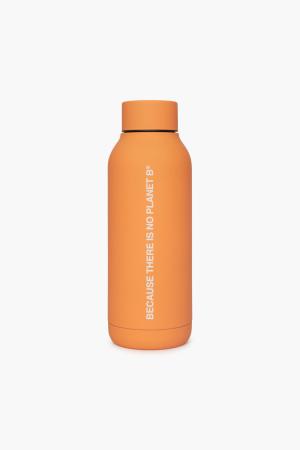
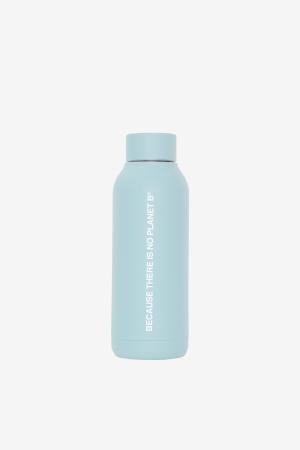
What is really hiding in the glass or bottle?
Tap water in the Czech Republic undergoes thorough treatment and continuous monitoring. Water companies are legally required to regularly test dozens of parameters — from nitrate content and heavy metals to microbiological indicators. The results are also publicly available, so any consumer can verify what flows from their tap. This level of transparency is something you will not find to the same extent with bottled water.
Bottled water is subject to different legislation than tap water. While drinking water from the mains must meet standards defined by Act No. 252/2004 Coll., natural mineral waters and spring waters are governed by different regulations that are not necessarily stricter in all respects — quite the contrary, in fact. For example, the permitted levels of certain minerals or bacteria may be higher for bottled water. Paradoxically, it is tap water that is more strictly regulated, not the water in a plastic bottle.
Consider a specific situation: a family in a mid-sized Czech city — say Hradec Králové or Olomouc — buys an average of six litres of bottled water in PET bottles every week. Over a year, that amounts to roughly 300 litres. At an average price of around 10–15 crowns per litre of bottled water, the family spends 3,000 to 4,500 crowns a year on water alone — water they could get from the tap for a fraction of the price, approximately 50 to 70 crowns. The difference is literally fifty- to sixtyfold. And yet, as we shall see, the difference in quality is nowhere near proportional to this price gap.
The environmental dimension is even more telling. Producing a single plastic bottle consumes approximately three times more water than the bottle itself contains. Add to that the emissions from transportation, the energy intensity of production, and the problem of recycling — according to the European Environment Agency, a large proportion of plastic packaging in Europe still ends up in landfills or in nature, despite improvements in recycling infrastructure. In the Czech Republic, waste sorting is a relatively well-established habit, but even so, the ecological footprint of bottled water is incomparably higher than that of tap water.
Taste test: do our taste buds believe what our eyes see?
This is where we get to the most interesting part of the whole topic. Taste is subjective, but science has surprisingly a lot to say about it. A number of studies conducted in various European countries have shown that in blind tests — that is, when people do not know what they are drinking — they cannot reliably distinguish high-quality tap water from bottled water. Results consistently show that the preference for bottled water disappears the moment the consumer cannot see the brand on the bottle.
A well-known example comes from London, where Thames Water organised a public taste test. Participants evaluated tap water and several types of bottled water without any labelling. The tap water finished in second place on average, with minimal differences between the samples. Similar tests have been conducted in other countries, including neighbouring Germany and Austria, with comparable results.
In the Czech context, location plays a key role. Water from the Prague water supply, which comes primarily from surface sources treated at the facilities in Káraný and Želivka, has a different flavour profile than water in Brno, where groundwater sources are more heavily used. As a general rule, groundwater tends to be more pleasant in taste, because water naturally filtered through rock contains an optimal amount of minerals and less chlorine, which is added as a disinfectant. Chlorine is in fact the most frequently cited objection to the taste of tap water.
As hydrogeologist and science communicator Václav Cílek points out: "Water is not just H₂O. It is a living solution with a history that begins in the clouds and ends in our glass. And we can taste that history." This perspective helps explain why taste preferences are so individual and why it is impossible to say categorically that one water is "better" than another.
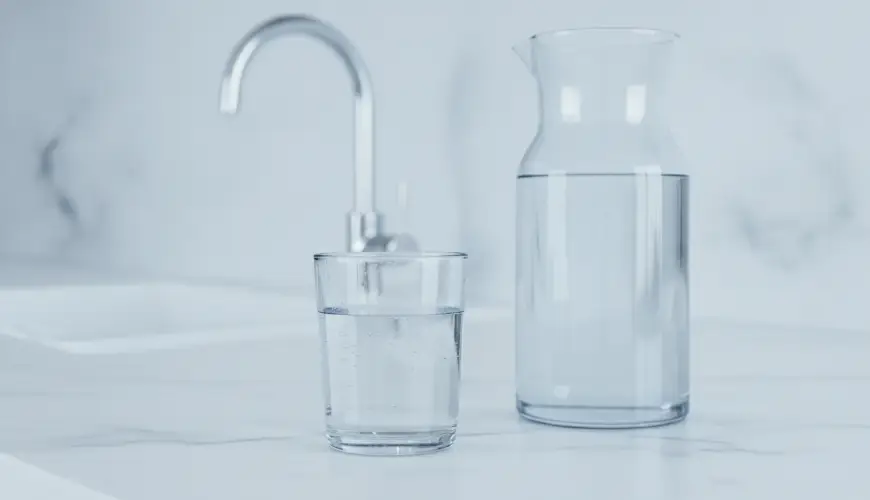
If someone genuinely objects to the taste of chlorine in tap water, there is a simple and inexpensive solution: leave the water to stand for a while in an open container, or filter it through a carbon filter. Chlorine is a volatile substance and naturally dissipates from water within a few minutes to a few hours. Filter jugs or built-in under-sink filters can significantly improve the taste of tap water at a fraction of the cost associated with continuously buying bottled water.
Mineral composition is another factor that consumers are interested in. Many people buy specific mineral waters for their magnesium, calcium, or sodium content. This is a legitimate reason — for example, for athletes after strenuous exercise, it may make sense to reach for water with a higher electrolyte content. However, for everyday hydration in a healthy adult, tap water is perfectly adequate and in many cases contains minerals in similar or even higher quantities than cheaper bottled spring waters. Recommended daily mineral intakes are, after all, derived primarily from food, not from water.
The psychology of the whole phenomenon is also worth noting. Research in behavioural economics shows that the perception of quality is closely linked to price and presentation. Water in an elegant glass bottle with a label evoking Alpine springs simply tastes better — at least in our minds. This placebo effect is well documented and is consciously exploited by marketers. There is nothing mysterious about it; it is entirely predictable human psychology.
Another aspect worth mentioning is microplastics. This topic has come to the forefront of scientific and media attention in recent years. Research, including a study published in PLOS ONE, has confirmed the presence of microplastics in bottled water, with concentrations in some cases higher than in tap water. The reason is straightforward: plastic bottles themselves are a source of microparticles, which are released into the water particularly when exposed to heat or mechanical stress. The long-term health effects of microplastics on the human body have not yet been fully studied, but the available data certainly do not support the notion that bottled water is a safer alternative from this perspective.
How to make a smart decision?
The point is not that people should stop buying bottled water entirely under all circumstances. When travelling, hiking, or in places where tap water quality is questionable, reaching for a bottle makes sense. But making bottled water the everyday foundation of your hydration routine at home is a decision that does not pay off — financially, ecologically, or health-wise.
Czech tap water is one of the most rigorously controlled food products on the market. It is available instantly, without packaging, without a transport footprint, and at a price that is practically negligible. If we want to improve it in terms of taste or mineral content, we have a range of tools at our disposal — from simple filter jugs to home remineralisation filters that add back minerals removed during filtration.
Switching from bottled water to tap or filtered water is one of the simplest changes a household can make to reduce its ecological footprint. There is no need to invest in expensive equipment or overhaul your lifestyle. All it takes is one conscious step: the next time we reach for a plastic bottle at the supermarket, let us recall the numbers. The 99.5% of compliant samples. The fiftyfold price difference. And the fact that in a blind test, we would most likely not be able to tell the "inferior" water apart at all.